Sebastian Furck
Sebastian Furck (or Fulcarus), a German engraver active throughout the first half of the seventeenth century, played a crucial role in the development and dissemination of Northern European documentary portraiture. Though biographical details place his life between approximately 1589 and 1666, the definitive core of his cataloged output occurred between 1600 and 1639, establishing him as an important practitioner of high-resolution copperplate technique.
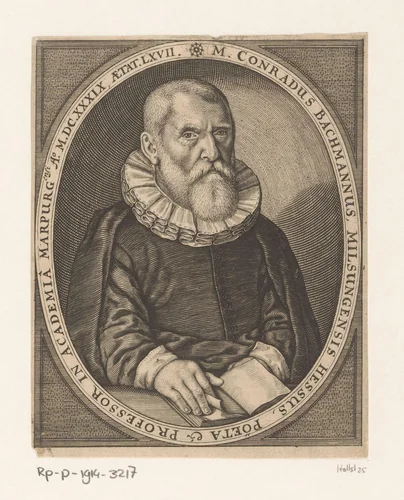
Furck specialized in producing intricate and highly detailed reproductive prints, a medium essential for circulating the images of powerful political and social figures across territories before the advent of mechanical reproduction. His work demanded exceptional precision in line work, ensuring both accurate representation and clear articulation of the textures, vestments, and accessories that denoted status in the early modern period.
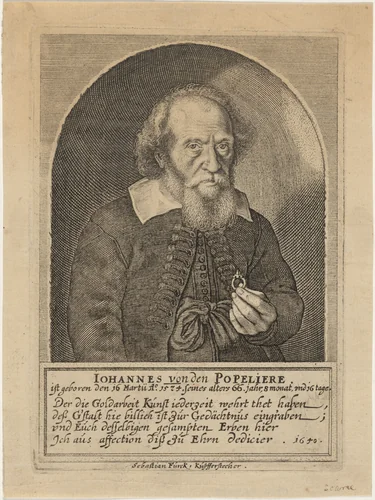
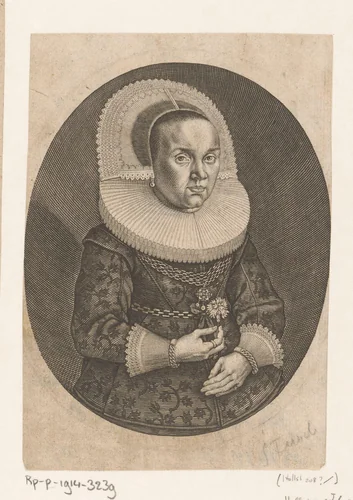
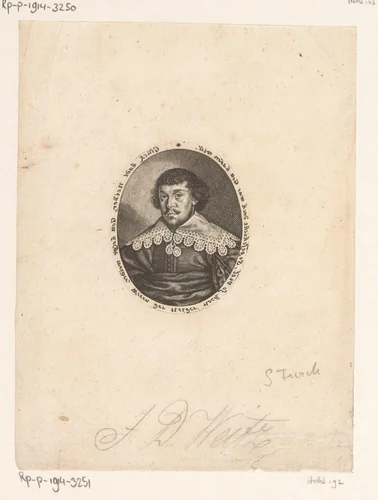
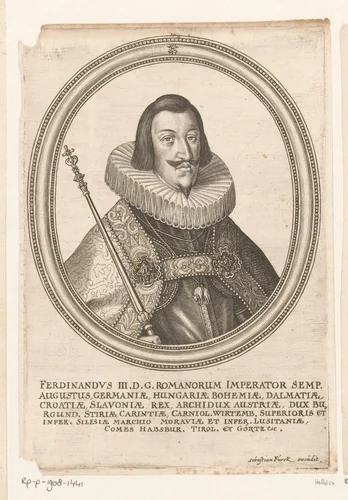
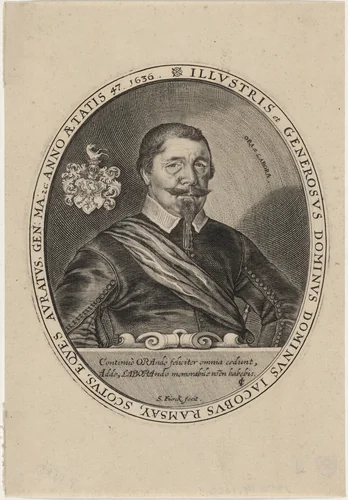
His commissions included prominent historical personages, granting historians access to visual records of power. Notable examples include the demanding political portrait of Portret van Ferdinand III, documented while he was still establishing his authority as future Holy Roman Emperor, and the striking study of the military figure Sir James Ramsay. Furck’s technical assurance, however, was not reserved solely for the powerful. He devoted equal meticulousness to civilian subjects, as demonstrated by the detailed Portret van Regina Schwind and Johannes van den Popeliere. This broad focus, capturing both the central figures of statecraft and the established gentry, lends his portfolio a particular value beyond pure political history.
The surviving collection of Sebastian Furck prints demonstrates a consistent, professional hand that helped define the expectations for museum-quality printmaking during the Baroque transition. Today, his work is conserved in major international collections, including the Rijksmuseum in Amsterdam and the National Gallery of Art. As these historical works transition into the public domain, they offer ready access to the period’s visual culture. The availability of high-quality prints generated from his finely engraved plates ensures that Furck’s contributions to seventeenth-century German graphic arts continue to be appreciated.
Source: Wikipedia · CC BY-SA 4.0