Sawrey Gilpin
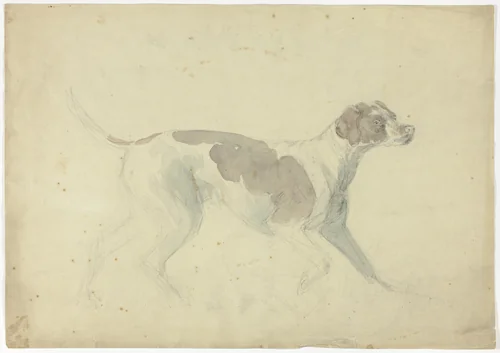
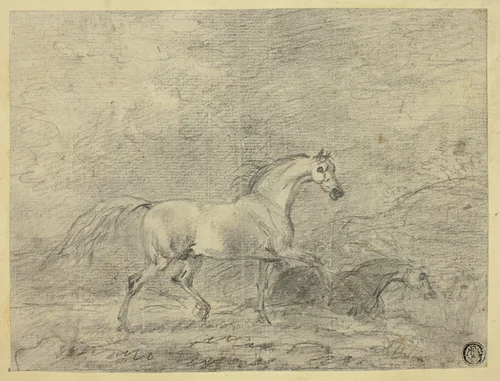
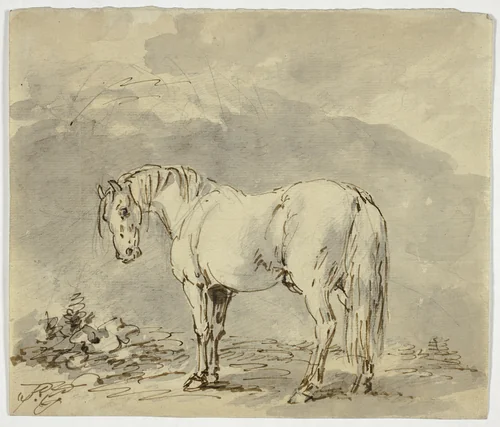
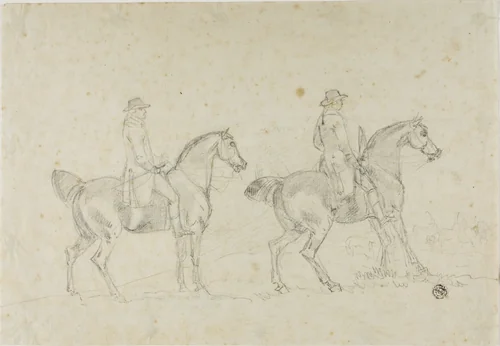
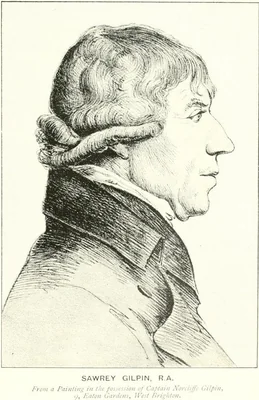
Sawrey Gilpin (1733-1775) stands among the most accomplished English animal painters, illustrators, and etchers of the mid-eighteenth century. Recognized for his precise anatomical skill and dynamic compositions, he specialized overwhelmingly in the depiction of horses and dogs, establishing a distinct and respected niche within British sporting and genre painting. His achievement was formally acknowledged with his selection as a Royal Academician.
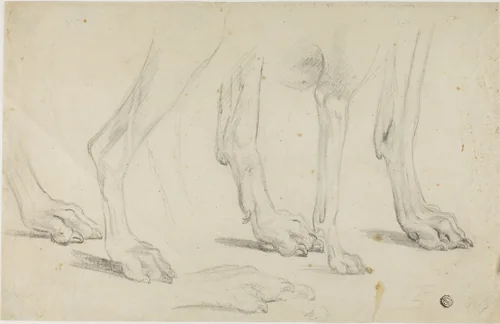
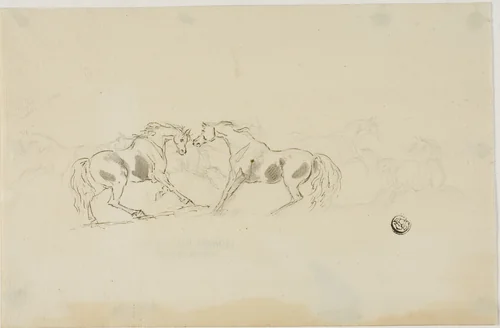
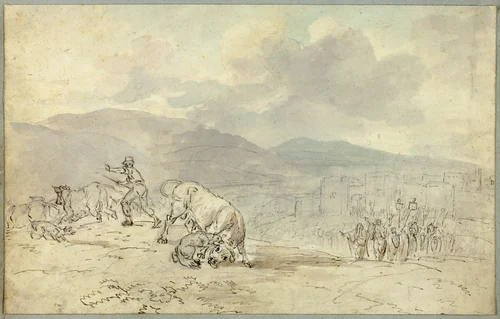
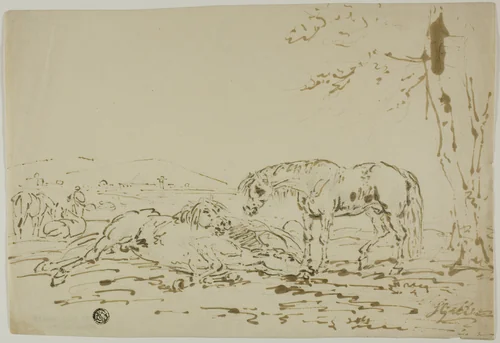
Gilpin worked across multiple media, displaying a profound observational capacity that elevated his subjects beyond mere decorative portraiture. While the surviving output of Sawrey Gilpin paintings is relatively small, his extensive body of preparatory studies and drawings, such as the focused study Dog Paws and the complex anatomical interaction shown in Horses Fighting, reveal the depth of his process. His approach synthesized meticulous, almost scientific observation with a compelling vitality, seeking to capture the inherent spirit and musculature of his subjects in motion.
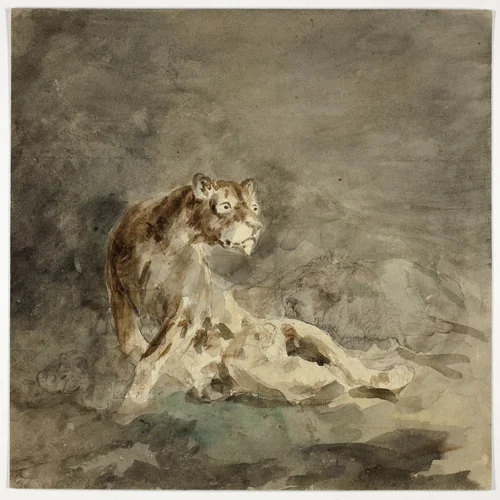
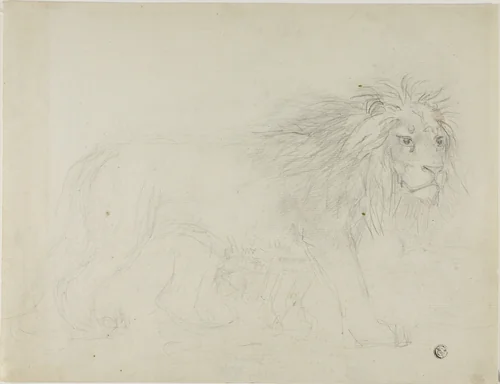
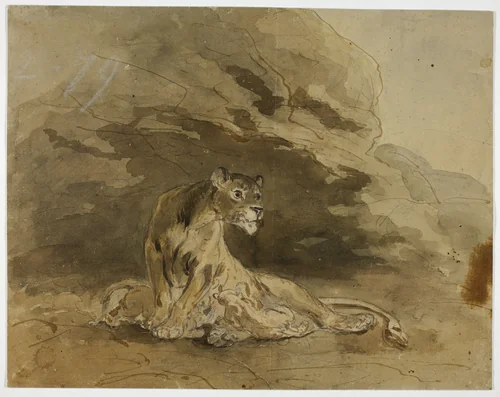
Although known primarily for domestic and sporting commissions, Gilpin also addressed the classical "noble beast" essential to the Enlightenment mindset. His works featuring predatory animals, notably Lion and the remarkably detailed Lioness with her Family, demonstrate an impressive command of exotic anatomy, often derived from sketches made at traveling menageries or anatomical studies of specimens imported to London. It is perhaps ironic that one of the era’s most prolific painters of magnificent horses is today often cited for the careful, almost vulnerable intimacy seen in his studies of a nursing lioness.
Gilpin’s legacy is preserved in major international collections, including the National Gallery of Art and the Art Institute of Chicago. His commitment to precise draftsmanship ensures the enduring appeal of his creations. Many original Sawrey Gilpin prints and drawings are now widely available as high-quality prints, ensuring that this important eighteenth-century master remains accessible to scholars and enthusiasts alike. The clarity and detail of his compositions make his downloadable artwork particularly valuable for comparative study.
Source: Wikipedia · CC BY-SA 4.0