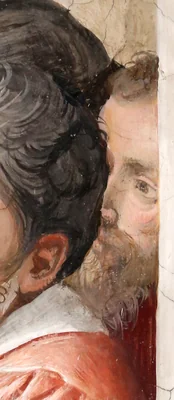
Santi di Tito
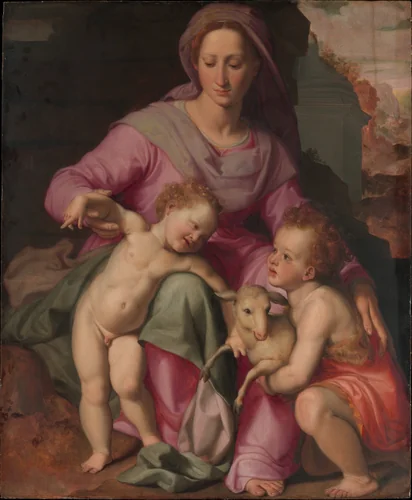
Santi di Tito stands as one of the most influential and essential Italian painters operating in the latter half of the sixteenth century. Active between 1570 and 1600, he was not merely a participant in the established style but a crucial figure in the emergence of the proto-Baroque aesthetic, spearheading what scholars precisely term Counter-Maniera or Counter-Mannerism. His importance lies in his calculated reaction to the excesses of the preceding generation.
This stylistic pivot represented a determined and successful shift away from the esoteric, highly intellectualized, and often emotionally strained compositions characteristic of late Mannerism. Instead, Di Tito championed a return to visual clarity, robust naturalism, and compositional legibility, a straightforward presentation that was deemed necessary for devotional art during the era of the Catholic Counter-Reformation. While many of his contemporaries favored stylized elongation and artifice, Di Tito sought authenticity, grounding his figures and narratives in anatomical rigor and spatial logic.
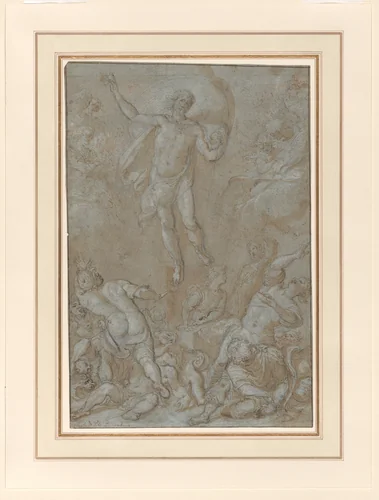
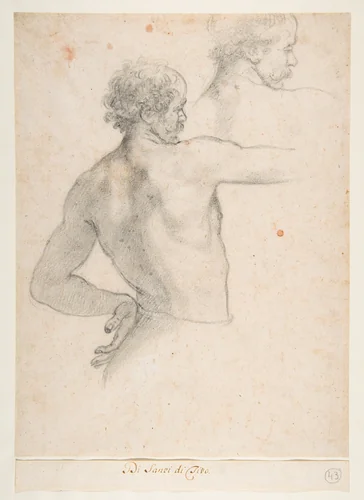
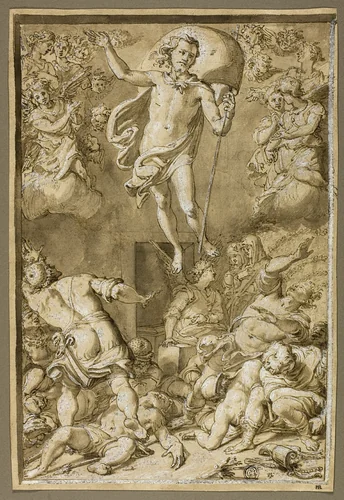
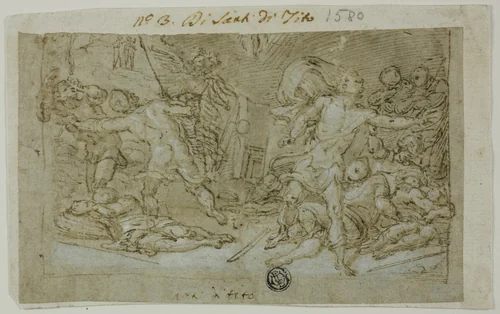
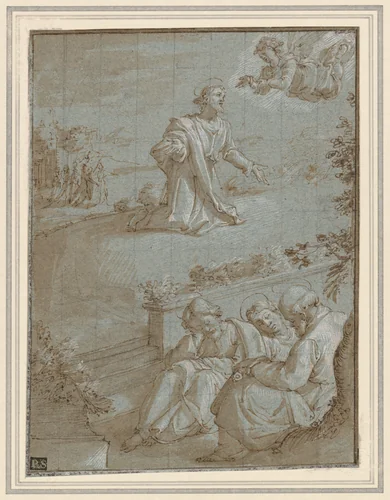
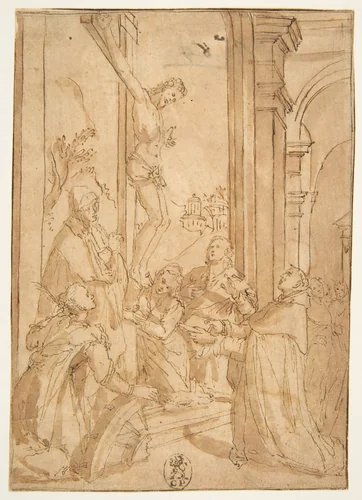
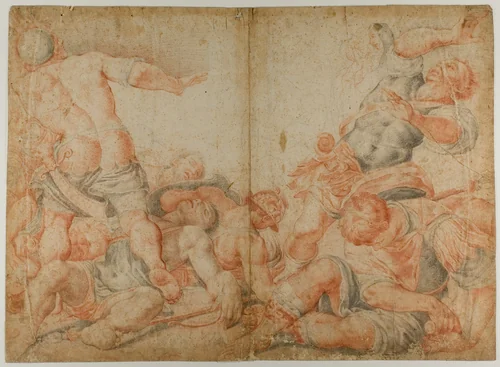
The rigorous approach Di Tito applied to his mature commissions is fully evident in his preparatory materials. His surviving output, which ranges from detailed figure studies to full-scale altarpieces, is held in major international institutions, affirming their museum-quality status; significant holdings are found in the Metropolitan Museum of Art, the Art Institute of Chicago, and the Cleveland Museum of Art. Detailed graphite and chalk sheets, such as Two Studies of a Man and concentrated drawings for monumental works like The Resurrection, reveal his emphasis on structural integrity and dynamic, yet controlled, human form. These surviving drawings provide profound insight into the construction of his signature Santi di Tito paintings.
Although immensely celebrated in his time for restoring clarity to Florentine visual culture, his measured authority often seems understated when compared against the intense, emotional dynamism of the fully formed Baroque that immediately followed. Yet, it is precisely this characteristic calm that grants his work its lasting power and dignity. Today, a renewed appreciation for his foundational role means that many works of the period are becoming more broadly accessible. Historical imagery, sometimes derived from original drawings, is entering the public domain, allowing institutions and enthusiasts to access high-quality prints and downloadable artwork derived from his foundational artistic innovations.
Source: Wikipedia · CC BY-SA 4.0