Sano di Pietro
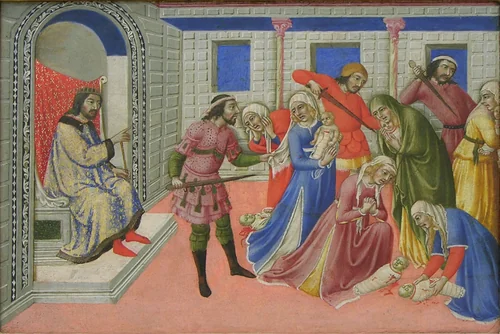
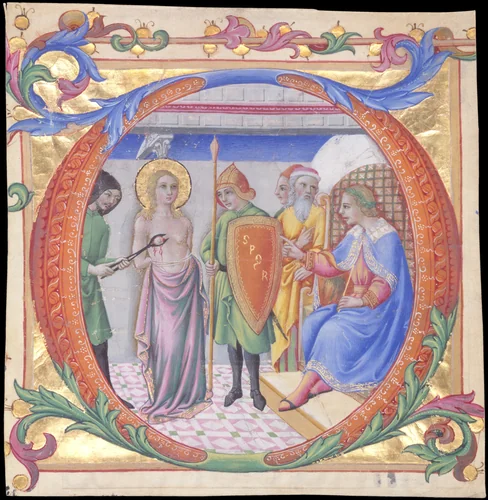
Sano di Pietro, formally Ansano di Pietro di Mencio (1405-1481), remains a defining figure of the Sienese School during the crucial transition of the Quattrocento. Active for nearly half a century, Sano’s longevity and prolific output provided essential stylistic continuity in Siena, maintaining the region's distinct artistic identity even as the Florentine Renaissance transformed visual culture elsewhere in Italy. His extensive career overlapped significantly with contemporaries such as Sassetta and Giovanni di Paolo, yet Sano cultivated a remarkably consistent and immediately recognizable pictorial language.
Sano’s aesthetic is characterized by an unwavering dedication to the spiritual intensity and decorative grace inherited from earlier Sienese masters. While he occasionally incorporated modest concessions to early Renaissance developments, his art consciously prioritized luminous color, expressive linear detail, and gold backgrounds over strict classical naturalism or rigorous perspective. This style made his Sano di Pietro paintings highly successful, particularly for large-scale devotional pieces and smaller, private commission works. Examples such as the complex altarpiece Madonna and Child with Saints John the Baptist, Jerome, Peter Martyr, and Bernardino and Four Angels demonstrate his mastery in weaving multiple devotional narratives into a cohesive, prayerful whole.
A crucial element of Sano’s historical impact was the sheer productivity of his workshop. He successfully managed the demands of a prosperous and deeply conservative clientele, balancing aesthetic quality with the need for near-industrial consistency across major commissions and smaller narrative panels like Saint Anthony Distributing His Wealth to the Poor and Saint Anthony Leaving His Monastery. This efficiency solidified his role as the indispensable visual chronicler of Sienese religious life.
Today, reliable attributions place about 15 core works by the artist in global institutions, including the Metropolitan Museum of Art, the National Gallery of Art, and the Art Institute of Chicago. The widespread accessibility of high-quality prints and royalty-free images ensures that the quiet elegance of Sano’s singular Sienese vision continues to inform studies of 15th-century Italian devotional art.
Source: Wikipedia · CC BY-SA 4.0