Samuel W. Ford
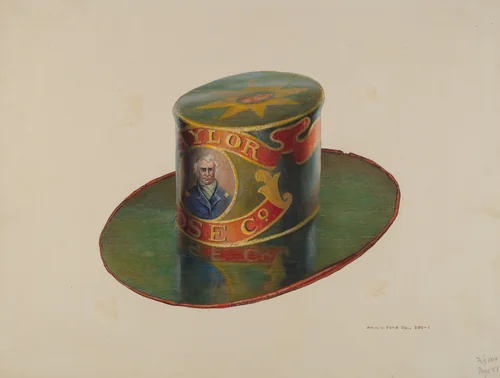
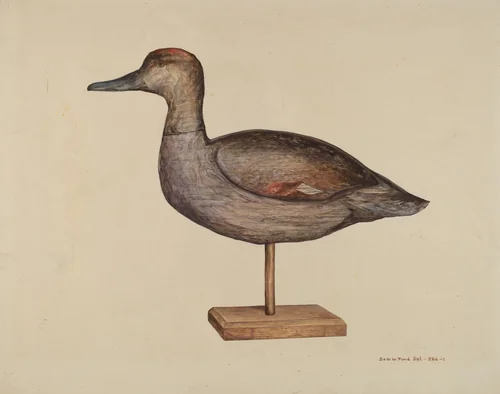
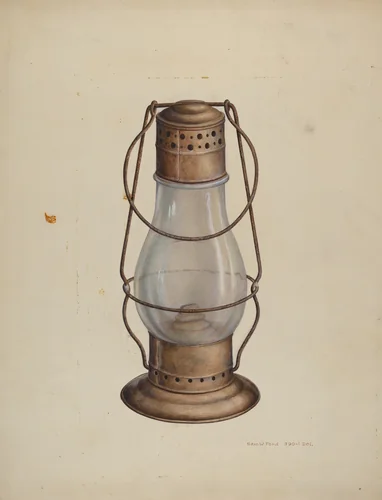
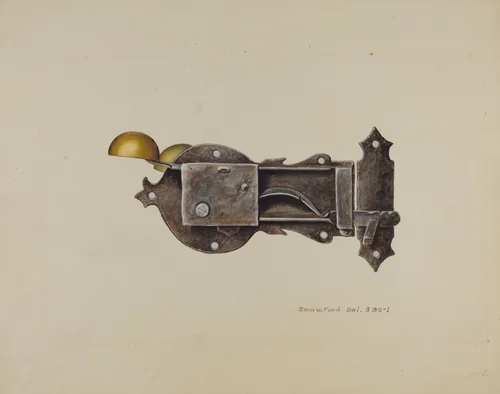
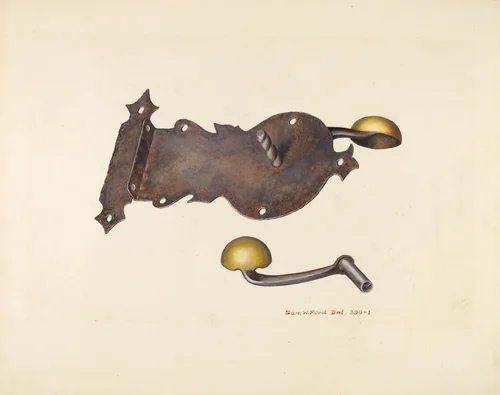
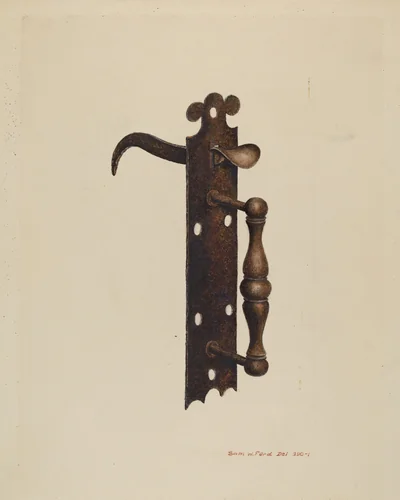
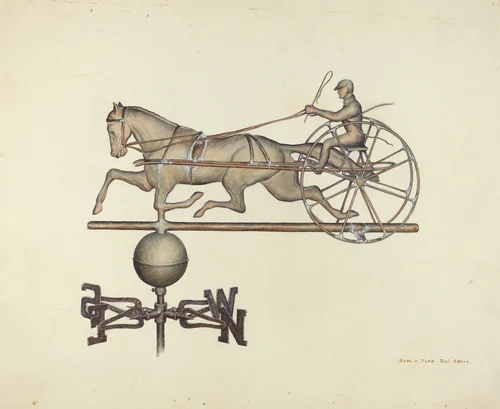
Samuel W. Ford was an artist active during a concentrated period in the late 1930s, documented as working between 1935 and 1939. Ford’s output is uniquely defined by its association with the Index of American Design, a large-scale initiative dedicated to creating precise, detailed renderings of American decorative arts, folk objects, and historical design items.
Ford’s contribution to the Index focused strictly on documenting historical utilitarian objects and antique furniture, prioritizing meticulous technical execution over aesthetic interpretation. Fifteen works attributed to Samuel W. Ford are represented in major museum collections, affirming the significance of these historical documents. Notable examples include studies of everyday household items, such as the Apple Peeler and Pitcher, alongside broader cultural documentation like the Conestoga Wagon Bells. Ford also created detailed studies of period furniture, exemplified by the Pennsylvania Ladder Back Chair and the Samuel Chase Chair.
The body of work created by Samuel W. Ford is held in institutional archives, establishing their legacy as technical draftsmen. The primary repository for this documentation is the National Gallery of Art. Due to the historical nature of the Index of American Design, many of these high-quality prints are considered public domain, making Ford’s detailed drawings and downloadable artwork widely accessible for educational and scholarly reference today.
Source: Wikipedia · CC BY-SA 4.0