Samuel Reynolds
Samuel William Reynolds (1773–1835) holds a significant, if often understated, position in the history of British Romantic-era art, primarily as a master engraver whose work disseminated the visual culture of the Regency period. Active from the 1790s through the late 1820s, Reynolds established a powerful dual career, producing a small but concentrated body of original paintings while devoting the majority of his formidable technical skill to reproductive printmaking. This practice allowed the portraits and genre scenes of his contemporaries to reach a far wider audience, a crucial function in the transition toward modern art distribution.
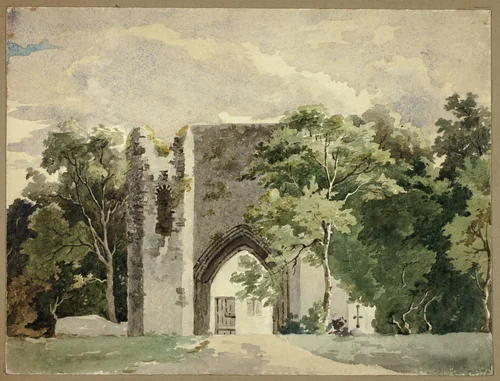
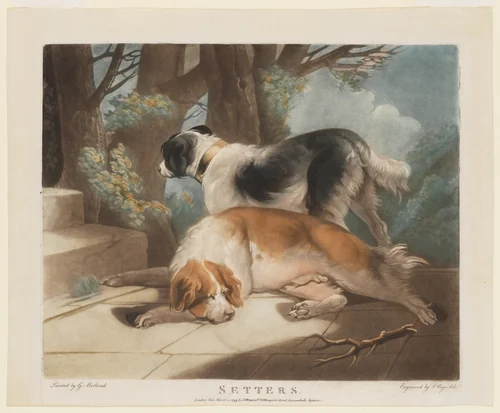
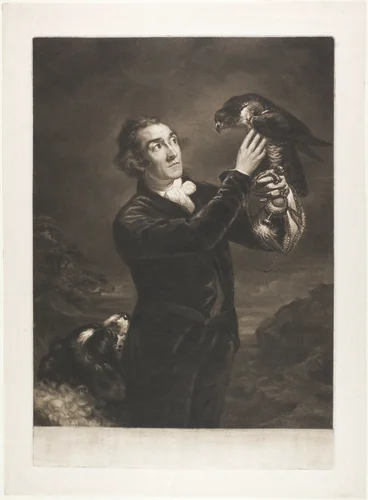
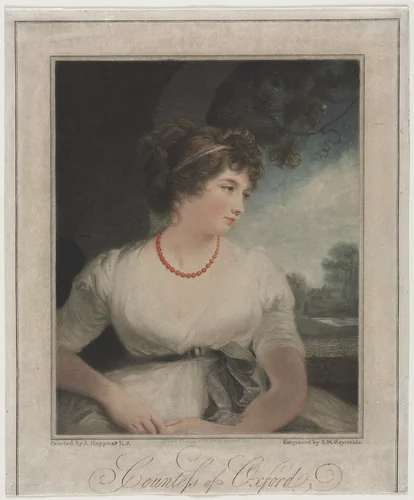
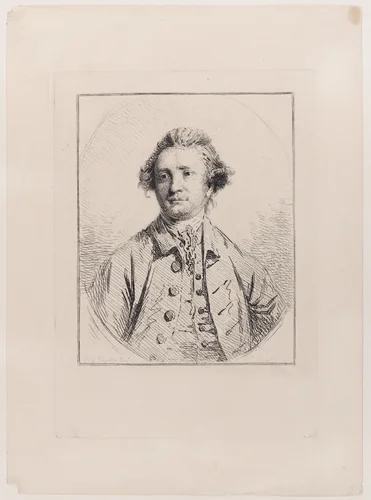
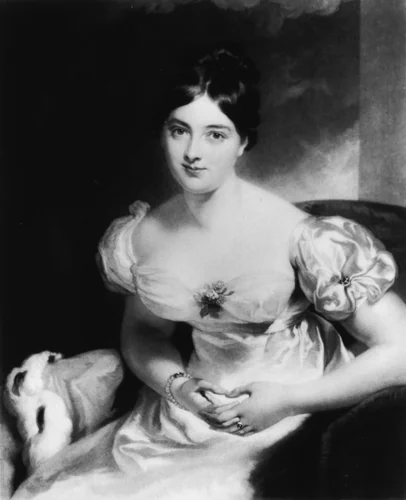
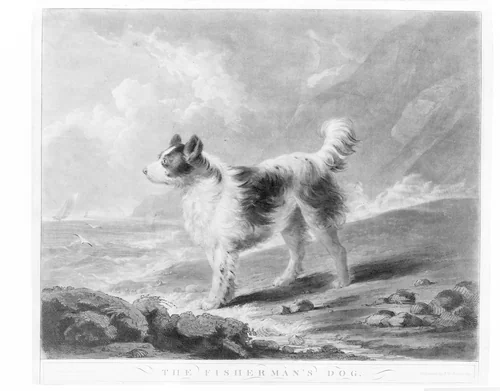
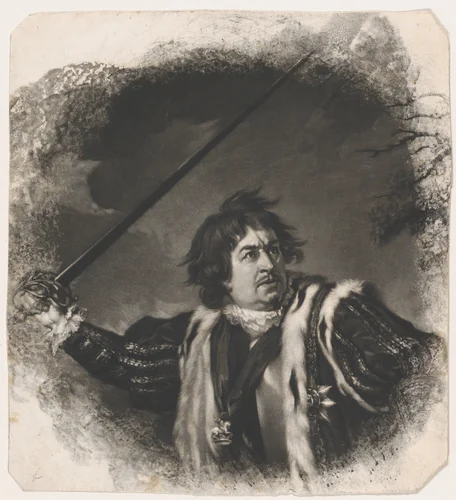
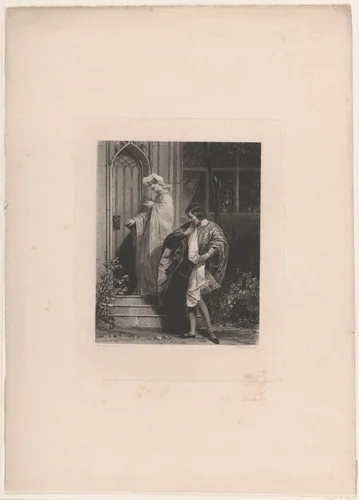
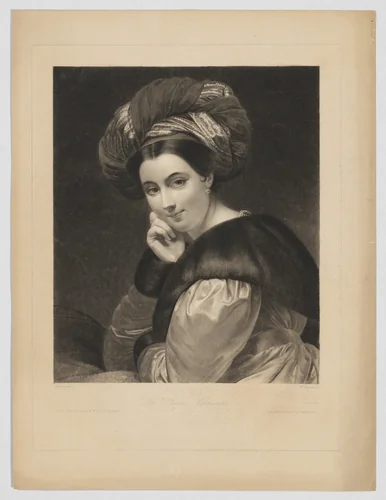
Reynolds specialized in mezzotint, a notoriously exacting and subtle form of engraving celebrated for its ability to capture the tonal nuances and rich shadow essential to early nineteenth-century aesthetics. His capacity for rendering texture and mood is evident across his varied oeuvre, which encompassed meticulous studies of architectural decay, such as Abbey Ruin, sensitive genre scenes like Setters and The Falconer, and stately portraiture, including his depiction of The Countess of Oxford. A notable achievement in this medium is the compelling likeness of Lieutenant Colonel Alexander Dow, which exemplifies Reynolds’s expertise in translating the gravity and detail of oil paint into monochrome print.
While only a single original painting is currently tracked in major databases compared to nine documented prints, this disparity speaks less to a lack of talent and more to Reynolds’s profound dedication to the craft of reproduction itself. Indeed, his sheer proficiency elevated the role of the engraver from mere copyist to interpretive collaborator. Reynolds understood that the mezzotint plate was the most powerful vector for circulating the visual ideas of his time.
Today, the enduring quality of his work ensures its preservation within major international institutions, including the Art Institute of Chicago, the Metropolitan Museum of Art, and the Cleveland Museum of Art. His historical importance is confirmed not just by these museum-quality holdings, but by the availability of his prolific output; many of his finest plates are now available as downloadable artwork through public domain collections, ensuring that these high-quality prints continue to instruct and engage new generations of art enthusiasts.