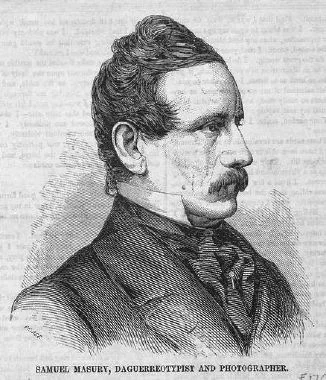
Samuel Masury
Samuel Masury occupies a significant position in the transitional history of American photography, operating during the mid-19th century shift from unique-image daguerreotypes to replicable negative-positive processes. A dedicated practitioner working in Boston, Massachusetts, Masury’s training roots reached back to the pioneering studios of the era, notably under John Plumbe around 1842.
Masury initiated his career in partnership, operating as "Masury & Silsbee" with G.M. Silsbee between 1853 and 1855. Their established daguerreotype studio on Washington Street placed them squarely within Boston’s burgeoning commercial photography scene. However, Masury demonstrated a technological restlessness that defined his ambition. Recognizing the superior quality and economic potential of new European methods, he traveled to Paris in 1855 specifically to master the glass negative process. This technique, learned directly from the internationally celebrated landscape and architectural photographers, the Bisson brothers, provided Masury with a crucial technical advantage upon his return.
By 1858, Masury was running his own independent studio back on Washington Street, utilizing the innovative wet-plate technology to create sharper, more durable images. His works, which included both commercial portraits and striking documentary landscapes such as Landscape, Pride’s Crossing, were deemed notable enough to be presented in the 1860 exhibition of the Massachusetts Charitable Mechanic Association. This commitment to technical excellence and public presentation solidified his reputation.
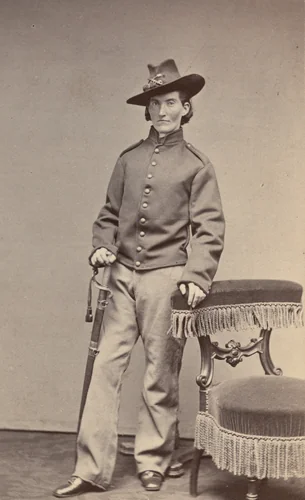
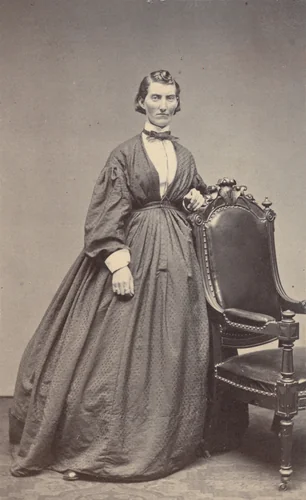
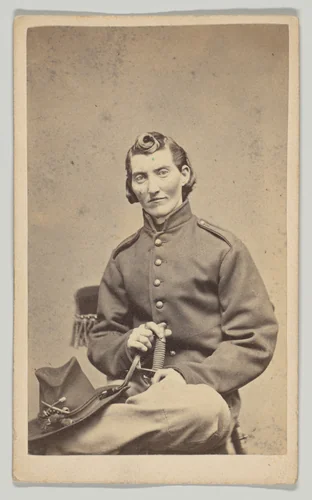
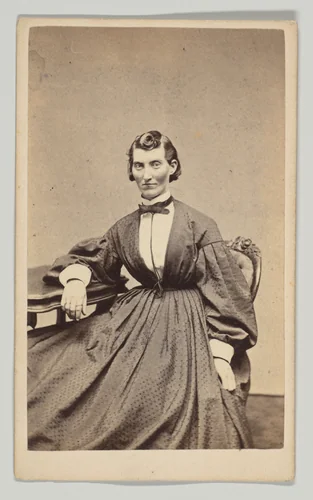
Masury is perhaps best known today for his portraits of significant historical figures, notably the series of photographs featuring Frances Clayton, the famous cross-dressing soldier who served in the Union Army during the Civil War. Masury captured multiple high-quality prints of Clayton, whose images remain key documents of gender and military history. Given the age of his known output, much of Masury’s essential photographic documentation, including images of Frances Clayton, are now in the public domain, allowing institutions and researchers access to these museum-quality works. These images, held in permanent collections including the Metropolitan Museum of Art and the National Gallery of Art, confirm Samuel Masury's lasting, if concise, impact on 19th-century American visual culture.
Source: Wikipedia · CC BY-SA 4.0
![[Landscape, Pride's Crossing] by Samuel Masury, photograph, 1854-1858](https://img.artbee.org/1f901966-2761-4066-be92-ac00be78e6ef/small.webp)