Samuel Joseph Brown, Jr.
Samuel Joseph Brown, Jr. (1907-1994) holds a crucial, pioneering position within 20th-century American arts history. A distinguished printmaker, watercolorist, and educator, his career bridged major shifts in federal arts patronage, placing him directly within the pivotal social and artistic movements of the Great Depression era. His historical significance is cemented by his selection as the first African-American artist hired to produce work for the Public Works of Art Project (PWAP), a foundational federal program that preceded the larger Works Progress Administration's Federal Art Project. This early appointment established Brown at the forefront of the movement using government sponsorship to document the diverse realities of the American experience.
Working primarily in watercolor and oils, Brown developed a sensitive yet direct approach to portraiture and landscape. His body of work consistently focused on depicting the everyday lives of African Americans, capturing moments of labor, community, and quiet dignity, often situated within the urban environment of his native Philadelphia. Although he produced numerous portraits and landscapes, his focused contributions as a printmaker and draftsman, particularly during his most documented period of 1935-1936, offer a striking view into his focused draftsmanship and narrative skill.
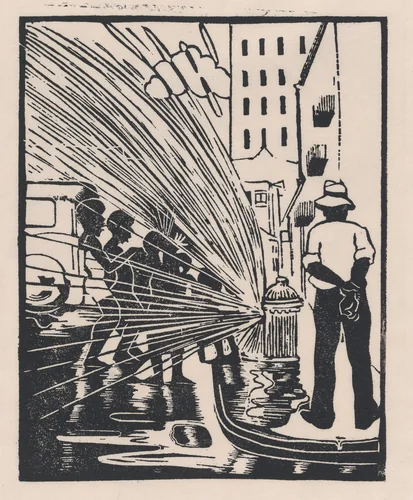
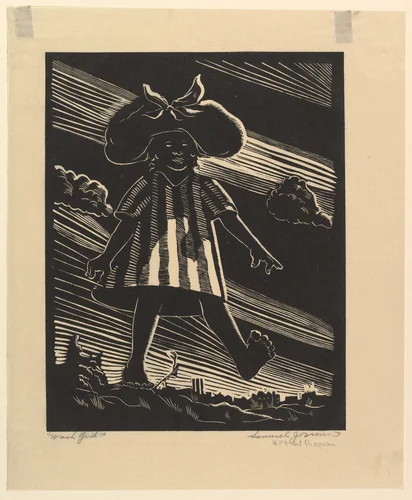
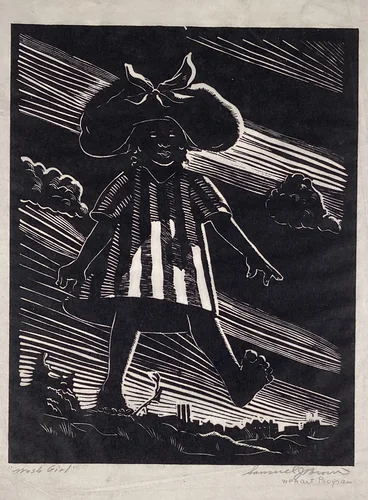
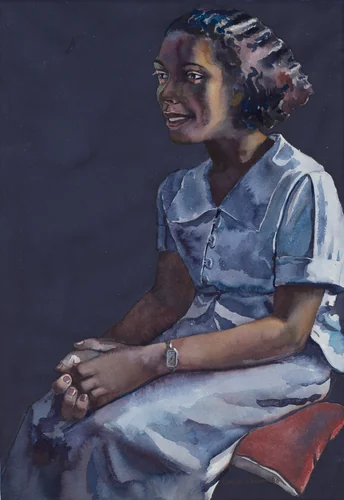
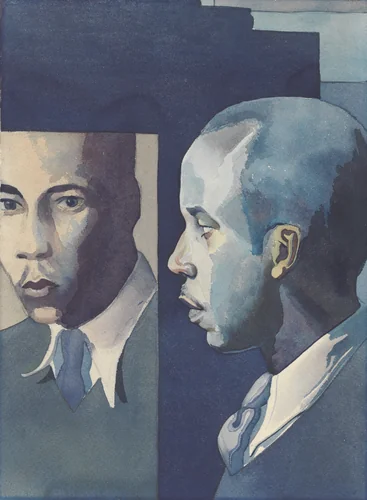
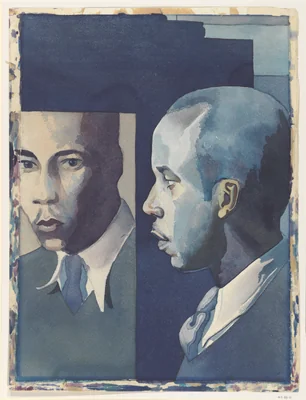
His etchings, such as Fireplug and the powerful depiction of domestic labor in Wash Girl, showcase a commitment to clarity and emotional resonance. The few surviving drawings, including Girl in Blue Dress and the insightful Self-Portrait, highlight his capacity to capture individual character rapidly and economically. An interesting observation emerges when reviewing the archival documentation of his federal submissions: while many artists submitted sweeping murals or grand landscapes to the PWAP, Brown focused intently on scenes of localized, domestic urban life, demonstrating a sophisticated awareness that the modern American story resided in minute detail rather than epic scope.
Brown’s work is held in major institutional collections, including the Metropolitan Museum of Art, ensuring his legacy as both an artistic pioneer and an essential documentarian of the 1930s. Although his period of print production was relatively brief, the surviving examples of Samuel Joseph Brown, Jr. prints are celebrated for their sharp social observation and technical skill. Today, reproductions of his work are often sought after as museum-quality examples of Depression-era federal art, and select pieces, available as high-quality prints, occasionally enter the public domain, making his vital contributions accessible globally.
Source: Wikipedia · CC BY-SA 4.0