Samuel Ireland
Samuel Ireland was a productive English author and engraver whose graphical output defined a niche within the artistic and literary circles of the late Georgian period, roughly spanning 1775 to 1795. Though often historically overshadowed by the later biographical complications involving his son, his work remains a significant index of 18th-century visual culture. His technical skill as an illustrator and printmaker allowed him to translate architectural views and portraiture into widely distributed media. Today, examples of Samuel Ireland prints and drawings are held in prestigious international institutions, including the Art Institute of Chicago and the Metropolitan Museum of Art.
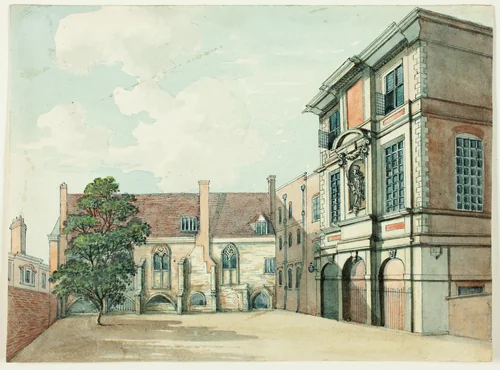
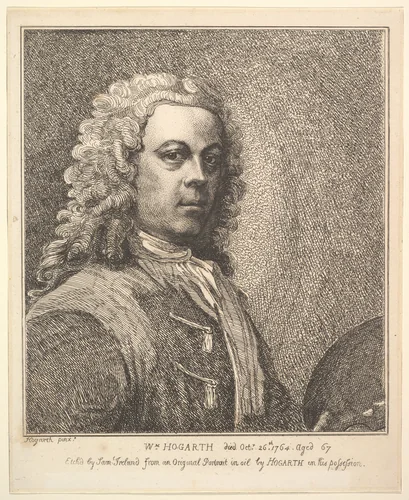
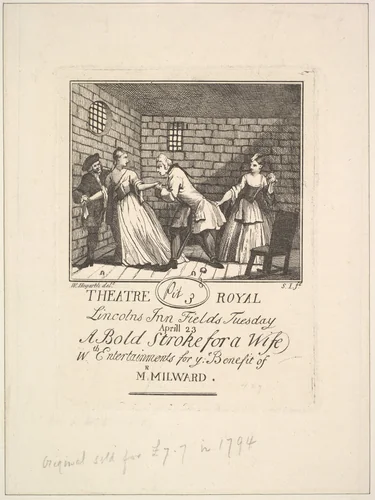
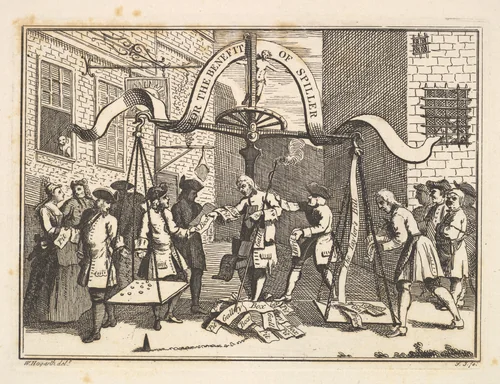
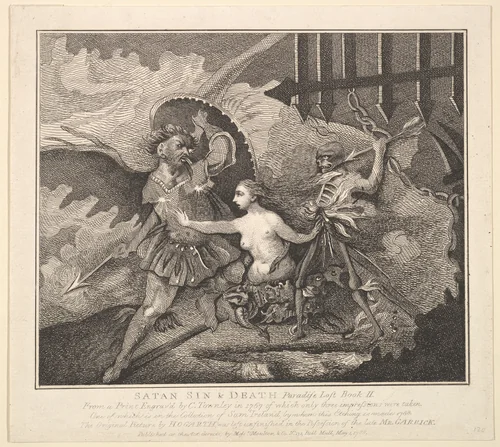
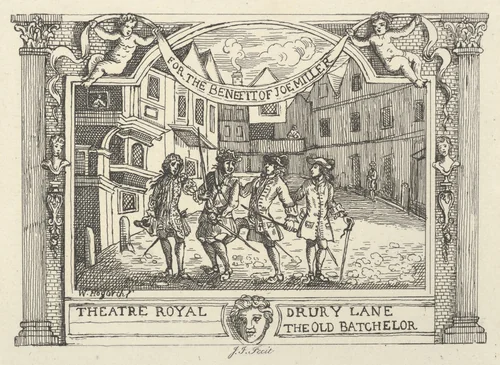
Ireland’s artistic practice largely focused on reproductive engraving, a process critical for disseminating famous imagery and documenting the changing face of London architecture. His known repertoire includes commissioned ephemera, such as the period-specific Benefit Ticket for Milward and the equally fine Benefit Ticket for Spiller, which offer concise insights into the vibrant theatre scene of the time. Perhaps his most enduring graphic works are the documentary architectural renderings, such as Remains of the Old Priory and Mathematical School, Christ’s Hospital, and his important copies of established masters like William Hogarth, specifically the meticulously executed engraved version of the William Hogarth, Self Portrait. He also undertook literary illustration, evidenced by the dramatic composition Satan, Sin and Death (Paradise Lost, Book II). Records indicate he produced at least nine prints and one notable Samuel Ireland painting during his active period.
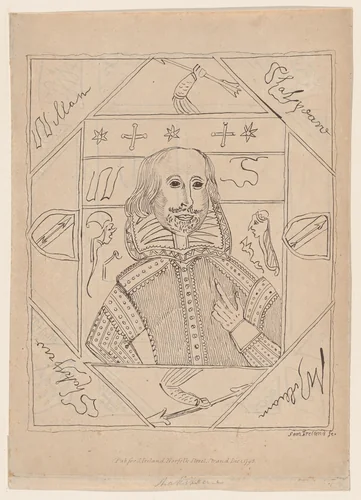
Ireland’s legacy is uniquely tied to his dual roles as creator and enthusiastic collector. His relentless pursuit of archival material, particularly his keen interest in Shakespearean artifacts and literary history, ultimately created the very environment exploited in one of the era’s most sensational literary frauds. Samuel Ireland is, perhaps, best known not for his considerable output as an engraver, but as the principal victim of the notorious Shakespeare forgeries executed by his son, William Henry Ireland. It is a unique historical irony that the dedication required to produce high-quality prints and authoritative works could be so devastatingly exploited by the next generation.
Active for two decades spanning the close of the 18th century, Ireland successfully captured the transitional character of late Georgian England. His technical precision ensured his works’ survival, and many of these historical records are now classified as public domain resources. For modern researchers and enthusiasts, these historically valuable images are often available as downloadable artwork, ensuring that the visual legacy of this complex figure remains accessible worldwide.
Source: Wikipedia · CC BY-SA 4.0