Samuel Howitt
Samuel Howitt (1756/57–1822) holds a significant, if often understated, position among late Georgian British sporting artists. Primarily known as a painter, etcher, and prolific illustrator, Howitt specialized in capturing the dynamic pursuits of the era: hunting, horse-racing, and detailed depictions of the natural world. Working across both traditional oils and the increasingly popular medium of watercolor, he provided visual documentation crucial to the study of early modern equestrian and animal husbandry practices. His active period, spanning roughly 1765 to 1807, placed him centrally during the rise of the illustrated sporting periodical, solidifying his role not just as a fine artist, but as a compelling chronicler of the gentry’s leisure.
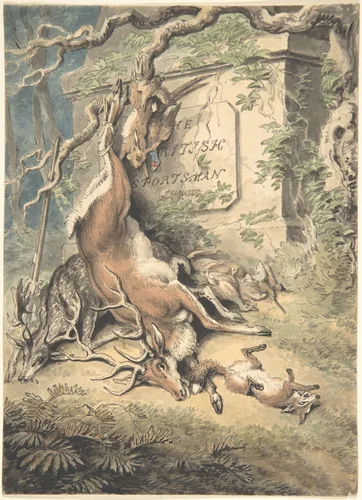
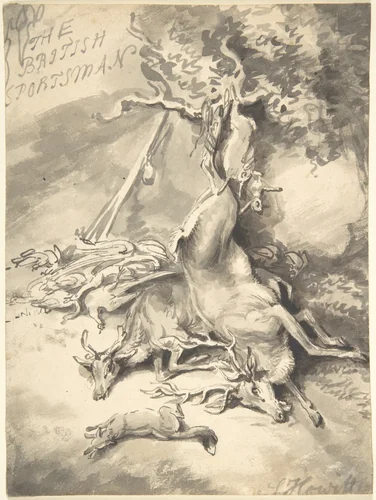
Howitt’s true impact often rests on his prolific output of etchings and drawings. While his larger Samuel Howitt paintings are respected, it is the accessibility and immediacy of graphic works like Design for the Frontispiece of "The British Sportsman" that defined his influence. His facility with line made him an ideal illustrator, capable of rendering complex subjects, such as anatomical details in livestock or the tension of a chase, with economy and vigor. His versatility is apparent in the range of his subjects, from the monumental scale of the hunt to intimate studies of farm animals.
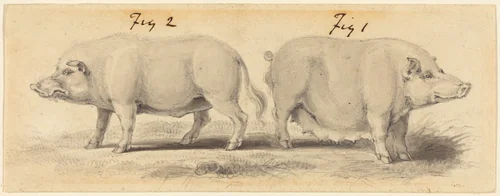
A particularly engaging element of his production is the subtle sense of personality he imparts to his subjects; pieces such as Two Chinese Pigs reveal an artist less interested in mere scientific observation than in conveying the specific attitude of the creature. His work, which includes high-quality prints and drawings now held in major institutions like the Metropolitan Museum of Art and the National Gallery of Art, demonstrates a consistent museum-quality standard in draughtsmanship.
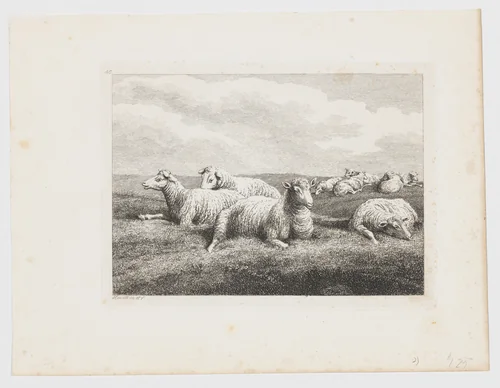
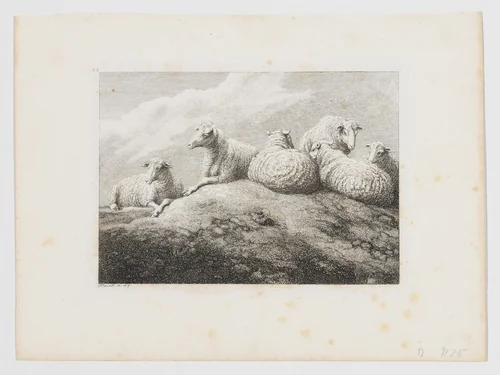
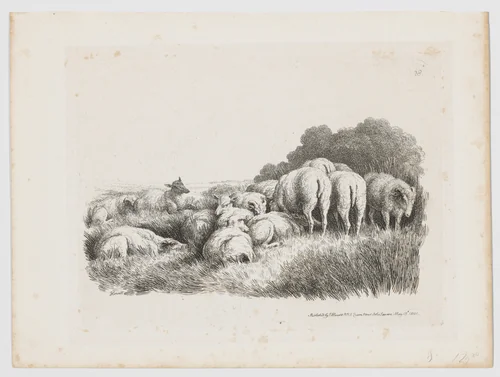
Howitt’s ability to transition seamlessly between large-scale scenes and focused studies of individual animals, such as his studies simply titled Sheep and Three Sheep, speaks to his commercial acumen and skill. His etchings proved particularly successful for mass reproduction, providing early collectors with accessible examples of contemporary British art. Today, thanks to the widespread availability of his graphic work, many of these images have entered the public domain. Scholars, collectors, and enthusiasts can access downloadable artwork and study his definitive documentation of 18th-century fauna.
Source: Wikipedia · CC BY-SA 4.0