Samuel Hieronymus Grimm
Samuel Hieronymus Grimm established a distinguished, if perhaps understated, career as a leading 18th-century Swiss landscape artist. Active from 1700 through 1772, Grimm specialized in capturing the evolving topographical and rural environments of Europe, working primarily in refined watercolours, oils, and precise pen and ink media. His consistent output and technical mastery have ensured his placement within major international collections, including the National Gallery of Art, the Metropolitan Museum of Art, and the Art Institute of Chicago.
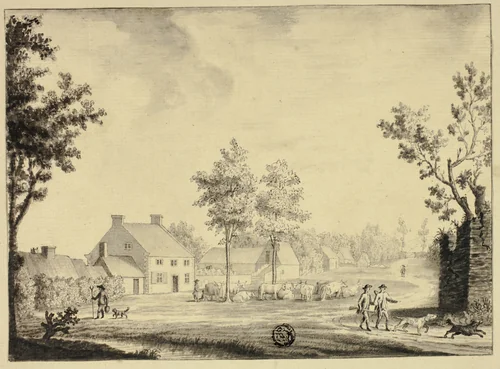
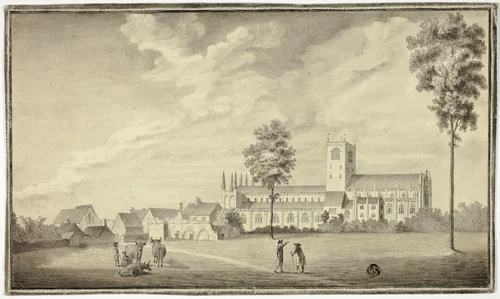
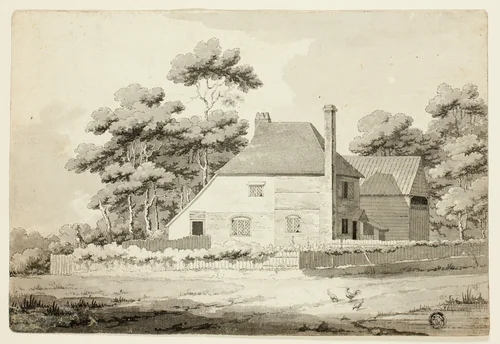
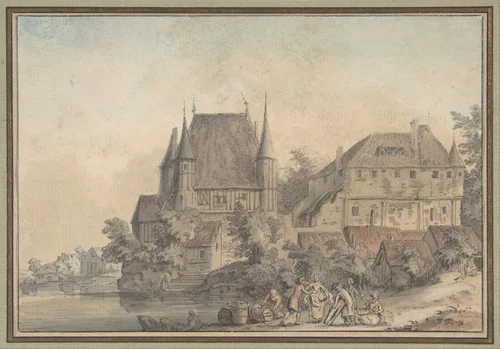
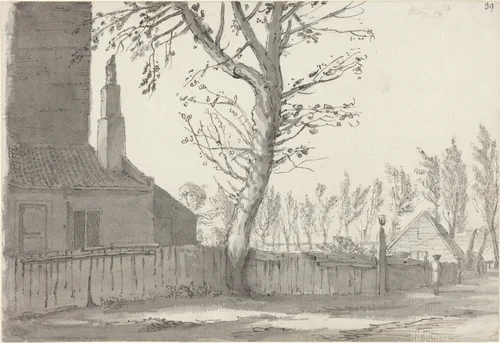
Grimm's output spans both rigorous architectural study and atmospheric landscape depiction. He excelled at rendering structural details and the delicate interplay of light and shadow on stone, evident in works such as Old Abbey Church and the grounded realism of English Farmhouse. Yet, his commitment was not solely to architecture; he equally documented daily rural life. His compositions frequently balanced detailed observation of human activity against vast natural settings, as seen in Hunters and Herd of Cattle Outside Country Estate and the sweeping panorama, View of a Village alongside a River.
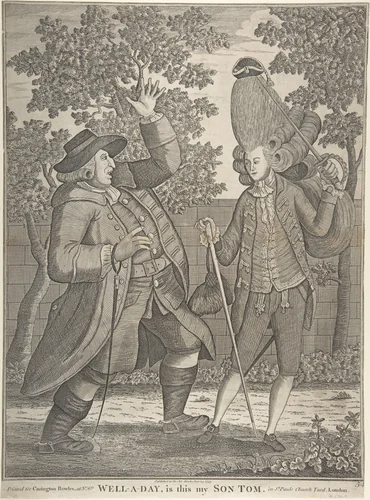
The 18th century saw increasing demand for visual documentation of natural and historical sites, a role Grimm fulfilled with diligence. His technical finesse with pen and wash allowed him to capture detail with immediacy, making his works invaluable historical documents as well as artistic achievements. It is this dual function that gives his work lasting appeal, demonstrating the capacity of the landscape genre to house precise draughtsmanship alongside visual poetry. Occasionally, Grimm demonstrated a charming departure into narrative humor, as hinted by the uniquely titled drawing, Well-a-day, Is this my Son Tom, a lighthearted inclusion that underscores his subtle personality.
Today, Grimm’s legacy endures through the accessibility of his drawings and prints. Because much of his historical work is now within the public domain, certain high-quality prints and studies of Samuel Hieronymus Grimm paintings are available globally, enabling scholars and enthusiasts to access and study his detailed topographical contributions. This widespread availability ensures his meticulous documentation of the Georgian landscape continues to educate and inspire, reinforcing his status as a key observer of 18th-century life and scenery.
Source: Wikipedia · CC BY-SA 4.0