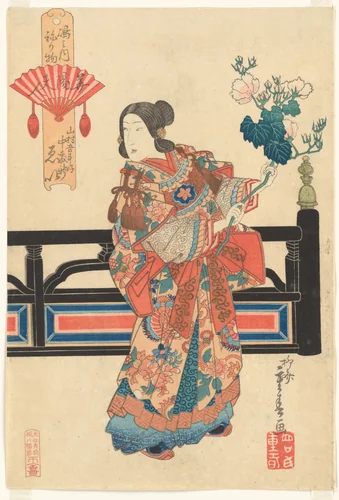
Ryūsai Shigeharu (柳斎重春)
Ryūsai Shigeharu (柳斎重春) was a Japanese print artist active during the Bunsei and Tenpō periods of the Edo era, with a documented working span between 1820 and 1836. His known output focuses on ukiyo-e woodblock prints, specifically chronicling the world of kabuki theatre and the contemporary urban landscape.
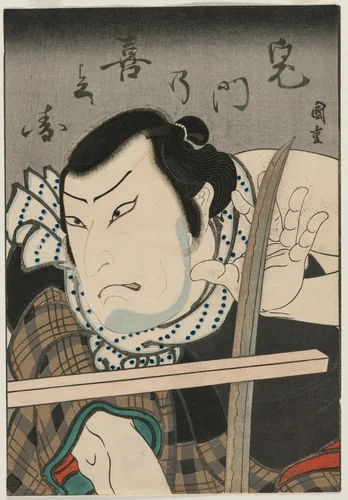
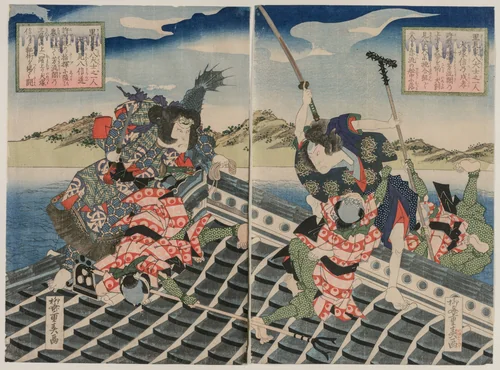
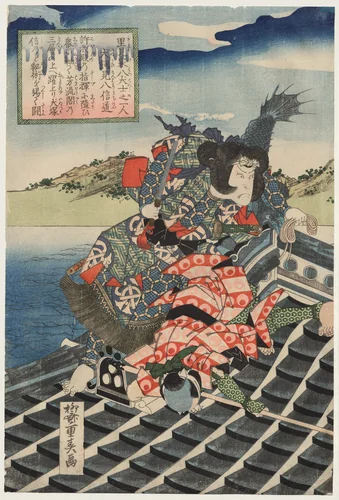
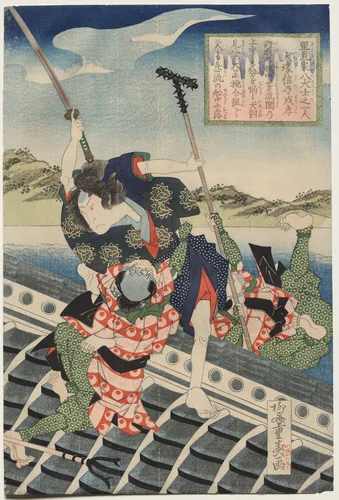
The thematic focus of Ryūsai Shigeharu’s surviving work is dominated by dramatic actor portraits and scenes from popular narratives. This is exemplified by the three known representations of the action scene Arashi Rikan II as Inuzuka Shino Moritaka and Nakamura Utaemon III as Inukai Kenpachi Michinobu Battling, part of the series The Eight Heroes of the Satomi Clan. Other subjects include individual actor representations, such as the print Actor as Kimon no Kihei, and depictions related to the pleasure districts, including the work “Ei of the Nakamoriken Brothel, who was a favorite of Yamamura Goto, as Lady Huayang (Kayō Fujin Yamamura Goto gonomi Nakamoriken Ei),” from the series Costume Parade of the Shimanouchi District in Osaka.
A small but significant body of Ryūsai Shigeharu (柳斎重春) prints is preserved in major American institutions. Five prints by the artist are currently represented in museum collections, establishing the historical importance of his output. These museum-quality works are held by institutions including the Metropolitan Museum of Art and the Cleveland Museum of Art. Today, many historical Ryūsai Shigeharu (柳斎重春) prints are available as high-quality prints or downloadable artwork through public domain initiatives, ensuring broad access for continued research.