Ryuryukyo Shinsai
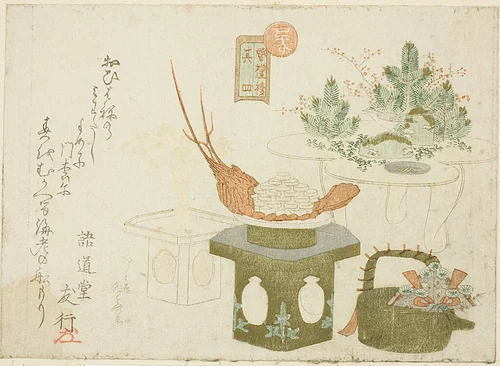
Ryūryūkyo Shinsai was a highly regarded Japanese ukiyo-e artist whose career spanned the late 18th and early 19th centuries, roughly flourishing between 1799 and 1823. He established his practice while studying under the direct tutelage of Katsushika Hokusai, one of the era’s most prolific and transformative masters. Unlike many of his contemporaries who focused on commercial theatre or figure prints, Shinsai specialized primarily in surimono, a highly refined genre of woodblock print developed specifically for private circulation and scholarly exchange.
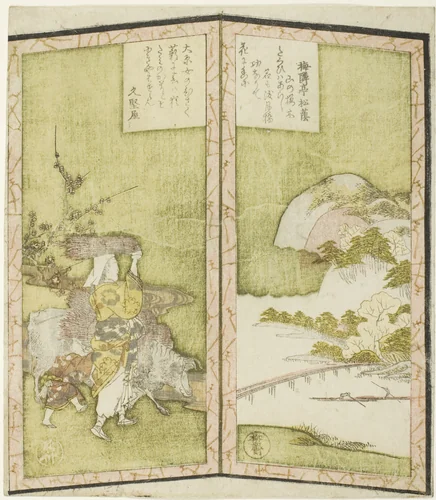
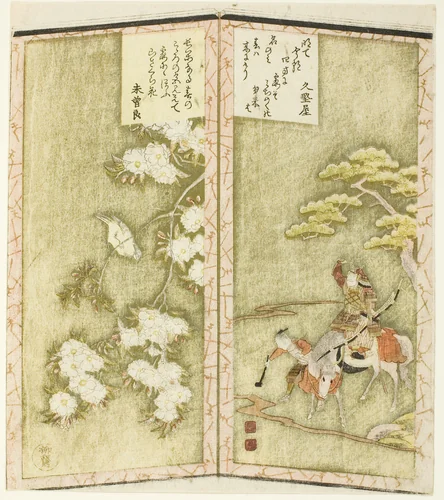
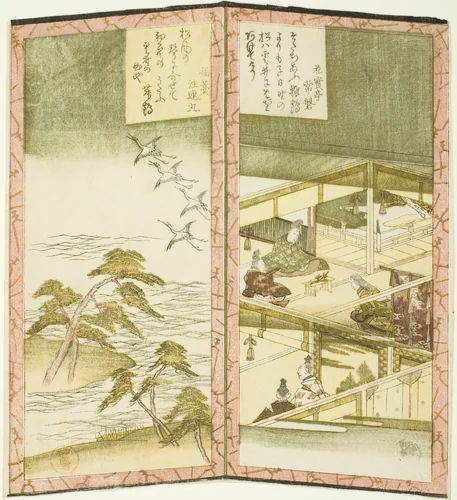
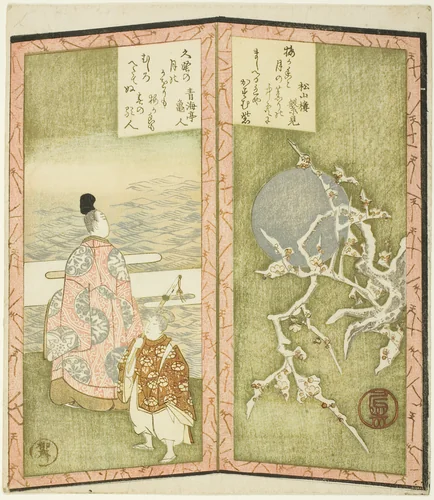
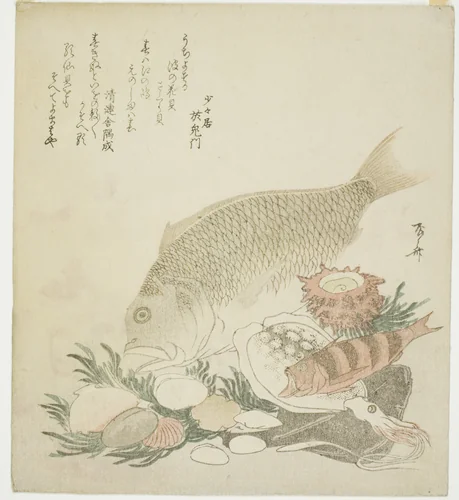
The surimono format, typically commissioned for poetry gatherings, New Year greetings, or commemorative events, demanded immense technical precision and sophistication, qualities that defined Shinsai's mature output. These works contrast sharply with the mass-produced commercial prints of the period, being characterized by highly controlled color registration, detailed texture through embossing (karazuri), and the expensive utilization of materials like metallic pigments. Shinsai’s work consistently demonstrates his mastery in capturing elegant still lifes and intimate domestic scenes.
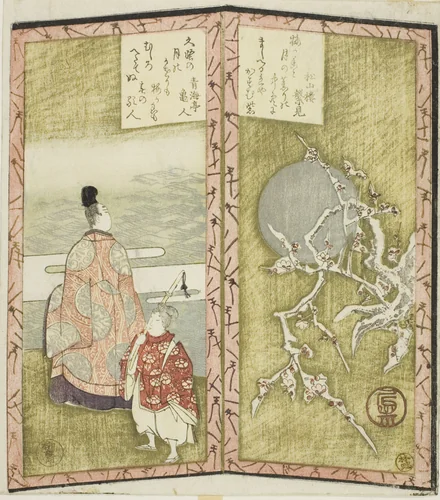
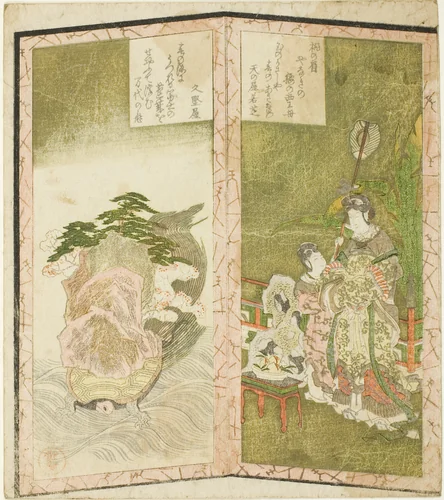
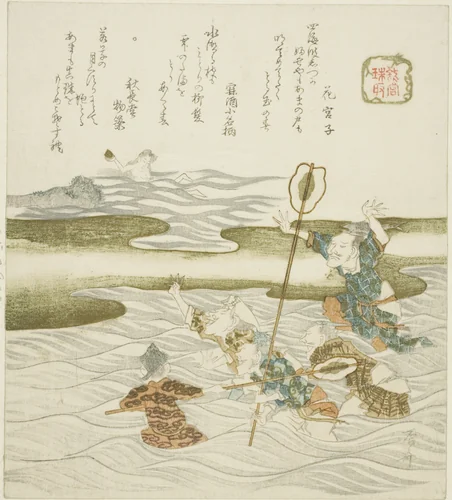
His subjects often focused on the meticulous arrangement of objects or subtle scholarly activities. Examples such as A Pair of Boxes, a Letter Box, and Plum Blossoms or the quiet genre scene Ladies Drinking Tea highlight his command over surface texture, ranging from highly polished lacquer to the soft, intricate folds of silk. His ability to render such detailed, observational moments places him firmly within the intellectual circle of high-ranking patrons who commissioned these specialized pieces, reflecting a cultivated taste for the beautiful minutiae of daily life. Even when contributing to formal landscape series, such as Mii Temple, from the series Eight Views of Omi (Omi hakkei), Shinsai maintains a compositional delicacy often associated with the still life.
While Ryuryukyo Shinsai paintings are exceptionally rare, his considerable body of work in the medium of print remains a standard for the surimono genre. Perhaps the most interesting aspect of his production is its intended transience: these museum-quality creations were originally meant not for broad public display, but as fleeting, intimate tokens exchanged among elite poetic clubs. Today, institutions such as the Art Institute of Chicago hold significant collections of his work. Through the digitization efforts of these museums, many Ryuryukyo Shinsai prints are now available in the public domain, allowing modern viewers access to these exquisite, detailed works as high-quality prints.
Source: Wikipedia · CC BY-SA 4.0