Ryōkan Taigu
Ryōkan Taigu (1758-1831) remains one of the most beloved and conceptually pure figures of the late Edo period in Japan. Active primarily between 1800 and 1816, he transcended the traditional role of a Sōtō Zen Buddhist monk to become a renowned poet and calligrapher whose work provides a direct, unmediated window into the practice and philosophy of Zen Buddhism. His aesthetic output established him as a crucial link between spiritual discipline and artistic expression, defining the unique character of late Japanese literati art.
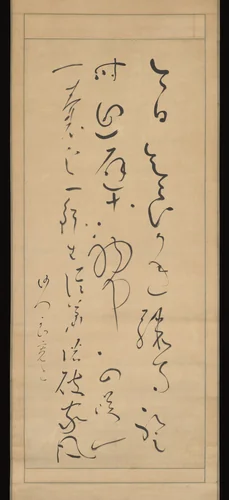
Ryōkan’s life choice as an unorthodox hermit defined his approach. Rejecting the formal structure of temple life, he sought absolute simplicity, often residing in small, secluded dwellings. This self-imposed austerity informed his brushwork. Unlike many contemporaries who favored refined, academic styles, Ryōkan’s calligraphy is celebrated for its radical spontaneity, naturalness, and a deceptive ease that only deep spiritual dedication can produce. His technique captures the dynamic, immediate quality of satori (enlightenment), where perfection emerges not through meticulous planning but through effortless presence.
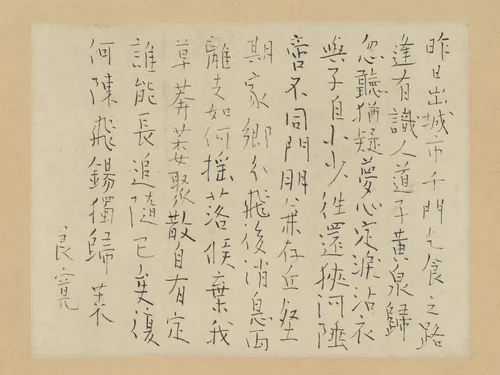
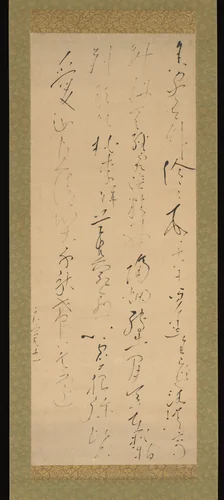
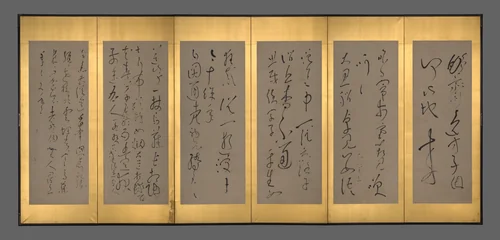
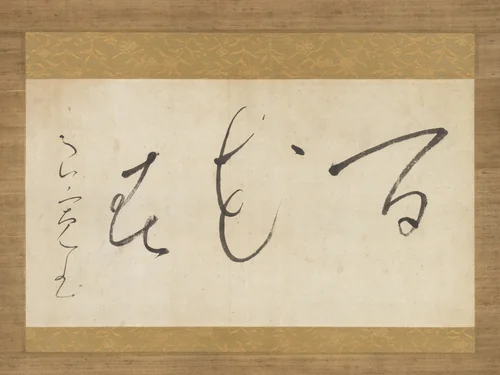
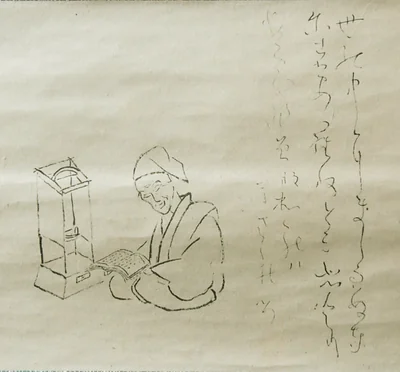
His extensive body of surviving works, which includes the deeply intimate Chinese Poem Lamenting the Death of a Friend and the expansive installation Screens with Chinese Poems, are not merely decorative elements but serve as visual manifestations of his philosophical commitment. While primarily known for his written works, pieces such as “One Hundred Flowers of Spring” and his singular extant painting, Sudden Rain, demonstrate this same unforced vitality and light-handed mastery across media. It is perhaps the greatest irony of his fame that this man, who spent his life avoiding society and status, is now perpetually housed in major international institutions, confirming the museum-quality status of his legacy.
Ryōkan’s dedication to a solitary existence, focused entirely on the essence of Zen, imbued his work with a unique moral authority that resonates centuries later. His legacy endures internationally; today, Ryōkan Taigu prints and original scrolls are highly sought after by collectors. Recognizing their significance, many of his creations have entered the public domain, making them available as downloadable artwork. This accessibility ensures that the purity of his technique and the quiet power of his poetry continue to inspire contemporary audiences through high-quality prints worldwide.
Source: Wikipedia · CC BY-SA 4.0