Rudolph Ackermann
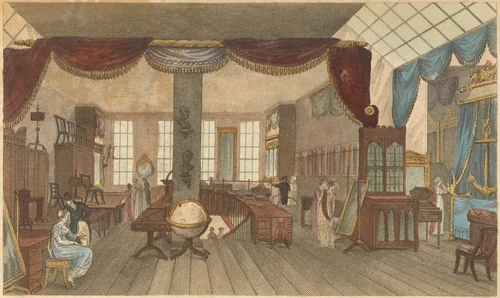
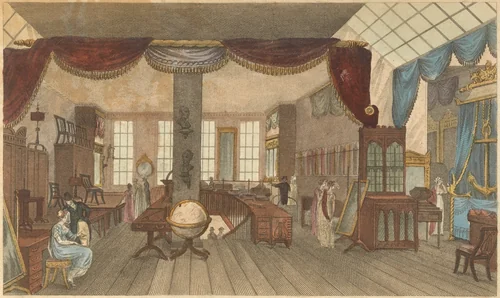
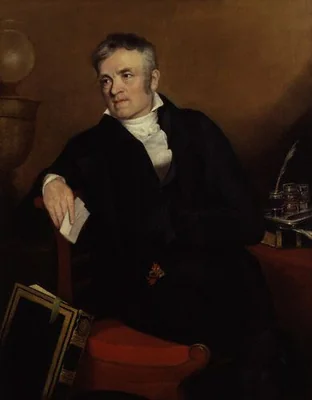
Rudolph Ackermann (1764-1834) was a pivotal Anglo-German figure whose career as an inventor, publisher, and lithographer fundamentally restructured the consumption of visual culture in early nineteenth-century Britain. Operating from his influential establishment, the “Repository of Arts” in London, Ackermann shifted the paradigm for artistic dissemination by skillfully merging commercial enterprise with technological innovation, particularly in the rapid advancement of printing and color illustration. His publishing program, active between 1809 and 1825, set a new standard for graphic arts quality and intellectual breadth.
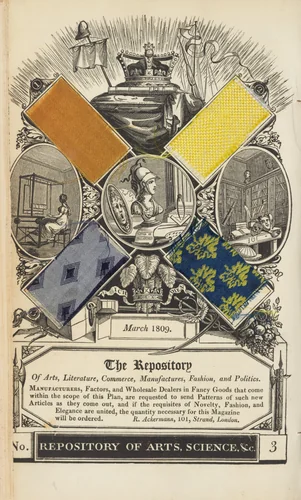
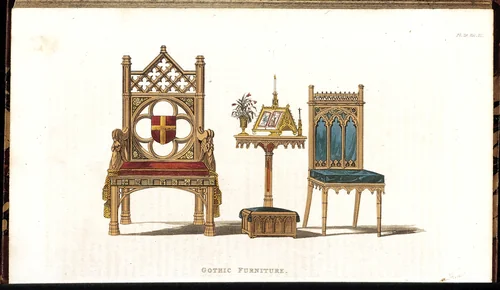
Ackermann’s major and most enduring contribution is the monumental serial publication, The Repository of Arts, Literature, Commerce, Manufactures, Fashions, and Politics. This expansive monthly periodical went far beyond mere reportage; it functioned as a visual compendium of contemporary aesthetics and functional design. Spanning multiple volumes, including the critical 1st series, vol. 1 and vol. 2, the Repository presented detailed, hand-colored engravings depicting everything from Regency fashion plates and textile patterns to architectural plans and domestic furnishings. It provided the era’s most crucial documentation of taste, making it an invaluable primary source for historians and designers today.
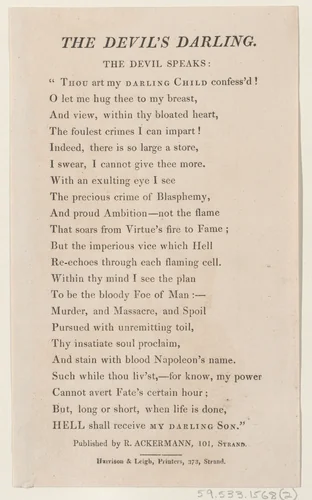
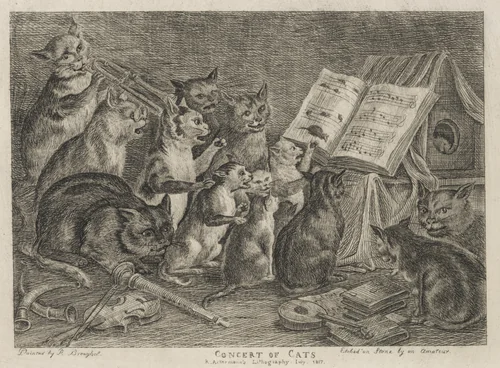
A critical element of Ackermann’s success lay in his early and vigorous adoption of lithography, which allowed him to produce a significant corpus of reproducible imagery, ranging from high-minded architecture studies to lighter, more whimsical illustrations. His catalog reveals this versatility, moving seamlessly between the serious documentation found in the Repository and the satirical verve of works like The Devil's Darling: Text and the charmingly irreverent Concert of Cats. It is perhaps an understated observation that an entrepreneur responsible for popularizing so many aspects of high culture also understood the inherent commercial value in well-executed feline mischief. Many Rudolph Ackermann prints are recognized today for their enduring clarity and museum-quality detail.
Ackermann’s output preserved crucial visual documentation of the era. His historical significance is reflected in institutional holdings worldwide, with works collected by the Metropolitan Museum of Art and the Cleveland Museum of Art. Due to their age and historical scope, much of his extensive body of published material resides within the public domain, offering modern viewers access to high-quality prints and downloadable artwork that continues to define the aesthetics of the 1810s and 1820s.
Source: Wikipedia · CC BY-SA 4.0