Rudolf von Alt
Rudolf Ritter von Alt (1812-1896) stands as the preeminent Austrian chronicler of 19th-century life, architecture, and landscape. Born Rudolf Alt, he cultivated an exceptionally long and productive career, spanning the decades from the precise aesthetics of Biedermeier to the nuanced atmospheric observations of the century’s close. While recognized formally as Rudolf Ritter von Alt only upon receiving the title in 1889, his reputation as a master draftsman had been firmly established decades earlier.
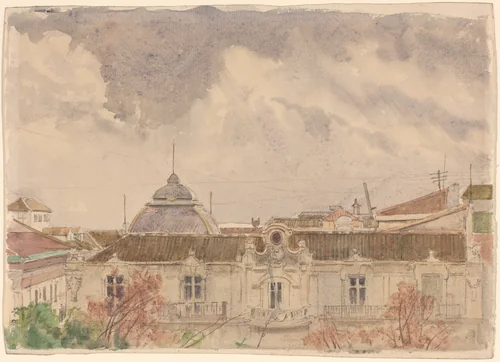
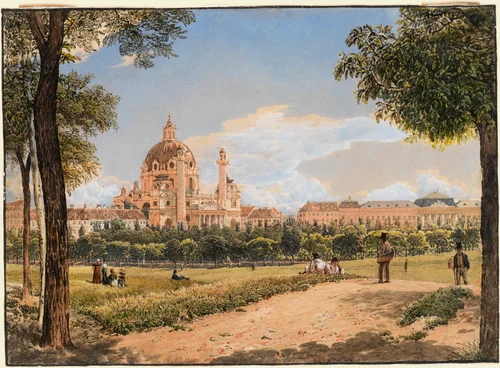
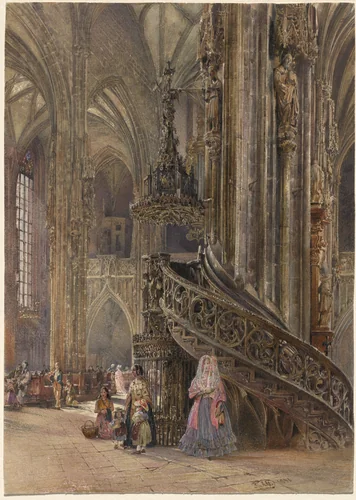
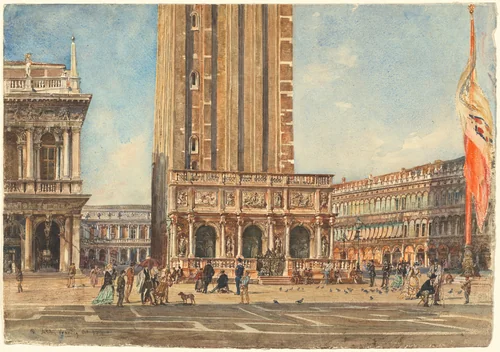
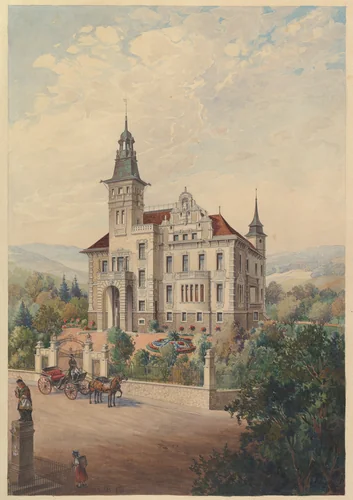
His artistic output, dominated by meticulous drawings and luminous watercolors, captures the urban dynamism and institutional gravity of the sprawling Habsburg Empire. Whether depicting interior scenes or the grand façades of Vienna, as seen in the precise architectural rendering of View of St. Charles Church and the Polytechnic Institute in Vienna, Alt prioritized absolute fidelity and controlled perspective. Although the historical record lists a small number of oil Rudolf von Alt paintings, it is through his vast corpus of watercolor studies that his true innovation emerged. These works frequently utilized light and shadow to grant the composition a sense of immediacy and atmospheric truth, a technique that anticipated later modernist concerns.
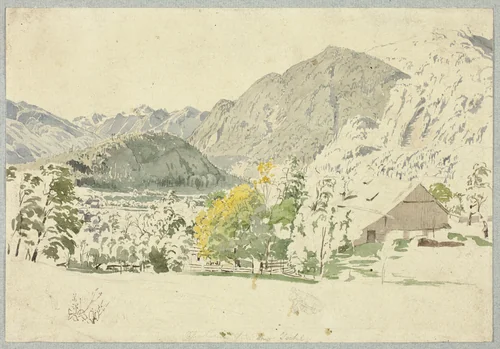
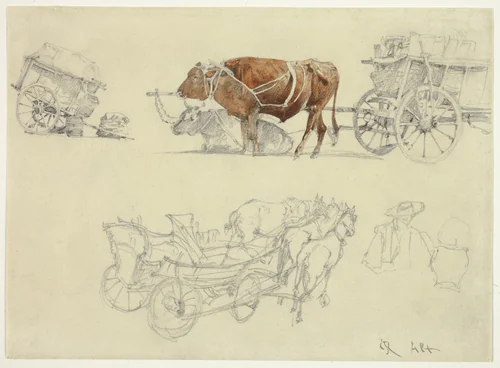
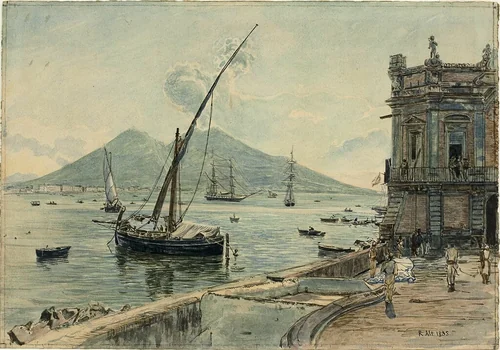
Alt was never confined by the courtly grandeur of the capital. His extensive travels throughout Europe and the provinces of the Empire furnished him with subjects far afield, evidenced by the dramatic light captured in works like Naples with Mt. Vesuvius and the ethnographic curiosity apparent in his detailed Studies of Slovakian Peasant Wagons with Oxen and Horses. He possessed a delightful, almost archival, compulsion to document the world around him, managing simultaneously to be an exacting surveyor and a sensitive observer of momentary conditions, such as the shifting atmosphere near Schmolnau Near Ischl.
Alt’s commitment to visual clarity ensures that his vision of 19th-century Europe remains intact for contemporary audiences. Major institutions like the Art Institute of Chicago, the National Gallery of Art, and the Cleveland Museum of Art hold his definitive works. Fortunately, due to the longevity of his career, many of these significant historical images are now in the public domain, allowing access to high-quality prints and downloadable artwork for scholars and enthusiasts globally.
Source: Wikipedia · CC BY-SA 4.0