Rudolf Füssli
Rudolf Füssli (1709–1788) remains a significant figure in 18th-century European intellectual and artistic life, bridging the roles of accomplished painter, foundational art historian, and rigorous lexicographer. Active professionally between 1737 and 1760, Füssli’s multidisciplinary approach positioned him not only as a working artist but as a vital conduit for the dissemination and documentation of visual culture during the high Enlightenment.
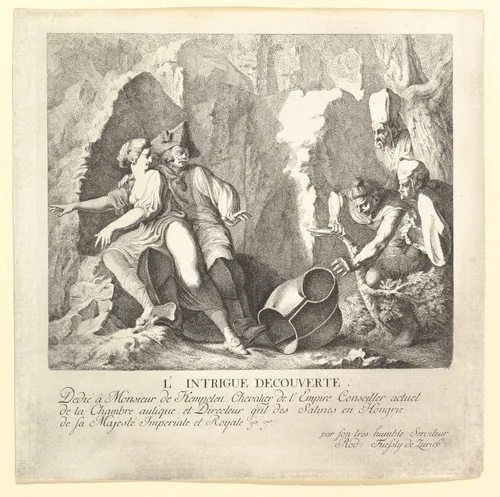
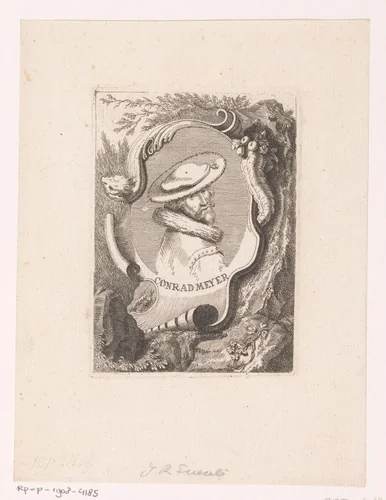
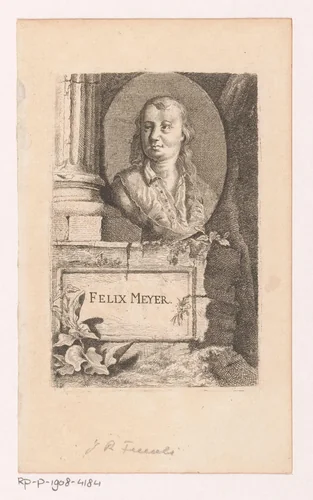
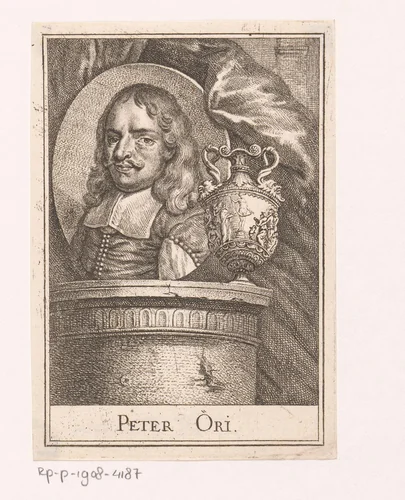
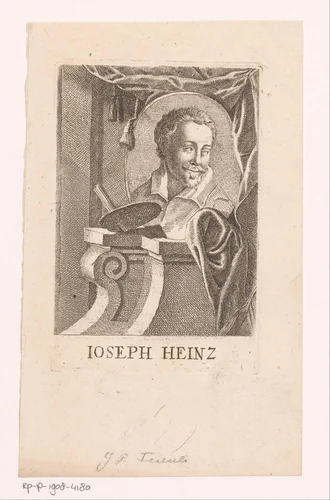
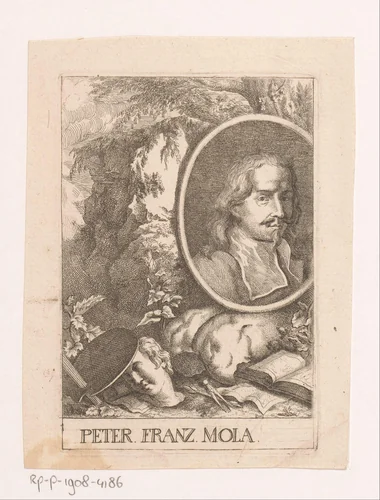
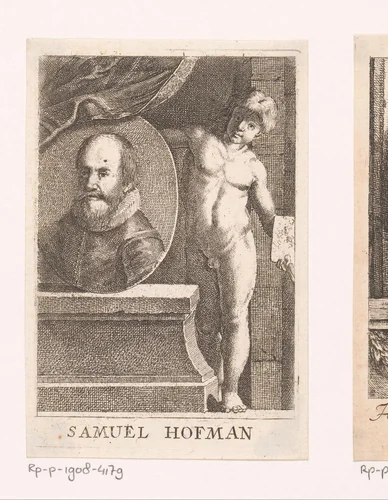
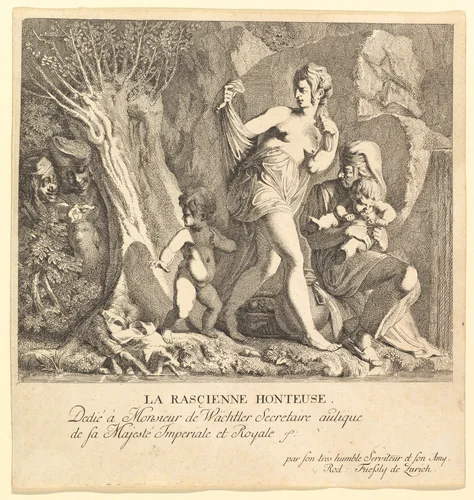
While Füssli practiced painting, his enduring artistic legacy rests largely on his surviving body of graphic work. Of the nine known prints attributed to him, the majority are meticulously rendered portraits that capture the intellectual and social milieu of Zurich. Füssli’s skill as an engraver allowed him to translate the subtle character and gravitas of his sitters with great precision, evident in works such as Portret van Conrad Meyer and Portret van Felix Meyer. Beyond portraiture, Füssli also explored narrative scenes, including the complex composition, L'intrigue découverte (The Discovery of the Intrigue).
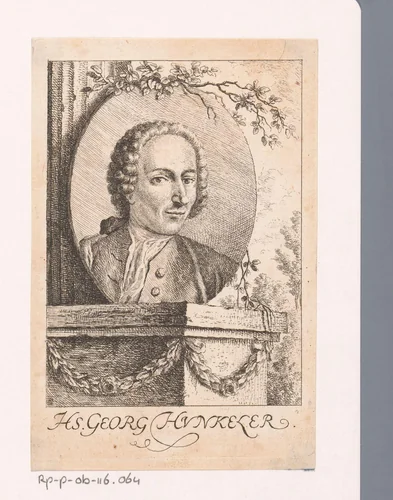
The quality and importance of these works are attested by their retention in major international repositories, including the Metropolitan Museum of Art and the Rijksmuseum. The fact that the works of Füssli, like Portret van Hans Georg Hunkeler and Portret van Hans Peter Oeri, are recognized as museum-quality prints speaks to the sophistication of Swiss graphic arts in the mid-1700s.
Füssli’s profound significance extended beyond the etching plate. His commitment to cataloging the lives and achievements of artists established the essential bibliography for later German and Swiss art history. He effectively created the biographical dictionary of his own epoch, ensuring posterity for his contemporaries—a strategic, if perhaps unintentional, move that cemented his own place in history as the artist who meticulously documented the rules of the academy. This rigorous scholarly impulse, unusual for an actively practicing painter, underscores the deep Enlightenment value Füssli placed on classification and knowledge. Today, these classic, high-quality prints and related works are often found in the public domain and available as royalty-free downloadable artwork, furthering Füssli’s legacy of cultural dissemination.