Romain Cazes
Romain Cazes (1810-1881) was an essential figure within the competitive landscape of French academic historical painting in the mid-nineteenth century. While many artists of his generation sought fame through immense, emotionally charged Salon pieces, Cazes’s lasting contribution to art historical study is firmly rooted in his preparatory draftsmanship. His technique, particularly evident in the eleven known surviving drawings executed around 1828, reveals an artist dedicated to rigorous classical study and the meticulous observation of physical reality.
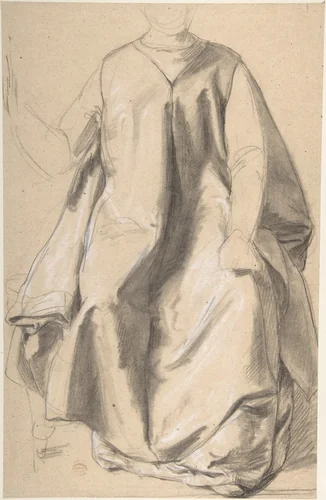
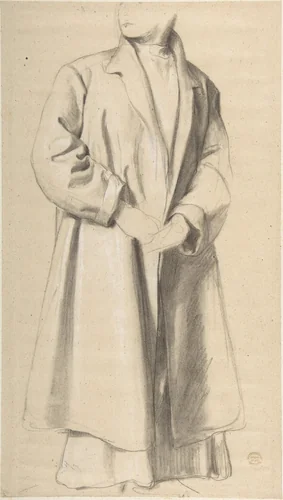
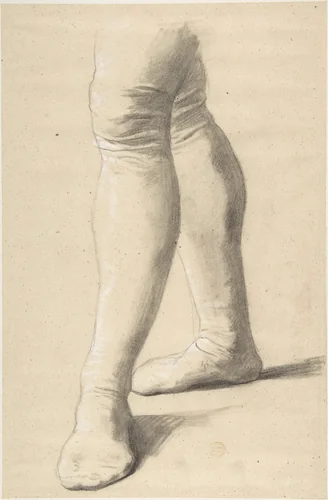
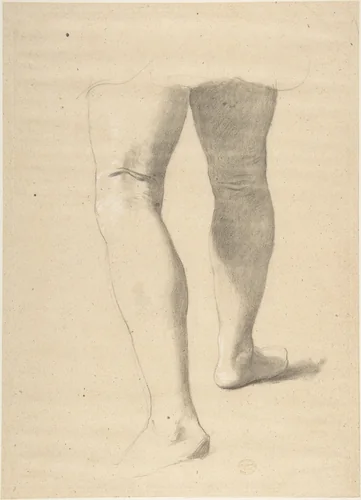
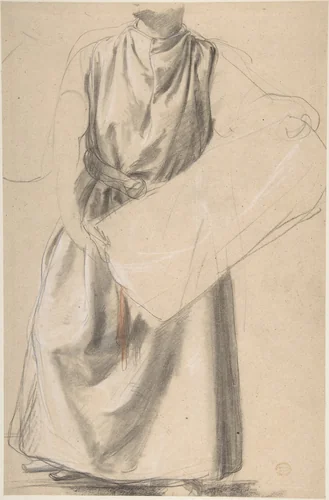
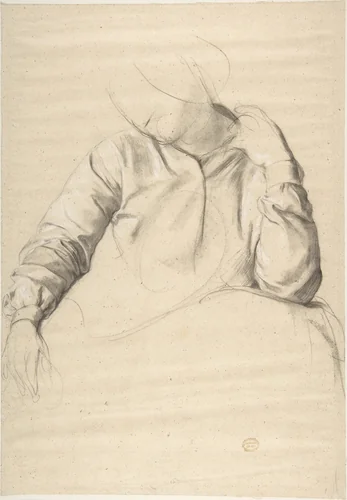
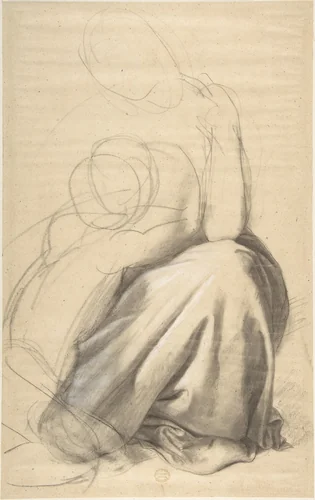
These works, held in prestigious collections including the Metropolitan Museum of Art, function less as casual sketches and more as exhaustive technical documents. They showcase Cazes’s mastery of graphite and chalk to create volumetric form. Pieces such as Figure in a Long Robe, Seated and Standing Figure in a Long Coat demonstrate the precise visual calculations required for transitioning from two-dimensional preparatory work to grand, multi-figured compositions on canvas.
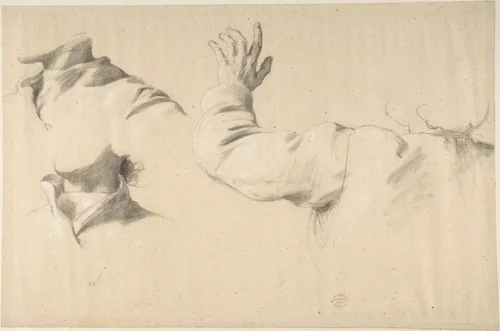
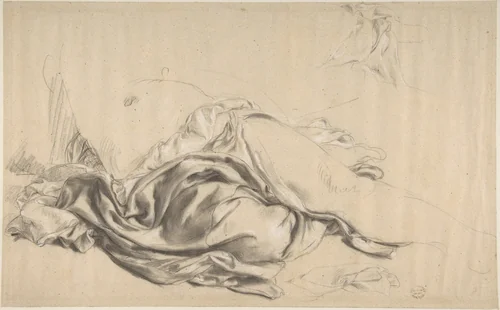
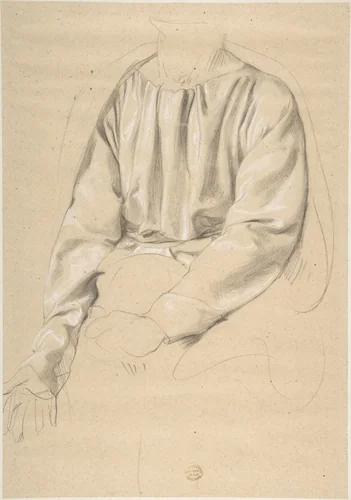
Cazes specialized in the almost scientific investigation of drapery. This intense focus is perhaps best exemplified by Studies of Drapery in Sleeve and Collars and the broader Study in Draperies. For Cazes, fabric was not merely a covering for the figure but a structural element that dictated light, shadow, and kinetic energy. He possessed a sophisticated understanding of how weight and gravity affect various materials, using folds to enhance the sense of depth and realism within his figures. It is perhaps an understated observation that Cazes, the historical painter, often became Cazes, the master of fabric portraiture, treating silk and wool with the same reverence afforded a human face.
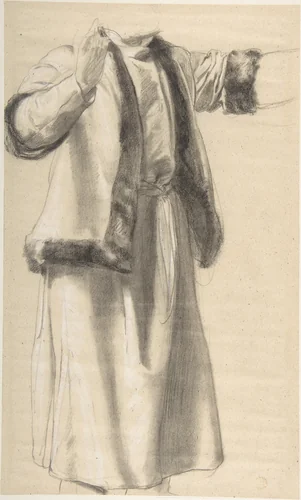
The technical clarity of his drawings ensures their enduring relevance for artistic study, confirming their status as museum-quality examples of the academic method. Although major Romain Cazes paintings may be infrequently displayed today, the preparatory drawings, including Figure in a Fur Trimmed Jacket, remain highly valued references. Fortunately, much of this material is now in the public domain, offering scholars, students, and enthusiasts worldwide royalty-free access to high-quality prints and downloadable artwork that captures the precision of this significant nineteenth-century draftsman.