Robert van Audenaerde
Robert van Audenaerde (1663-1748) was a significant Flemish artist, recognized primarily as an exceptionally skilled engraver whose detailed graphic works ensured the wide dissemination of religious iconography during the late Baroque period. Although early records identify Audenaerde as a painter, he dedicated the most productive phase of his documented career to copperplate printmaking, a medium vital for circulating major compositional ideas across Europe. His prints, characterized by precise handling of line and deep tonal contrast, achieved a high degree of fidelity, solidifying his role in bridging the gap between grand painting and accessible illustration.
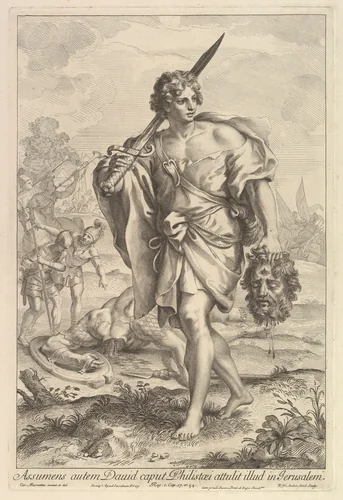
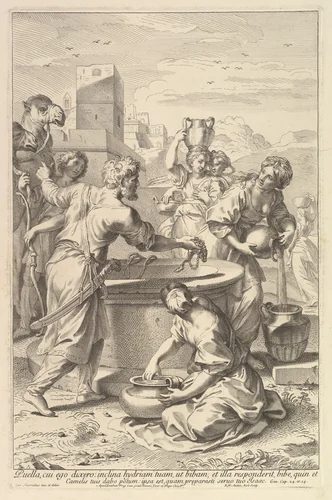
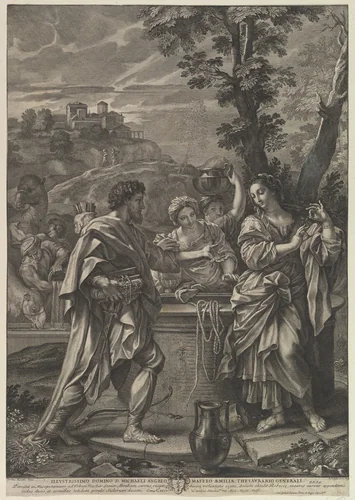
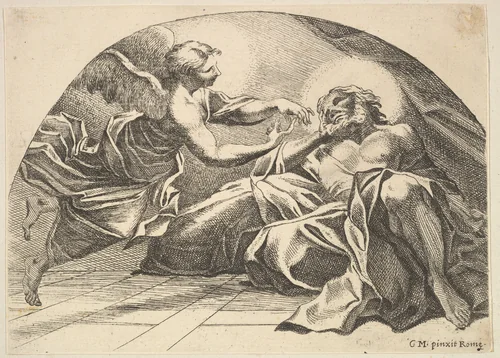
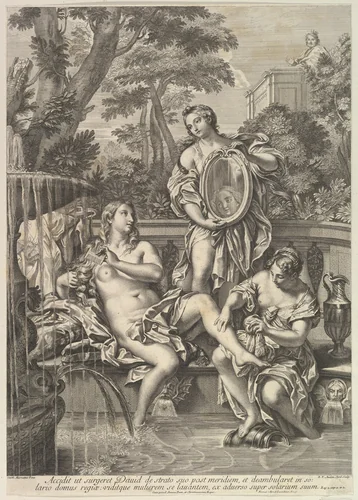
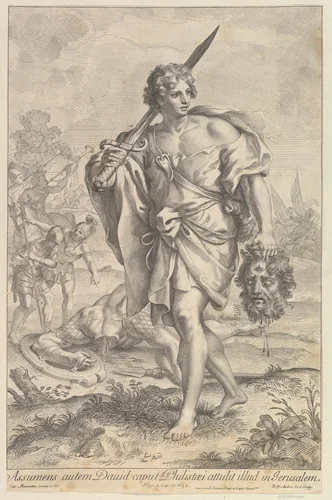
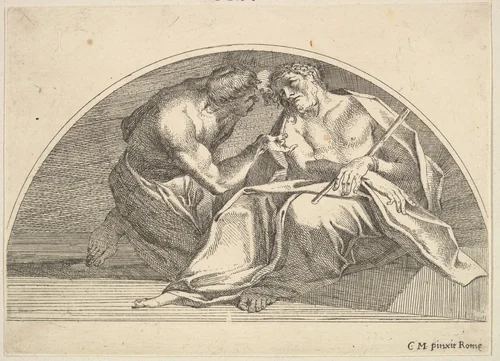
Audenaerde’s active period, lasting from approximately 1663 until 1694, yielded a focused body of work, with approximately fifteen individual prints currently cataloged in major global collections. These works, which include robust examples in the Metropolitan Museum of Art, concentrate almost exclusively on dramatic biblical narratives. His technical mastery is evident in the execution of complex multi-figure scenes, whether depicting the heroic vigor required for David with the Head of Goliath or the emotionally resonant composition found in Rebecca and Eliezer.
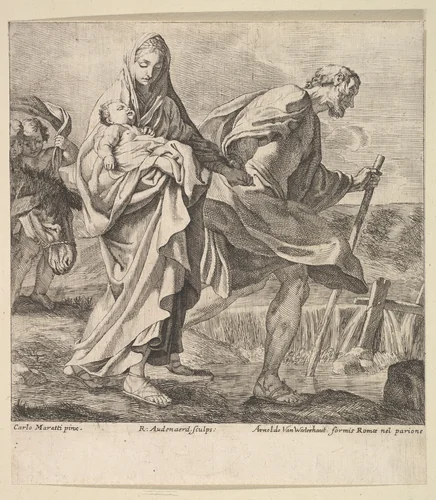
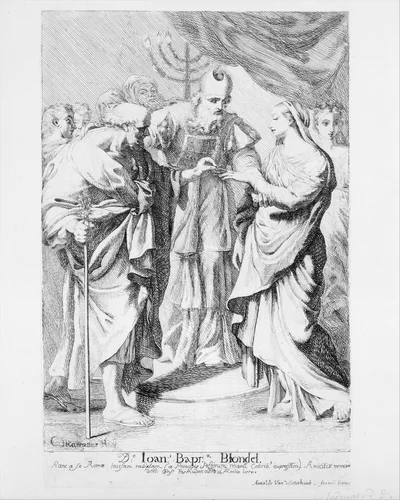
His graphic output served a clear commercial and devotional purpose, efficiently translating the visual impact of expansive altarpieces into reproducible sheets. The consistent quality across his subjects, such as the solemn devotion captured in Flight into Egypt and the detailed architectural settings of Marriage of the Virgin, underscores a sophisticated artistic intelligence, even when working from preparatory drawings by other masters. Audenaerde’s prints prove that true artistry is found not just in invention, but in exquisite translation.
The sustained visibility of Audenaerde’s work owes much to this prolific output in print media. While Robert van Audenaerde paintings are rarely encountered today, his legacy thrives through his copperplate work. Enthusiasts and scholars seeking high-quality prints and downloadable artwork are fortunate that much of his graphic oeuvre now resides in the public domain, allowing institutions to make these historically important, royalty-free compositions readily available for modern study and appreciation.
Source: Wikipedia · CC BY-SA 4.0