Robert Mangold
Robert Mangold was an essential American artist whose rigorous output positioned him centrally within the development of Minimalism and post-painterly abstraction from the late 1950s through the early 1970s. His practice centered on questioning the fundamental elements of painting: line, color, and the physical limits of the canvas itself. Mangold’s early work sought to merge the painting process with three-dimensional sculpture, treating the support not as a mere receptor for pigment but as a defined, geometric object that interacted dynamically with the surrounding space.
Mangold’s career (active 1937-1971) was characterized by systematic, almost architectural, formal investigations. He focused relentlessly on breaking down complex perception into primary visual data, utilizing restrained palettes and precise execution to emphasize subtle shifts in plane and boundary. A signature technique involved partitioning unified geometric shapes across multiple panels, thereby testing how continuity could be perceived across disjointed physical segments.
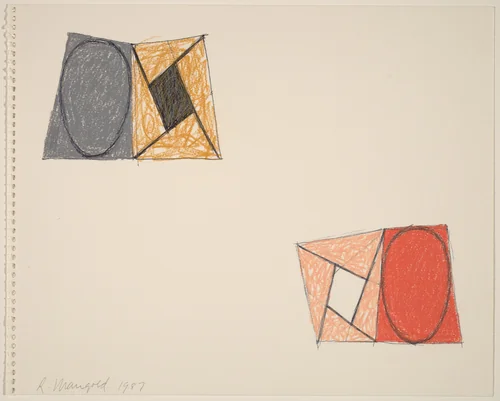
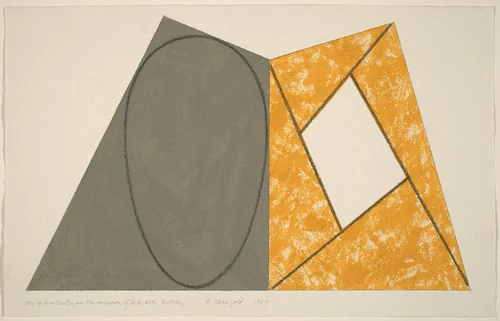
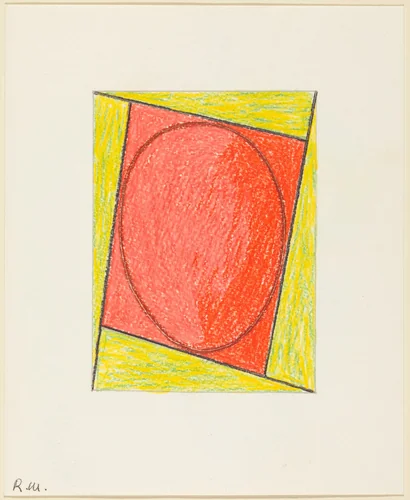
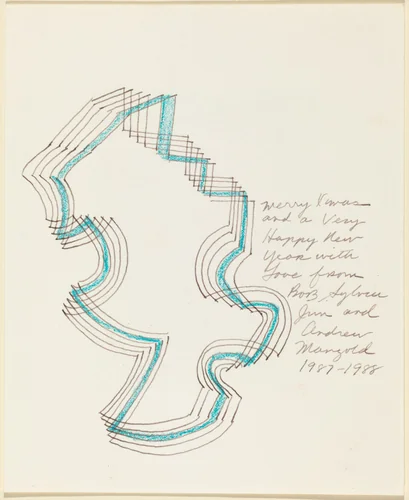
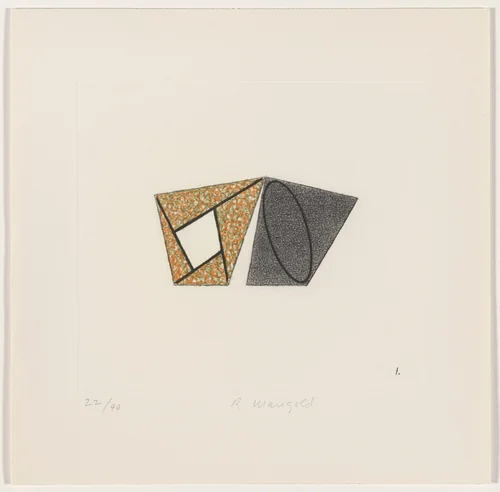
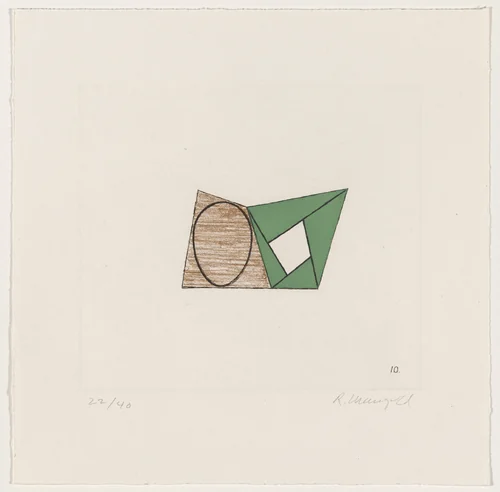
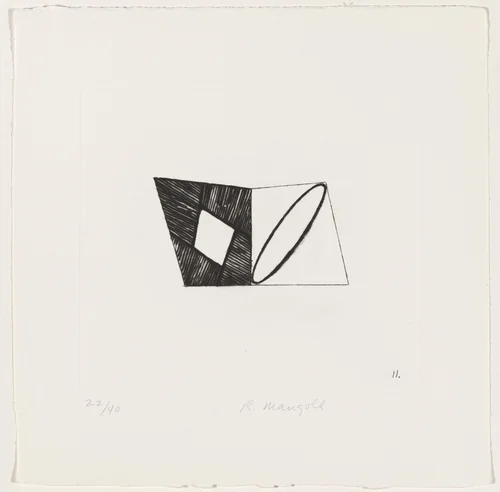
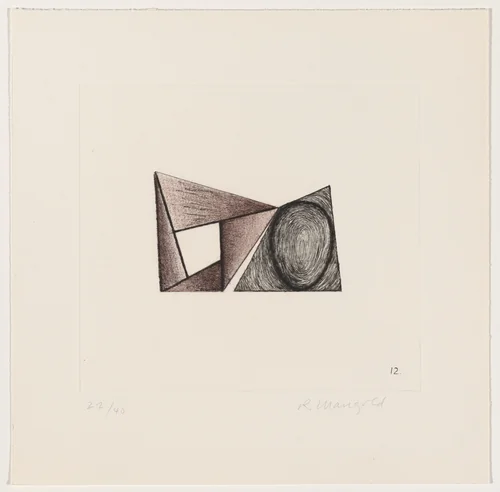
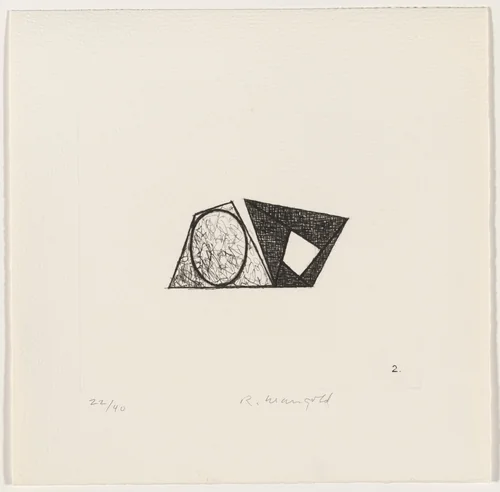
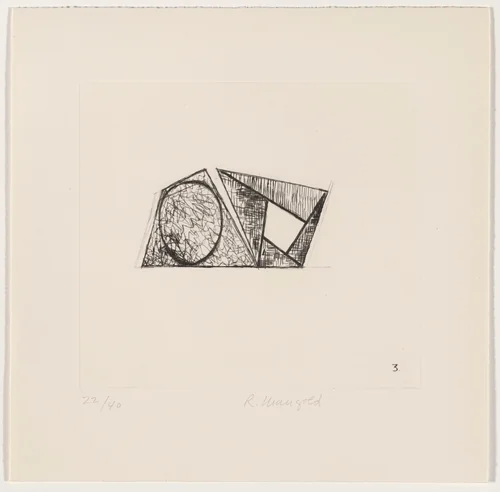
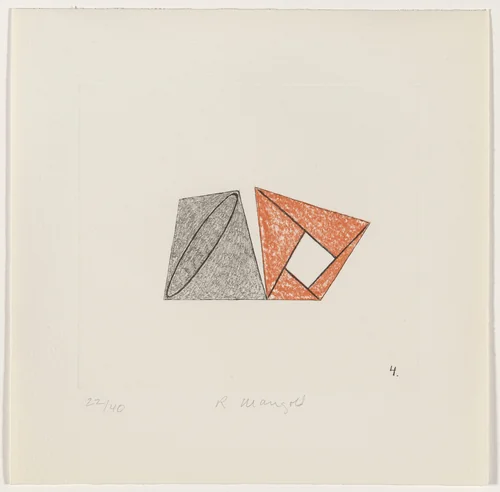
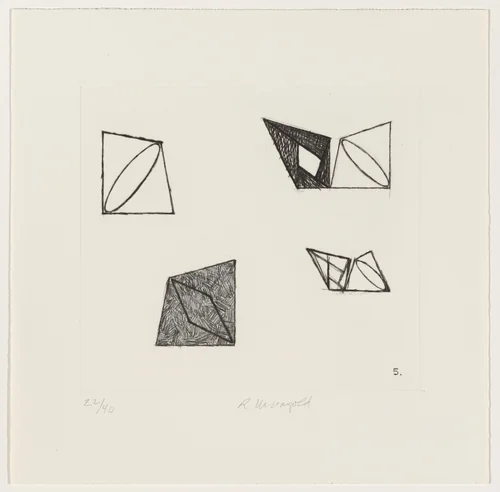
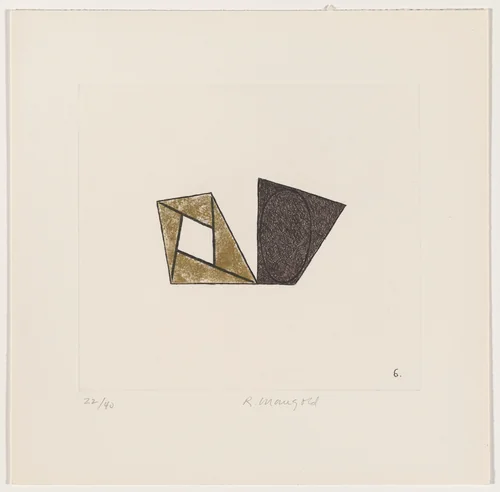
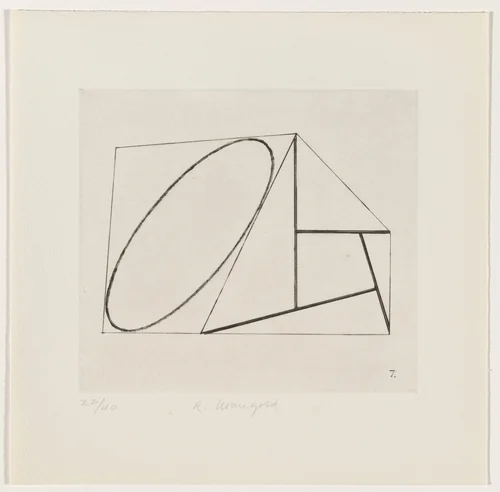
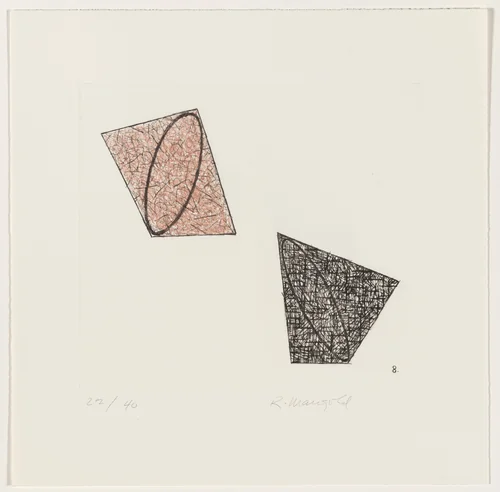
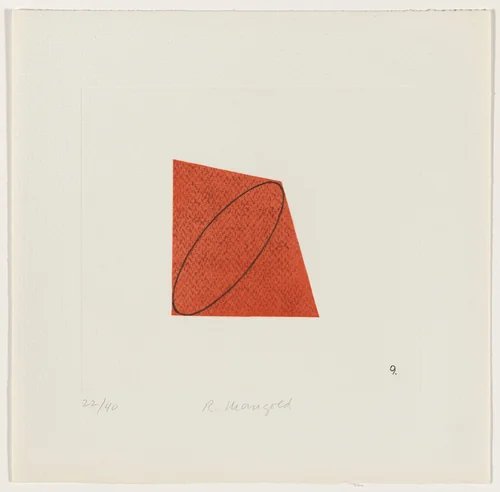
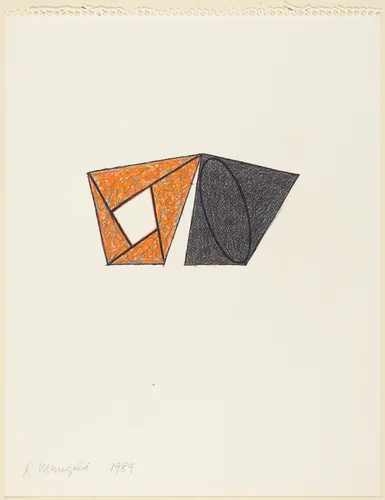
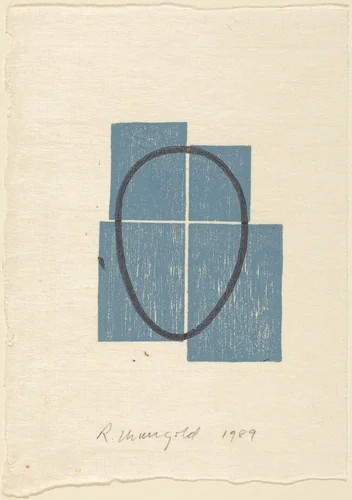
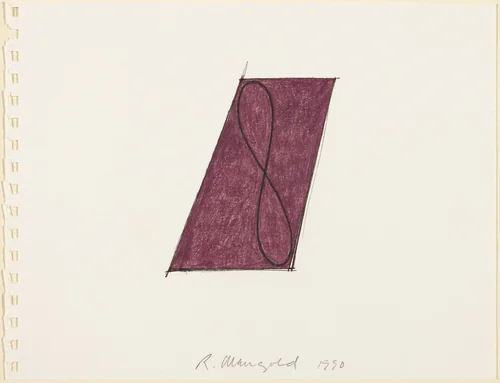
This methodology is powerfully illustrated in works such as the monumental three-part composition, Curved Plane / Figure VII (comprising a center panel, a left panel, and a right panel), dating from 1970. Complementary studies, including Window Wall Yellow and Tan Sketch, reveal the structural complexity and analytic preparation that underpinned his seemingly simple surfaces. His output extended beyond large-scale canvases to include critical bodies of drawings and graphic works, such as the intimate Untitled (Holiday Card) and various early Robert Mangold prints.
Mangold’s focused oeuvre is represented in major public collections, notably the National Gallery of Art, securing his historical place among artists who defined the intellectual rigor of 20th-century abstraction. Today, these seminal works are often made available as high-quality prints for scholarly study. He left behind a legacy that continues to inform minimalist aesthetics across media. In an understated observation of enduring creative passion, Mangold was also the father of acclaimed film director, producer, and screenwriter James Mangold, connecting the artist’s commitment to disciplined form with a family interest in structured narrative.
Source: Wikipedia · CC BY-SA 4.0