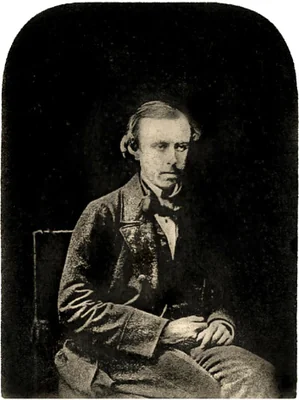
Robert Howlett
Robert Howlett holds a distinct, if tragically brief, place in the history of mid-nineteenth century British photography. Active for only a fleeting period between 1855 and 1857, his works rapidly entered major international collections, including the Museum of Modern Art, the Metropolitan Museum of Art, and the National Gallery of Art, immediately establishing his significant contribution to the nascent field of photo-documentation.
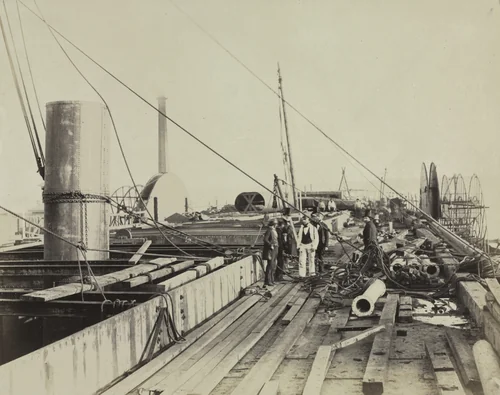
Howlett is primarily celebrated for his landmark photo-journalistic coverage of the construction of the SS Great Eastern, the colossal steamship being built at Millwall. This 1857 commission for the Illustrated Times newspaper yielded several pioneering images of industrial scope. Among these are the ambitious structural portraits, such as Deck Scene of the Great Eastern, and the renowned Isambard Kingdom Brunel and the Launching Chains of the Great Eastern.
The photograph of Brunel is often considered the pinnacle of early Victorian industrial portraiture. Standing before the colossal anchor chains, the famed engineer’s silk top hat and self-possessed stance make him appear less the architect of the behemoth and more its unflappable custodian. It is a striking exercise in contrasting the scale of human endeavor with the immense visual weight of the machine itself. The image endures as one of the most identifiable depictions of 19th-century innovation.
While the Great Eastern series defines his immediate legacy, Howlett’s output spanned several key photographic genres emerging in the 1850s. He produced sensitive studio portraits of Crimean War heroes, alongside atmospheric landscapes like In the Valley of the Mole, demonstrating a mastery of composition across varied terrain. Another notable, yet more cryptic, work from this period is the intriguing study [Aphrodita Under Construction].
Howlett’s concise body of work reflects the rapid transition of photography from novelty to a critical medium for both documentation and high art. Due to their age and historical importance, many of his photographs are now in the public domain, allowing for widespread study and the availability of museum-quality, high-quality prints, thereby securing his position among the pioneering British photographers who visually defined the industrial age.
Source: Wikipedia · CC BY-SA 4.0
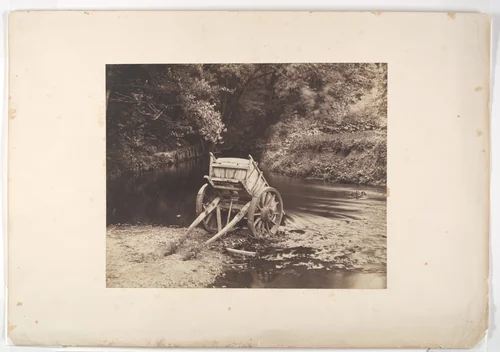
![[Aphrodita Under Construction] by Robert Howlett, photograph, 1855-1859](https://img.artbee.org/aea27ca8-cb2c-4d7f-a0de-eaf3f916659a/small.webp)
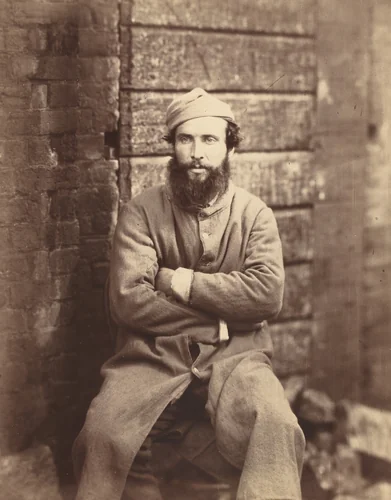
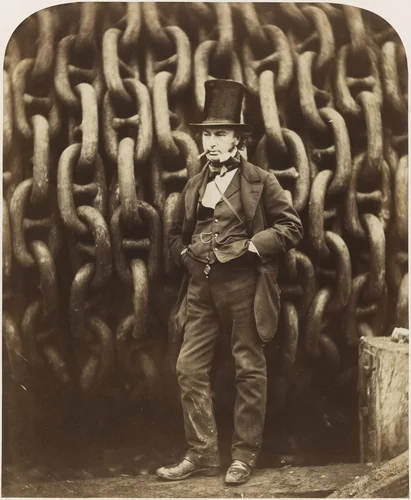
![[Isambard Kingdom Brunel Standing Before the Launching Chains of the Great Eastern] by Robert Howlett, photograph, 1857](https://img.artbee.org/14fbe57f-e902-41e0-8d0e-b26f3ea1ee20/small.webp)
![[Men at Work Beside the Launching Chains of the "Great Eastern"] by Robert Howlett, photograph, 1857](https://img.artbee.org/22bc3f19-363d-4168-b3a8-b0e8d2da4f14/small.webp)