Robert Hancock
Robert Hancock stands as a significant figure in the English decorative arts of the mid-eighteenth century. Active between 1746 and 1765, this prolific engraver specialized in genre scenes and small-scale decorative motifs, bridging the gap between traditional fine art prints and commercial applications in ceramics and enamels. His inclusion in prestigious global collections, including the Metropolitan Museum of Art, confirms his enduring museum-quality status and historical relevance.
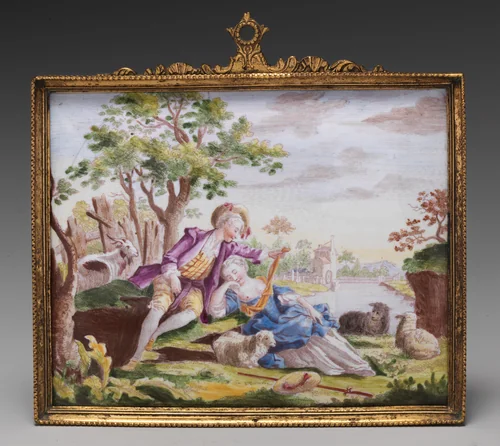
Hancock’s graphical output frequently reflected the prevailing rococo sensibilities of the era, combining classical elegance with lighthearted theatricality. His mastery of line work is evident in complex pastoral narratives such as Fêtes Venitiennes and Les Amours Pastorales. These compositions capture the period’s preoccupation with idealized leisure and theatricalized romance, translating the grandeur of continental painting into intimate, highly detailed engravings suitable for private contemplation.
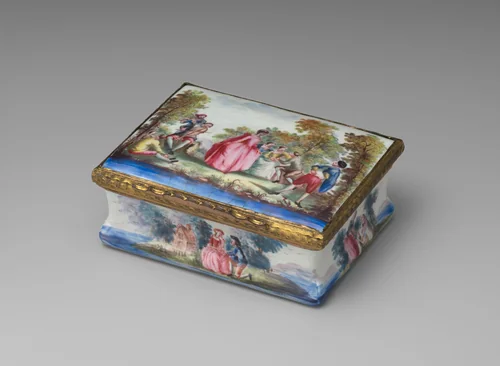
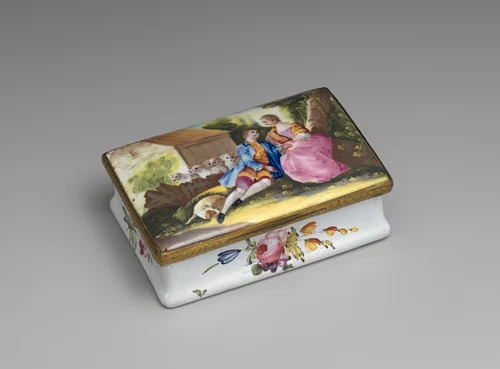
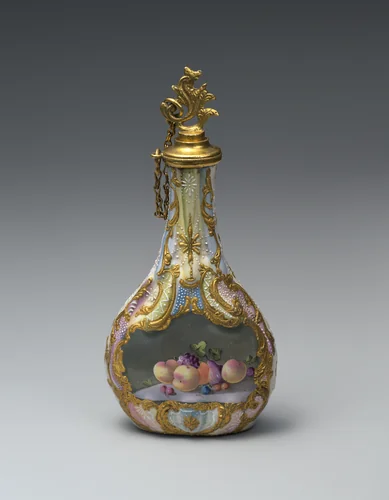
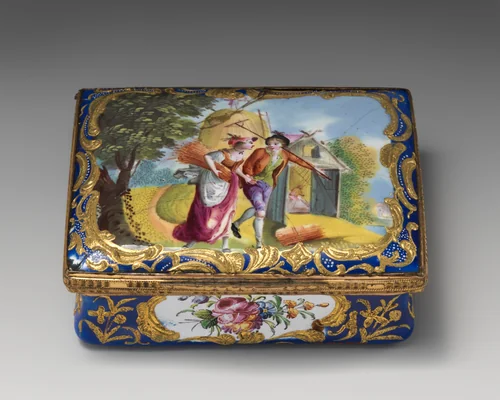
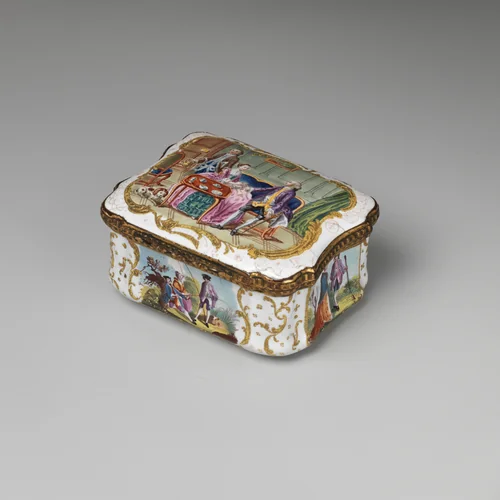
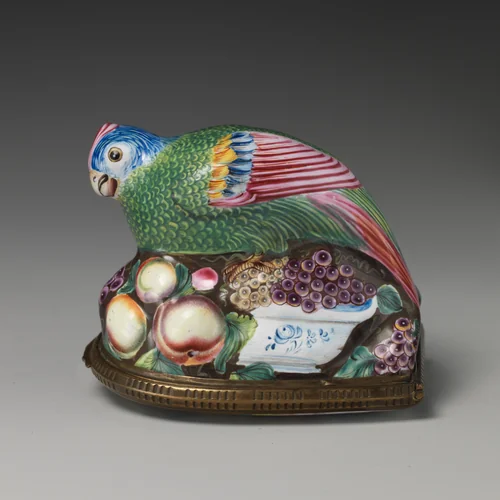
Yet, Hancock was equally adept at depicting the emerging domesticity of middle- and upper-class life. His work The Tea Party provides a charming and detailed study of 18th-century social rituals, demonstrating his ability to render both elaborate settings and the intimate exchange of gesture. Furthermore, the versatility of his technique is evident in functional objects, including the Scent bottle with still life of fruit and the Snuffbox with haymakers. These items illustrate his skill in adapting complex designs to curved surfaces, a crucial innovation in the burgeoning field of transfer printing. It is perhaps ironic that one of the era’s most skilled graphic artists is often best encountered not framed on a wall, but integrated into the sophisticated utility of daily objects.
Despite the relatively narrow window of his active career, Robert Hancock prints remain essential resources for understanding mid-18th century English visual culture and the intersection of art and industry. His technique allowed for the widespread dissemination of high-quality prints, making detailed, sophisticated imagery accessible to a broader market than traditional painting allowed. Today, many fine examples of his work are now in the public domain, ensuring that this influential engraver’s unique contribution continues to be studied by curators and is widely available as downloadable artwork for enthusiasts.