Robert Dighton
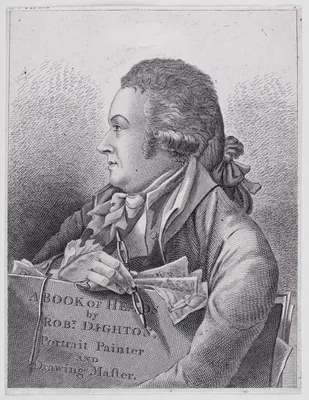
Robert Dighton (active 1772-1806) stands as a pivotal figure in the evolution of English visual satire, known variously as a proficient portrait painter, printmaker, and master caricaturist. He defined the late Georgian period’s approach to social commentary, establishing a recognizable visual language that influenced the generations of artists who followed in his footsteps, effectively founding an artistic dynasty centered on observational humor.
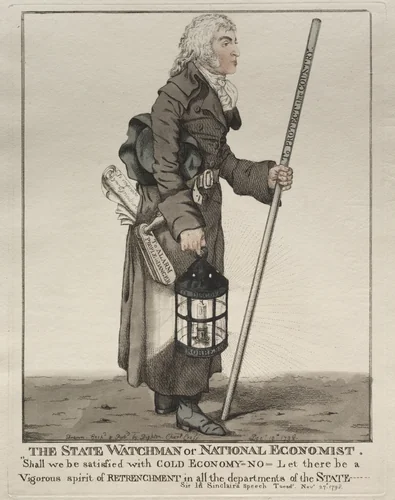
Dighton’s work is characterized by its sharp wit and highly controlled linearity. While he did engage in broader political commentary, his enduring reputation rests on his uncanny ability to capture human idiosyncrasy in bustling urban scenes and detailed character studies. Unlike contemporaries who often relied on exaggerated cruelty, Dighton’s satirical vision was tempered by a social curiosity that rendered minor officials, eccentric professionals, and fashionable society with an understated theatricality. He was, in effect, the society reporter of his day, delivering visual gossip with an unerring accuracy.
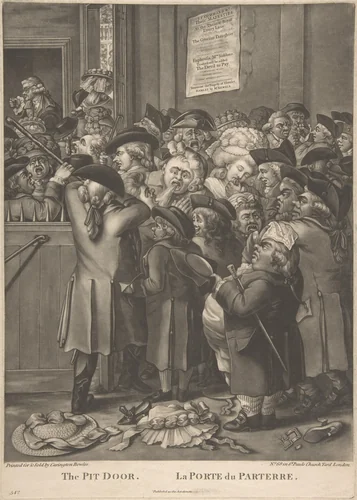
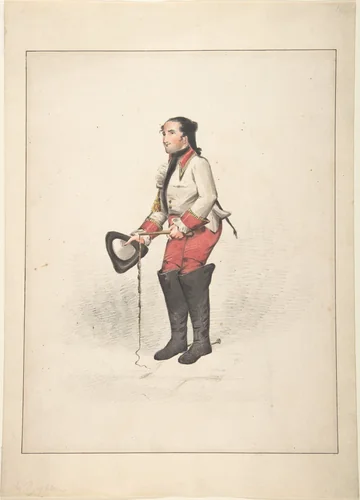
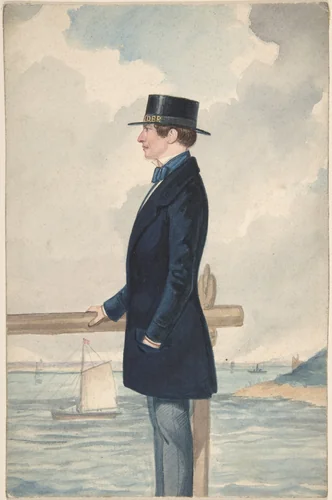
His prints often centered on the kinetic energy of public life. Works such as The Pit Door / La Porte du Parterre expertly capture the charged atmosphere of London's entertainment venues, documenting the chaotic mingling of classes seeking entry to the theater. Similarly, focused studies like A Yachtsman distill a character down to their essential, often affected, posture.
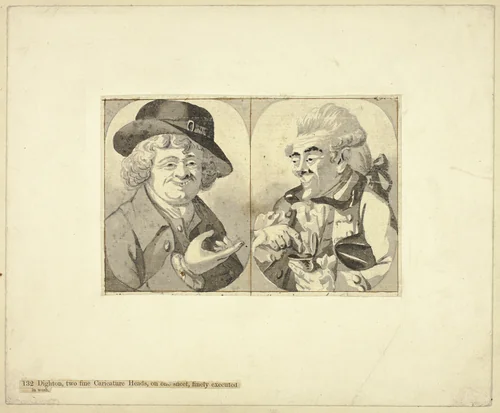
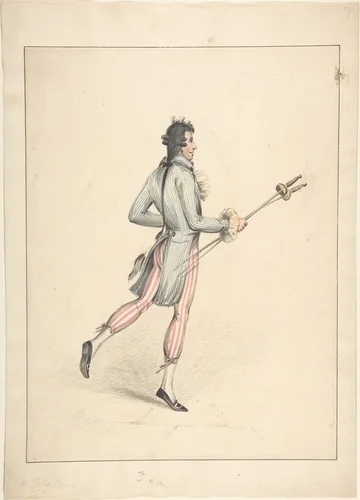
Dighton's skill as a draftsman is particularly evident in his surviving preparatory studies and paired sketches, which confirm his technical breadth. Drawings such as A fencing master (recto); sketch of a man's head (verso) display a rigorous confidence, executed with an economical use of line. The quality of these preliminary studies ensures that even his unpublished works are highly valued.
The historical significance of Robert Dighton prints has secured their presence in major institutions, including the Metropolitan Museum of Art, the Art Institute of Chicago, and the Cleveland Museum of Art. These museum-quality holdings serve as primary source material for analyzing early 19th-century English manners. Due to his prolific output and the subsequent scholarship, many of his compelling observational pieces and high-quality prints are now available in the public domain, guaranteeing his continued influence on the history of British graphic art.
Source: Wikipedia · CC BY-SA 4.0