Robert Demachy
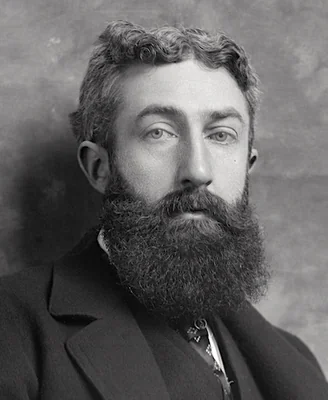
Robert Demachy (1859–1936) was a commanding figure in the international Pictorialist movement, establishing himself as the premier French practitioner of aesthetic photography during the late 19th and early 20th centuries. Active primarily between 1895 and 1910, Demachy’s explicit mission was to liberate the photographic print from mechanical reproduction and to elevate it to the subjective status of fine art. He achieved this through a radical embrace of manual intervention and intricate printing methods.
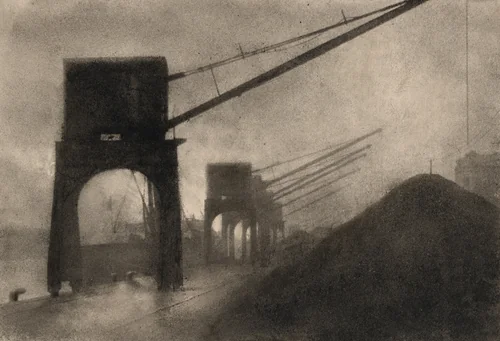
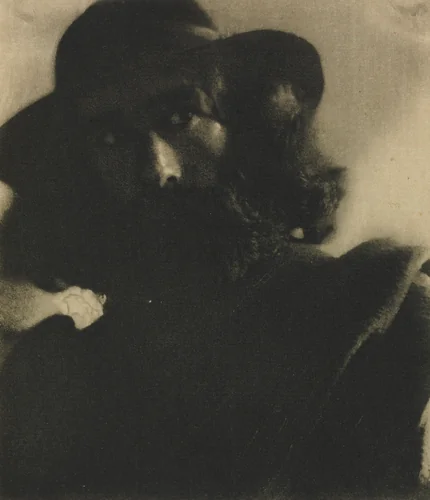
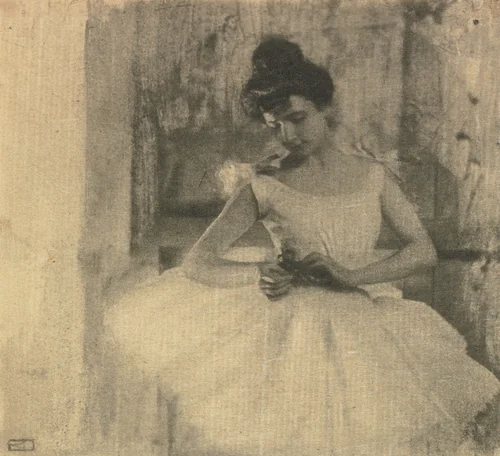
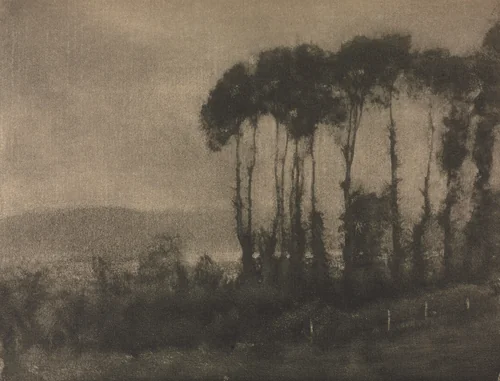
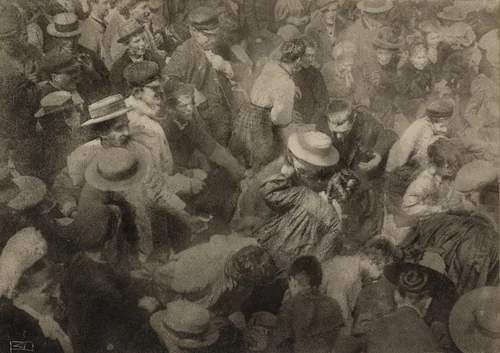
Demachy is distinguished by his intensely manipulated prints, which intentionally display a distinct painterly quality. Rejecting the objective clarity championed by earlier photographic masters, he became the foremost advocate for complex processes that allowed him to rework and reconstruct the image after exposure. He was a champion of the gum bichromate process, a challenging technique requiring multiple pigmented layers and precise registration. This method, often paired with bistre or oil processes, allowed Demachy to selectively heighten contrast, suppress detail, and dramatically manipulate the photographic plane, imbuing works like Cranes and his series for Camera Work, including Camera Work: A Model and Camera Work: Toucques Valley, with the texture and atmosphere of charcoal sketches or etchings.
This commitment to painterly artifice generated considerable critical discussion within the photographic community. Indeed, some of his contemporaries acidly questioned why Demachy bothered with a camera at all, a witty critique he seems to have thoroughly embraced by pushing the limits of photographic acceptability.
This methodological defiance was pivotal in photography’s acceptance by the fine art establishment. Demachy was not merely taking photographs; he was creating unique, museum-quality objects where subjective artistic intent was valued above mechanical fidelity. His technical innovations and dramatic style positioned Robert Demachy prints at the forefront of the movement. Today, his influential output remains a cornerstone of photographic history, represented in major collections worldwide. Much of his seminal work now resides in the public domain, ensuring that high-quality prints derived from his pioneering vision remain accessible to students of both photography and modern art.
Source: Wikipedia · CC BY-SA 4.0