Rimac
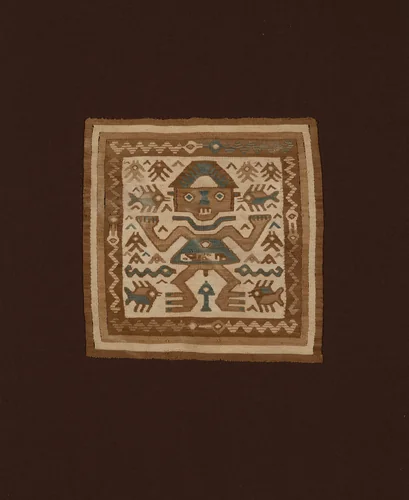
Rimac is a designation applied to the originator of a small group of historical textiles dated approximately to the year 1000. The active period and specific cultural context of the artist are inferred directly from the archaeological and material dating of the surviving works. As is common with artists preceding the development of formalized attribution, Rimac's identity is defined exclusively by the extant artworks.
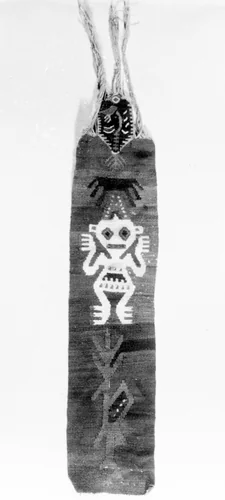
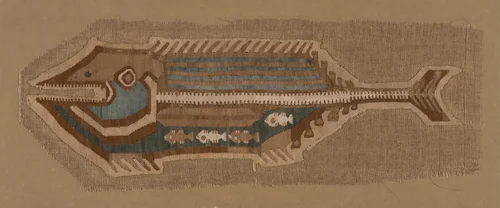
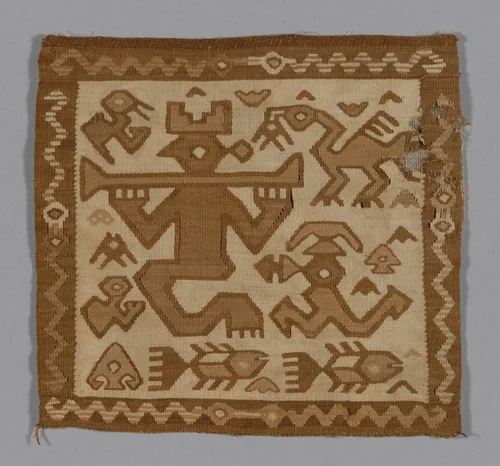
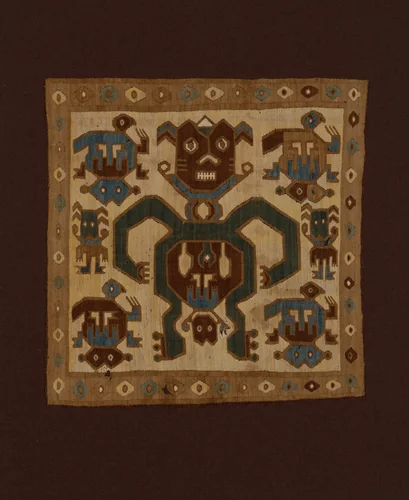
The body of work attributed to Rimac consists entirely of finely crafted textiles. Five specific pieces are currently represented in museum collections, confirming their status as important examples of early weaving and design. The known titles include the individual pieces Band and Fish, alongside three distinct works categorized as Panel.
The critical significance of Rimac’s work is established by its institutional ownership. All five known textiles are housed in the permanent collections of the Art Institute of Chicago, where they are preserved as museum-quality artifacts for scholarly access. These rare historical objects provide insights into ancient textile production methods. Efforts to document and conserve the works often result in the availability of high-quality prints and archival images, ensuring continued study of this historically important corpus.
Source: Wikipedia · CC BY-SA 4.0