Richard Whitaker
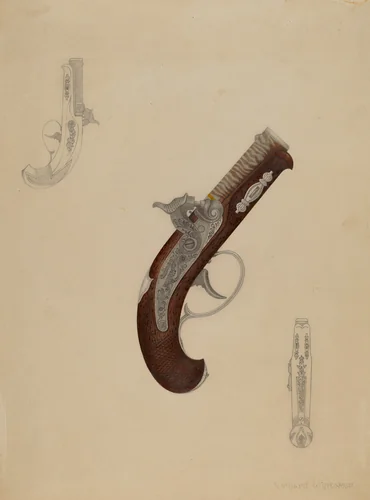
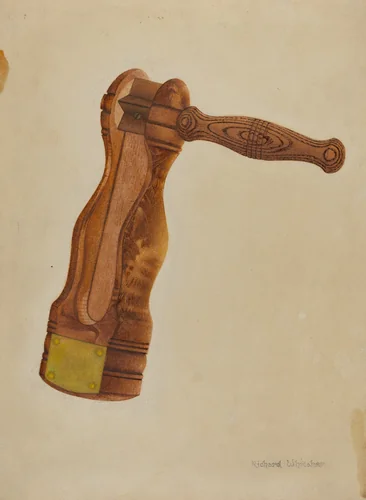
Richard Whitaker emerged during the mid-1930s as a pivotal, though often unsung, contributor to the American documentary movement. His activity, focused primarily between 1935 and 1939, centered on the Index of American Design, a monumental Works Progress Administration (WPA) initiative intended to catalog and preserve the nation’s decorative and folk artistry. This ambitious project required the rendering of historical artifacts with scientific rigor, often using watercolor and gouache.
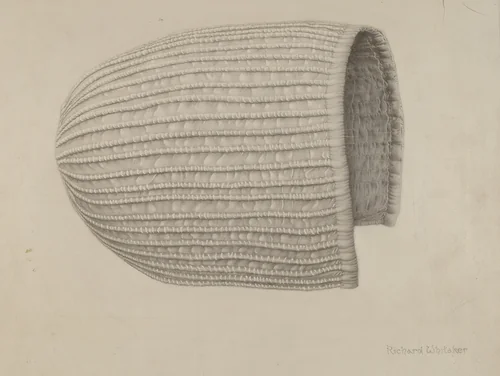
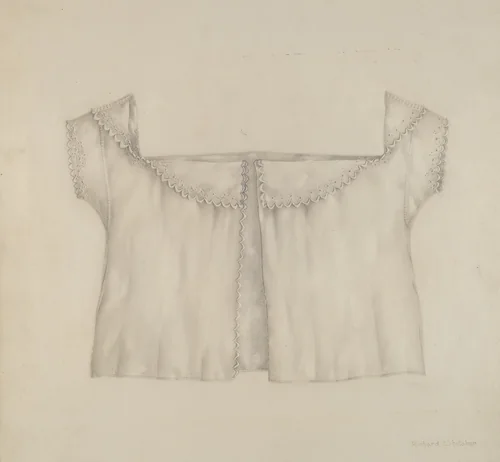
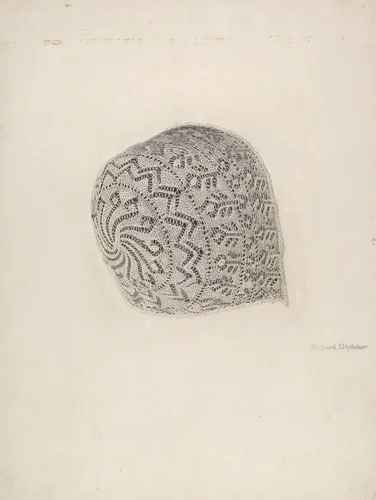
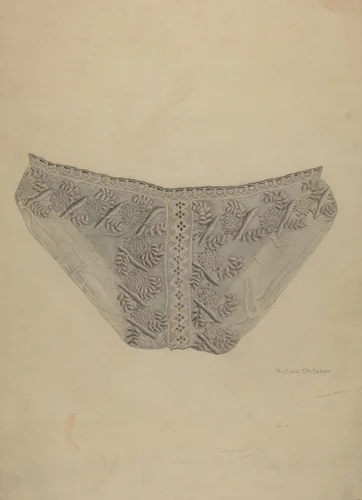
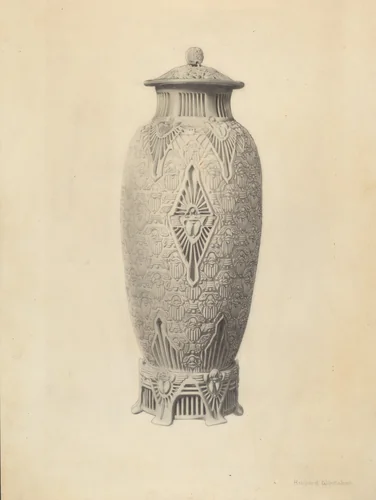
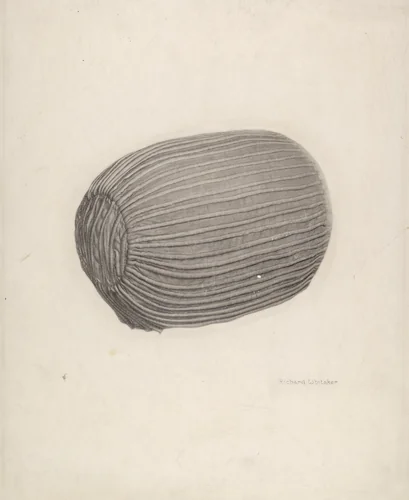
Whitaker’s twelve dedicated contributions to the Index distinguished themselves through their meticulous commitment to accuracy fused with an almost painterly sensitivity toward material texture. He specialized heavily in the study of domestic textiles and ceramics, detailing objects ranging from complex lacework to delicate glassware. This work required extreme concentration; to capture the infinite variations in thread count or the slight irregularities of early glass required a temperament suited both to drafting and contemplation.
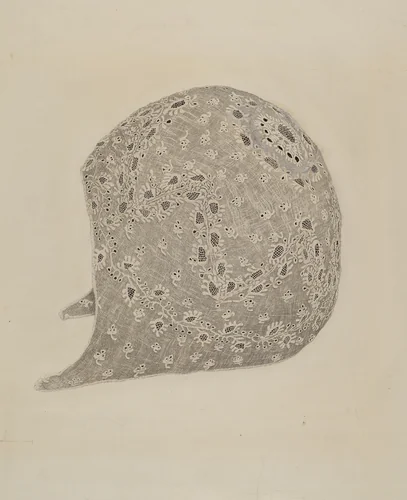
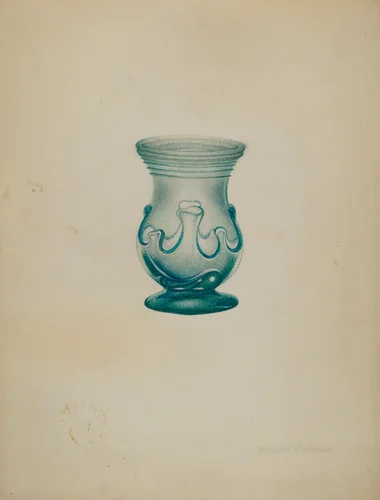
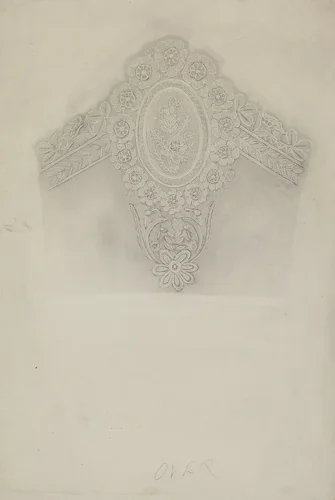
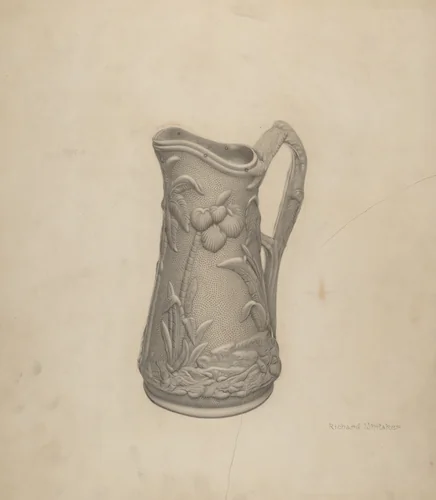
Works such as Lace Collar and Baby’s Lace Cap transcend mere illustration, operating instead as high-fidelity documents of domestic history. These renderings are particularly notable for their subtle tonal shifts, effectively translating the fragility of white-on-white texture onto paper. Similarly, his definition of hard surfaces, exemplified by the translucent quality of the Glass Vase or the stark geometry of the Parian Ware Syrup Pitcher, offers museum-quality insight into pre-industrial craftsmanship. One finds in these precise studies a fascinating dual devotion: to the logic of the object itself, and to the expressive capabilities of light.
While Whitaker’s documented objects were fundamentally archival in nature, their artistic merit ensured their continued preservation. They reside in permanent national collections, most notably the National Gallery of Art, offering contemporary viewers direct access to this crucial historical survey. Today, due to the federally commissioned origin of the Index of American Design, many of Whitaker’s indexed designs are available as royalty-free downloadable artwork. The enduring precision of these high-quality prints speaks volumes about the dedication inherent in Depression-era cultural recovery efforts.