Richard Schoene
Richard Schoene’s contributions to American art history are intrinsically linked to the great documentation project of the 1930s, the Index of American Design (IAD). Active between 1935 and 1937, Schoene was one of the many skilled draftsmen commissioned under the Works Progress Administration (WPA) to create a visual archive of American decorative, folk, and utilitarian arts dating from 1700 to 1900. His precise, meticulous renderings captured the essential character of early craftsmanship, establishing a standard of exacting detail necessary for the project’s success.
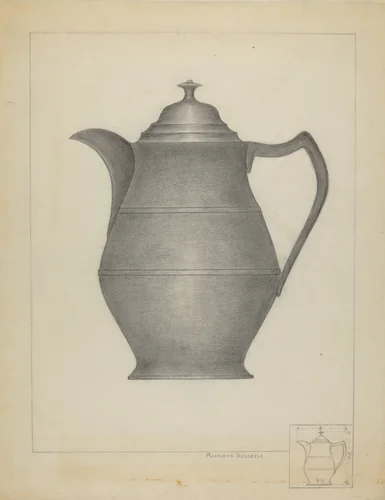
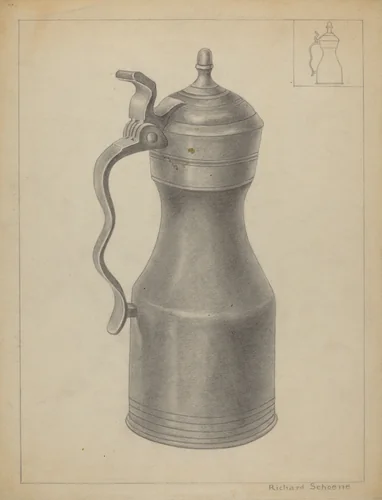
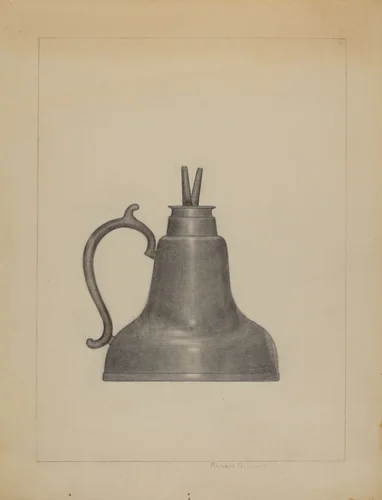
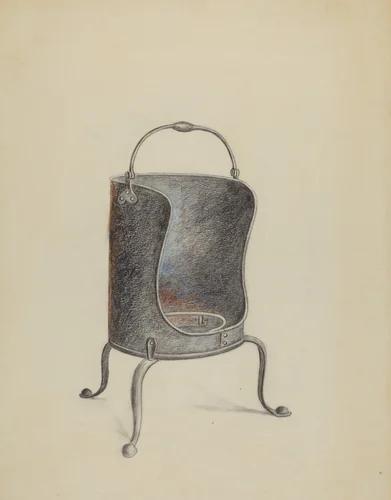
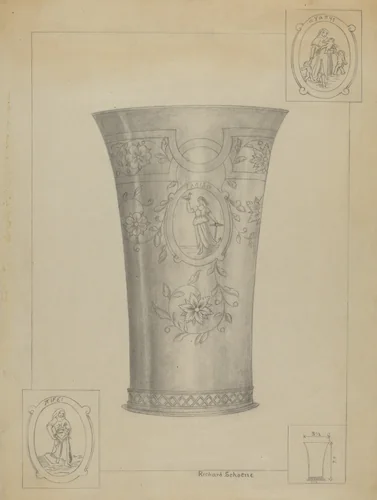
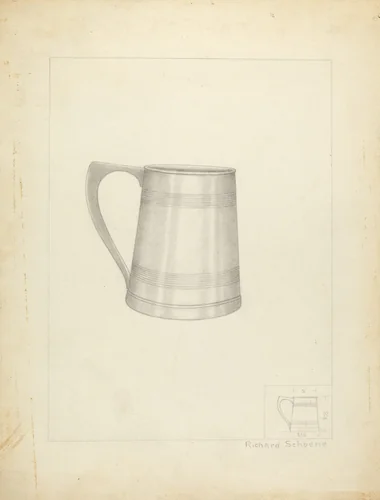
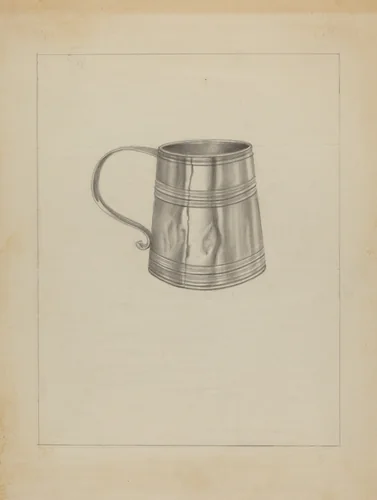
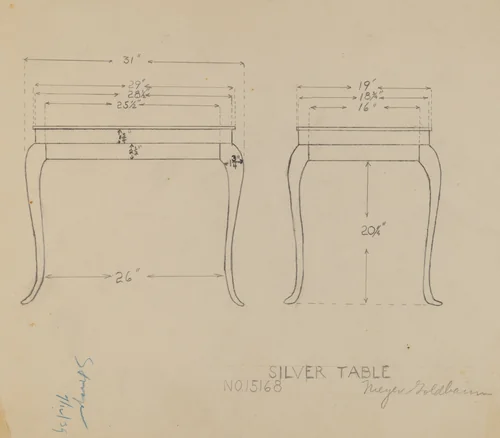
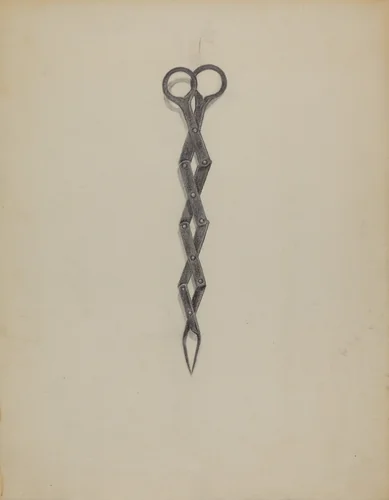
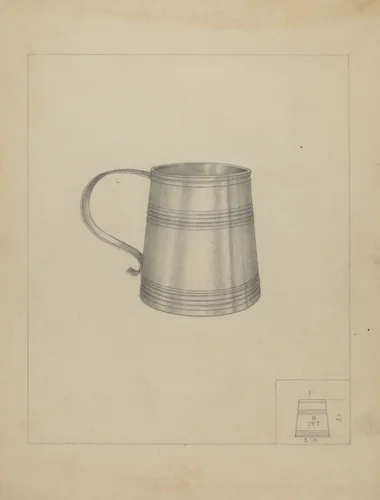
The Index was conceived as both an ambitious employment scheme for artists during the Depression and a necessary historical safeguard, documenting objects that were often fragile, decaying, or held in inaccessible private collections. Schoene specialized largely in metalwork and domestic implements, focusing on the functionality and inherent beauty of early American design. His 10 known index designs reveal a profound appreciation for line and volume, particularly evident in works such as the stately Pewter Tankard and the utilitarian grace of the Lamp. Other significant renderings include the detailed study of the Plate Warmer and the delicate refinement captured in the Silver Beaker.
Schoene’s artistic approach prioritized informational clarity, yet never sacrificed visual appeal; his watercolor studies are considered museum-quality documentation. It is perhaps a unique twist of history that Schoene, a name linked to classical philology and German archaeology in an earlier generation, found his place preserving the domestic materiality of the American republic. Whether this represents a shared name or an unusual career shift, the result is a body of work grounded in scholarly rigor.
Today, Schoene’s work forms part of the permanent Index of American Design collection housed at the National Gallery of Art, Washington D.C. These historical renderings are now held in the public domain, offering historians and contemporary designers essential insights into the evolution of American craft. The accessibility of these records means that Richard Schoene prints and high-quality prints of his essential documentation of American objects are widely available, securing his legacy as a vital, if understated, contributor to the nation’s historical visual inventory.