Richard Houston
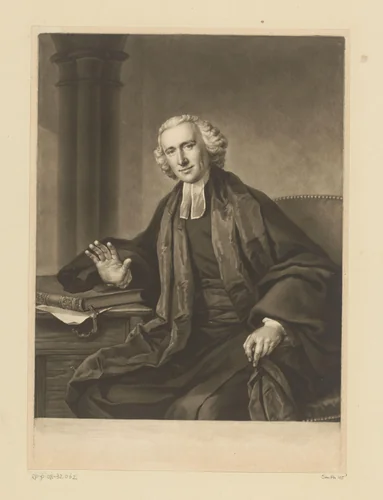
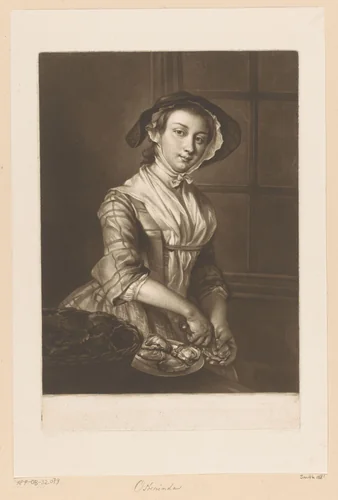
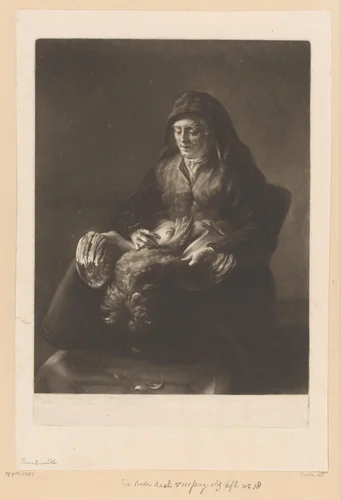
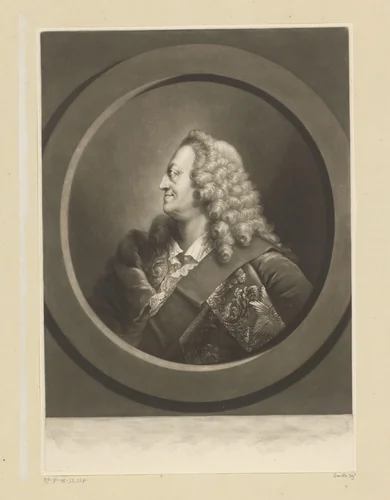
Richard Houston (c. 1721-1775) ranks among the foremost exponents of mezzotint engraving during the medium’s peak ascendancy in 18th-century London. Although his origins lay in Ireland, Houston’s professional life flourished across the Irish Sea, where he became a crucial figure in the burgeoning print market that characterized Georgian England. His technical mastery of the mezzotint process, a method often referred to as la manière noire due to its ability to render deep, velvety shadows and subtle gradations of tone, allowed him to create exceptionally rich and evocative images.
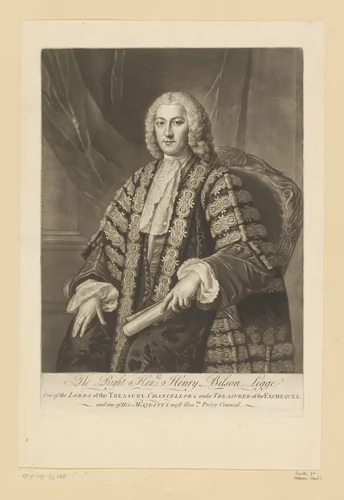
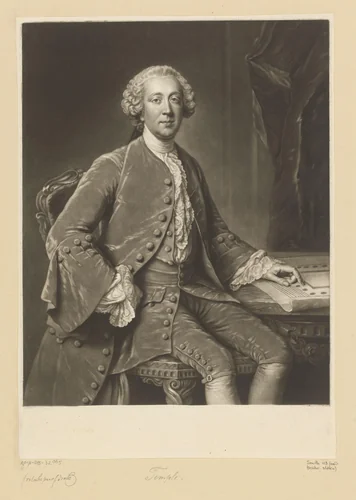
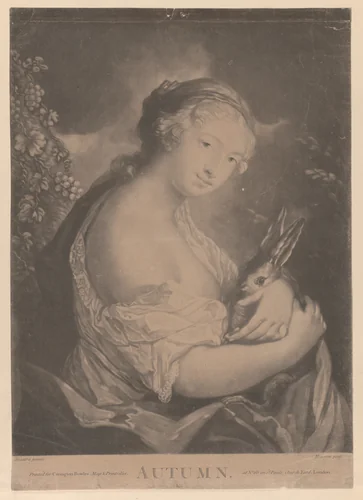
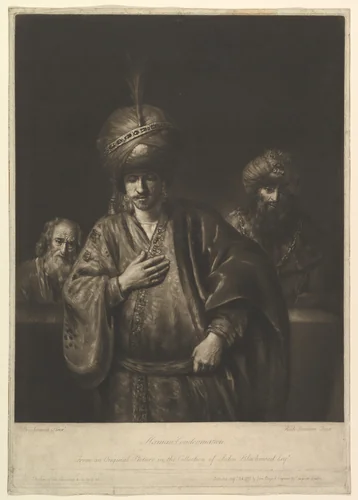
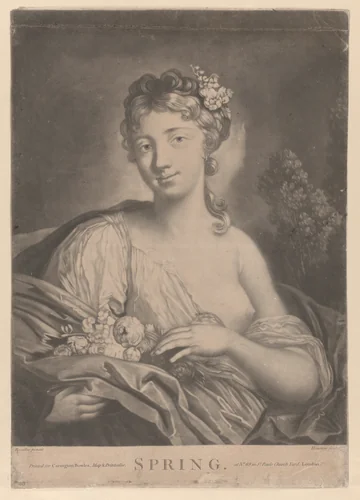
The primary function of the 18th-century engraver was reproductive; they served as the conduits through which the celebrated oil paintings of masters like Sir Joshua Reynolds and Thomas Gainsborough were popularized and disseminated. Houston excelled at this crucial interpretive task, successfully translating painterly texture into copperplate engraving. His work was pivotal in circulating the likenesses of prominent political and intellectual figures across Europe, solidifying London’s position as a capital of artistic reproduction.
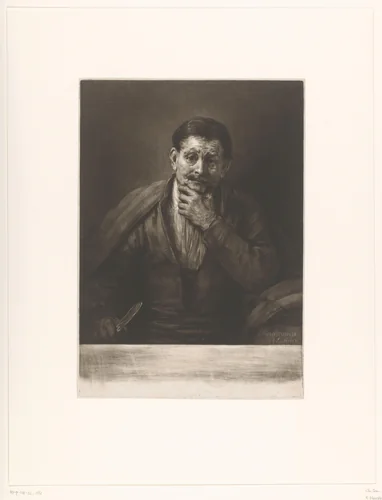
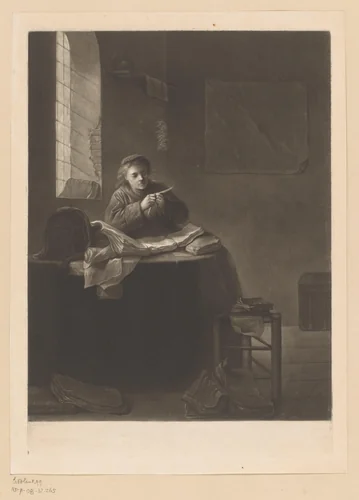
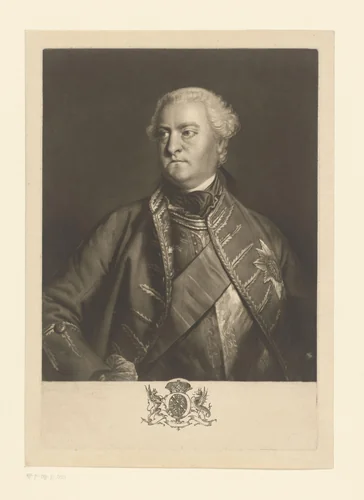
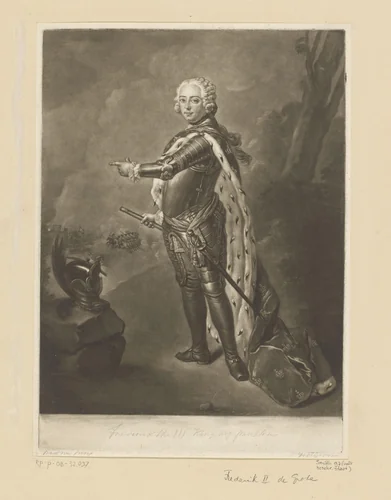
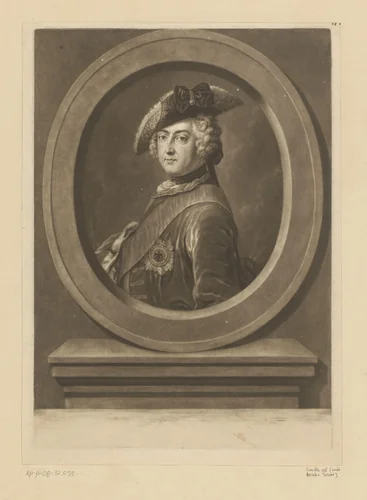
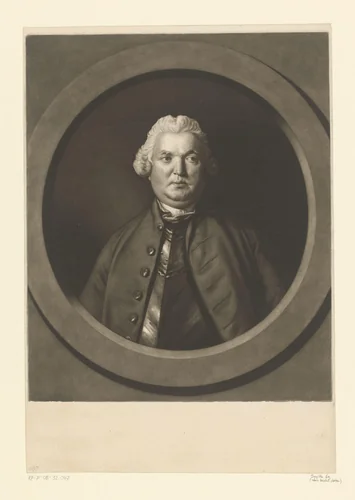
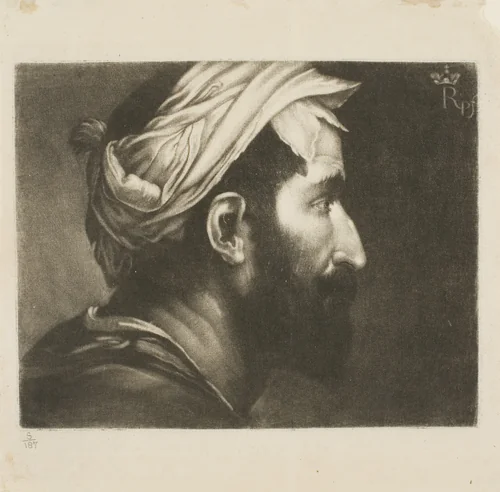
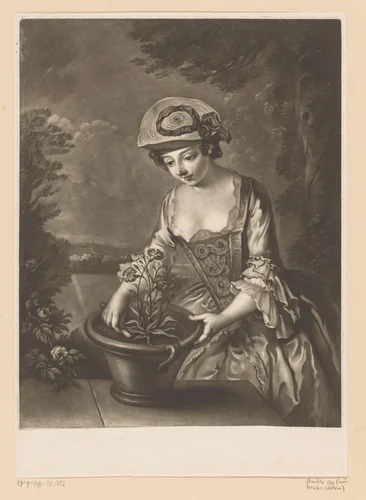
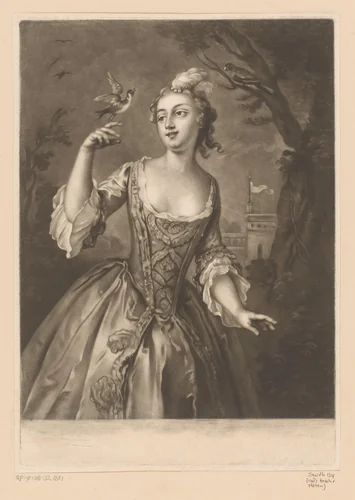
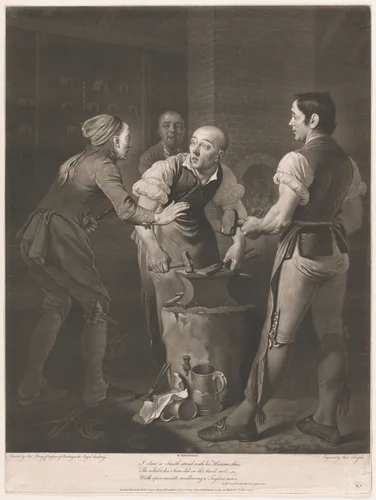
Houston’s versatility is clearly documented in the fifteen known prints attributed to him, which are held in prestigious institutional collections, including the Rijksmuseum and the Art Institute of Chicago. His catalog ranges from intimate character studies to highly formalized political imagery. Examples such as Man met een mes (Man with a Knife) reveal his capacity for genre realism, while the intricately detailed Geleerde versnijdt een pen in zijn werkkamer (Scholar Cutting a Pen in His Study) showcases his aptitude for depicting quiet, learned interiors. Simultaneously, he produced grand representations of European power structures, most notably the authoritative Portret van Charles Spencer and the widely distributed image of Prussian might in Portret van Frederik de Grote.
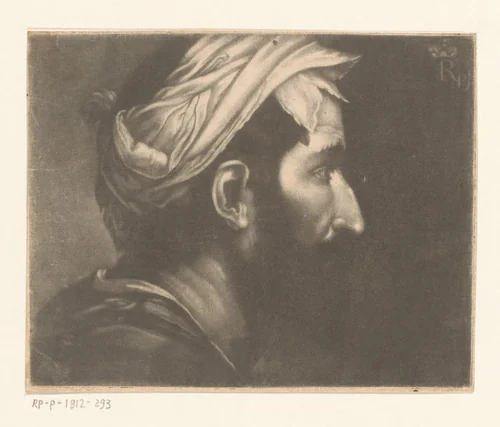
The subtle personality of Houston’s work lies in the atmospheric tension he managed to instill, even when working from existing compositions. His rendering of shadows in the dramatic Hoofd van een beul (Head of an Executioner), for instance, suggests a narrative intensity that elevates the work beyond simple transcription. These museum-quality prints are invaluable records of the period's visual culture. Recognizing their enduring historical significance, many Richard Houston prints have entered the public domain, providing researchers and enthusiasts with access to high-quality prints and downloadable artwork, thereby ensuring his legacy as a vital mediator of 18th-century artistry remains secure.
Source: Wikipedia · CC BY-SA 4.0