Richard F. Smith
Richard F. Smith holds a distinctive, if often complex, position within the history of American documentary arts. Active during the heart of the Depression-era New Deal programs, Smith contributed significantly to the Index of American Design (IAD), an ambitious federal endeavor intended to systematically record and preserve the visual heritage of native folk, decorative, and minor arts that were rapidly disappearing from the national consciousness. His documented activity spanned from 1935 to 1937, a crucial period in the IAD’s development.
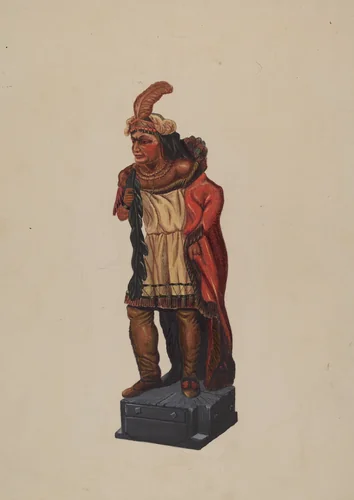
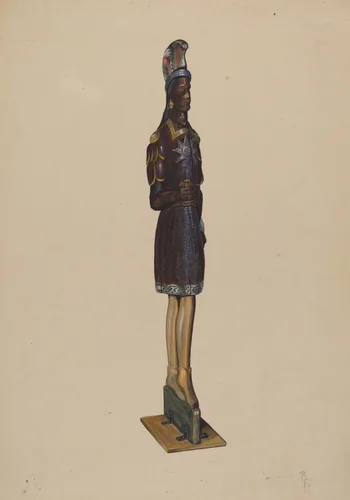
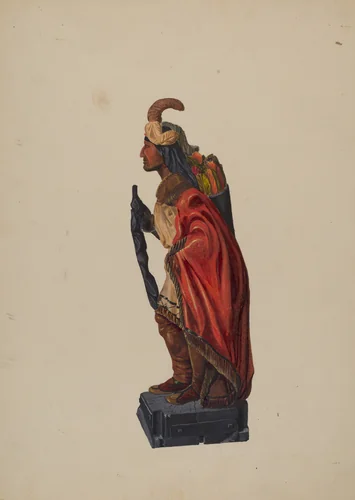
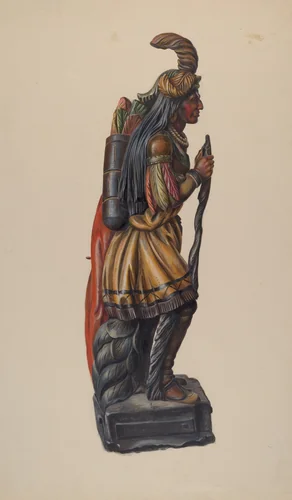
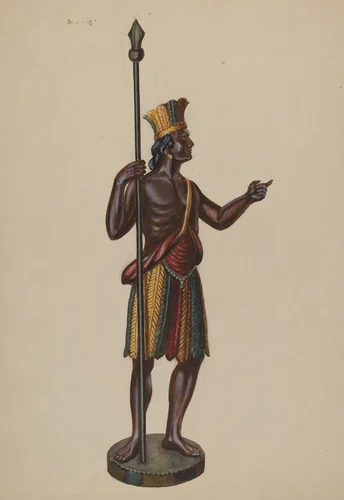
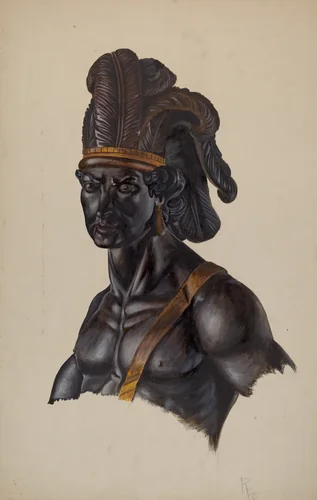
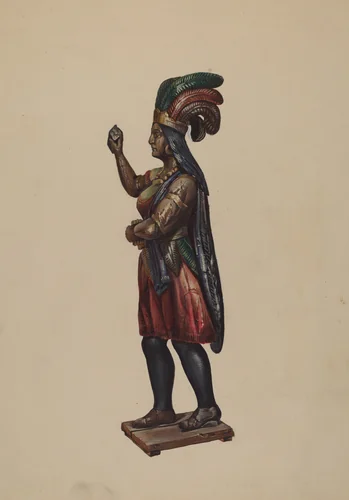
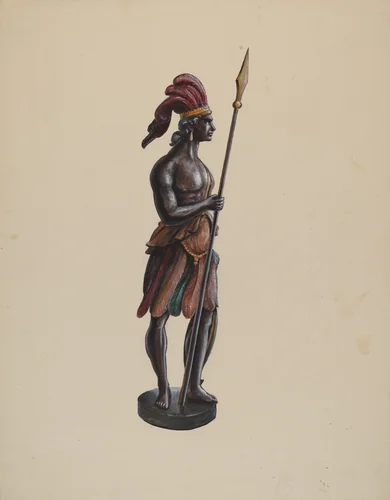
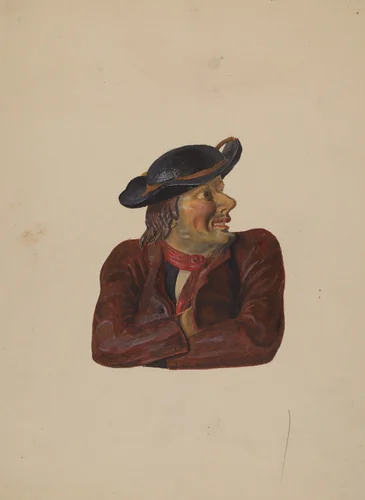
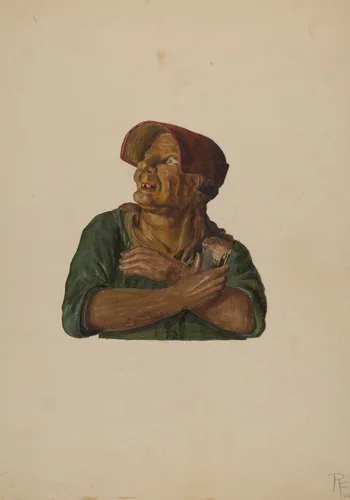
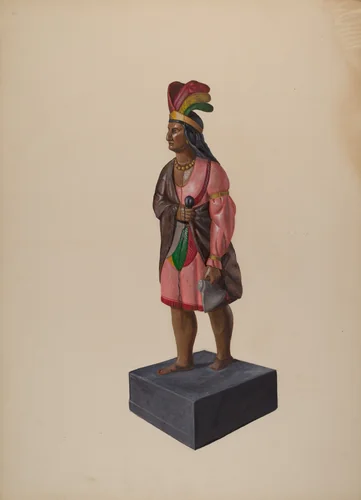
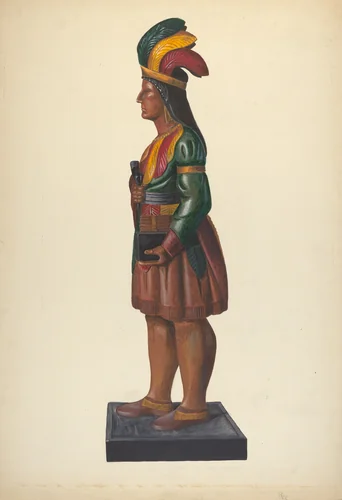
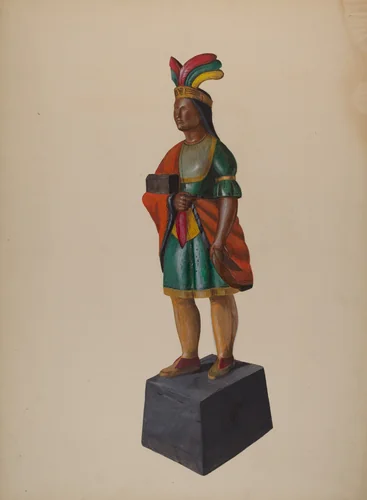
Smith’s primary contribution involved the exacting documentation of American commercial figures and trade symbols, executing at least thirteen detailed designs for the Index. He focused heavily on the iconic, vernacular artistry of the Cigar Store Indian. These drawings, often rendered in watercolor and graphite, were not merely sketches; they were meticulous, scaled representations that demanded intense technical discipline and a profound appreciation for craft typology. The repetitive study of the Cigar Store Indian transforms these commercial artifacts, originally intended for immediate visual impact, into subjects of formal artistic and historical scrutiny.
His detailed output provided essential visual data that ensured the preservation of these unique American forms. These works are now held in the permanent collection of the National Gallery of Art, Washington D.C., confirming their status as museum-quality historical records. The documentation created by Smith and his contemporaries forms part of the rich cultural legacy that has since entered the public domain, enabling researchers and enthusiasts worldwide to access and utilize these valuable resources. Today, Smith’s detailed studies of these unique wooden figures are widely available as Richard F. Smith prints, providing indispensable documentation of 19th-century craft traditions.
It is a curious note in American professional history that the executive rigor and systematic analysis required for such fastidious artistic documentation later defined a markedly different career trajectory. Following this intensive period of visual record-keeping, Smith pivoted to the corporate sphere, embarking on a long and influential career in American business. He eventually served as chairman and chief executive officer of the credit reporting corporation Equifax from 2005 until 2017. The discipline required to document the physical artifacts of the American past, it seems, was merely prologue to managing its financial present.
Source: Wikipedia · CC BY-SA 4.0