Richard Doyle
Richard Doyle (1824–1883) stands among the most significant English illustrators of the Victorian period, largely responsible for crystallizing the visual language of the nineteenth-century fairy world. Active principally between 1844 and 1870, Doyle’s distinctive style married precise draftsmanship with exuberant fantasy, establishing him as the era’s foremost interpreter of folklore and elven life.
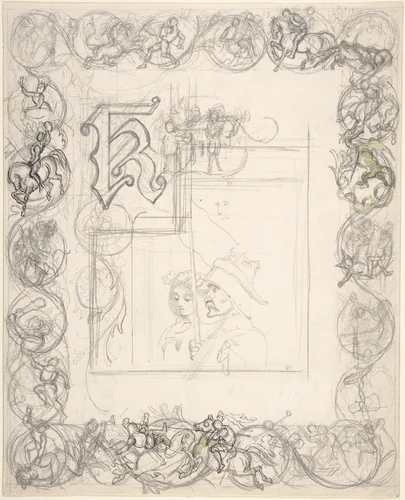
Doyle initially gained prominence through his work at Punch magazine, where he created its iconic cover masthead, used consistently until 1956. However, his enduring artistic legacy resides in his book illustration and singular passion for the supernatural. Doyle’s visual world is dense and intricate, characterized by detailed pen-and-ink studies and lively watercolor paintings that populate natural settings with diminutive, often mischievous, sprites and fairies. Early works, such as the drawing Border design with knights, ladies and dragons (recto), exemplify his talent for creating elaborate, ornamental compositions that blur the line between decorative art and narrative illustration.
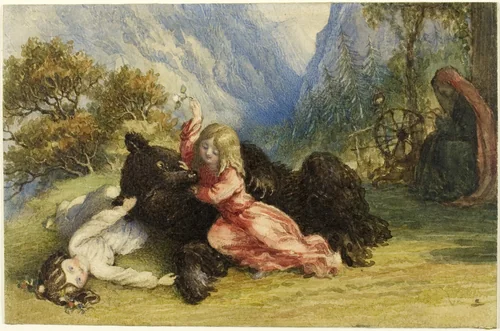
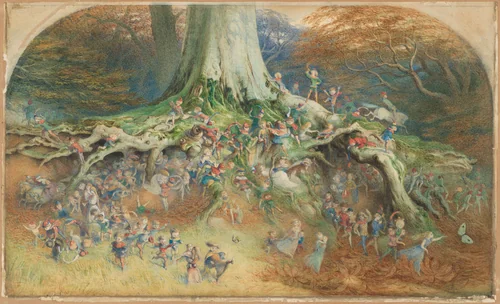
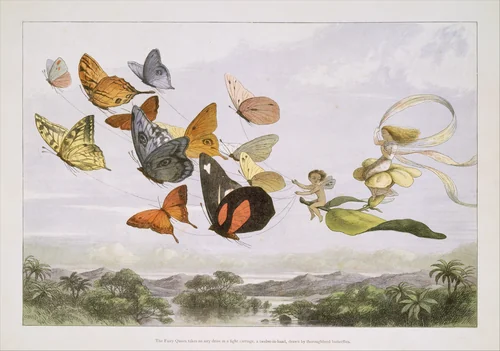
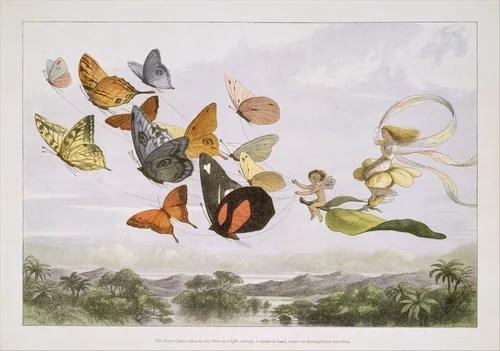
His dedication to the ethereal culminated in the monumental publication of In Fairyland: A Series of Pictures from the Elf-World (1870). Featuring sixteen color plates rendered with extraordinary skill, the volume showcased the full breadth of his imaginative vision, including whimsical scenes like The Fairy Queen Takes an Airy Drive in a Light Carriage, a Twelve-in-hand, drawn by Thoroughbred Butterflies. Whether working on narrative scenes like Snow White and Rose Red or standalone pieces such as the watercolour The Enchanted Tree, Doyle consistently achieved an exceptional standard of craftsmanship.
Doyle’s capacity to imbue the fantastic with believable, almost journalistic, detail secured his reputation. His works are highly prized for their museum-quality execution and historical importance, held today in major collections including the Art Institute of Chicago and the Metropolitan Museum of Art. Although much of his illustration work is now in the public domain, allowing access to high-quality prints and royalty-free images, the legacy of Richard Doyle prints continues to define the quintessential Victorian response to the enduring appeal of the magical.
Source: Wikipedia · CC BY-SA 4.0