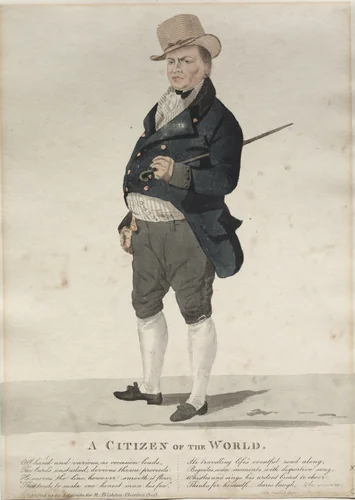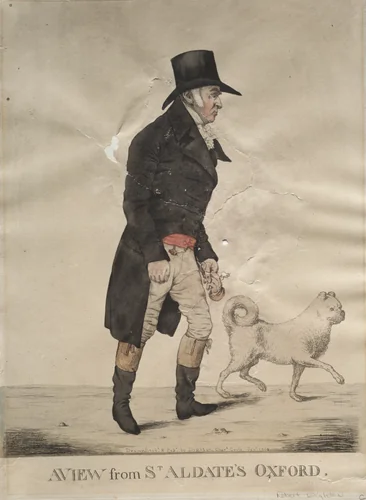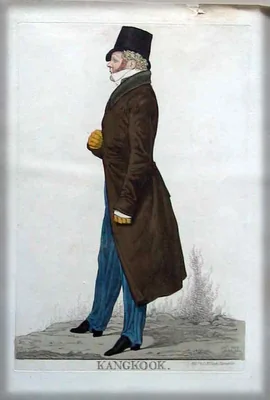
Richard Dighton
Richard Dighton (active 1807-1835) was an essential English artist who captured the defining social fabric of the Regency period through graphic satire. Operating primarily in London, Dighton established his reputation not through the grand, academic tradition of historical painting, but through the immediate, accessible medium of the profile caricature. His works function as vital documents of metropolitan life, providing a discerning, often humorous, visual index of the era’s celebrities, local personalities, and eccentric characters.
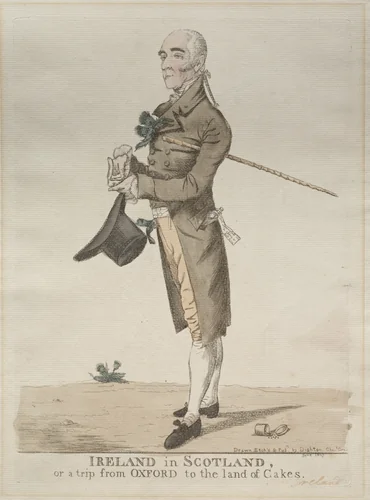
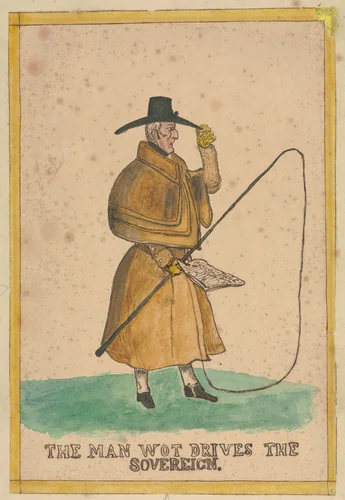
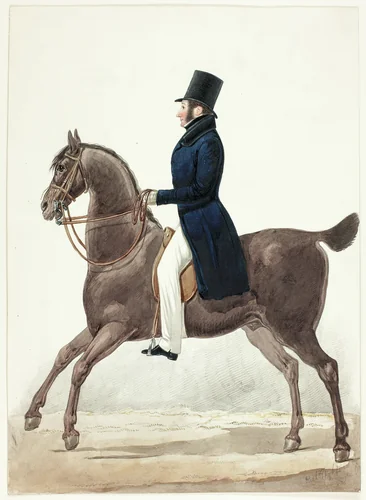
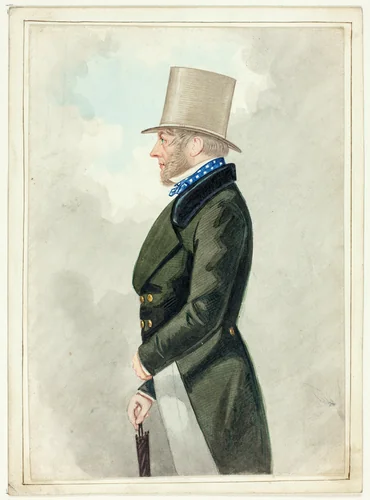
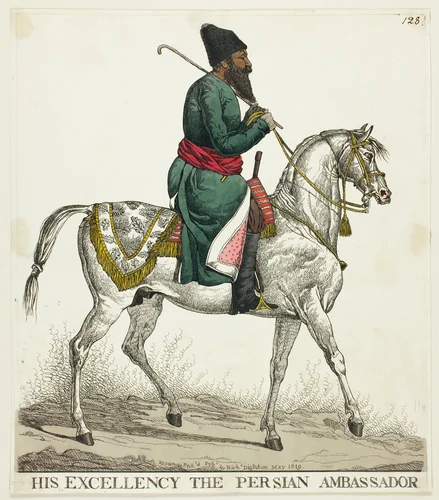
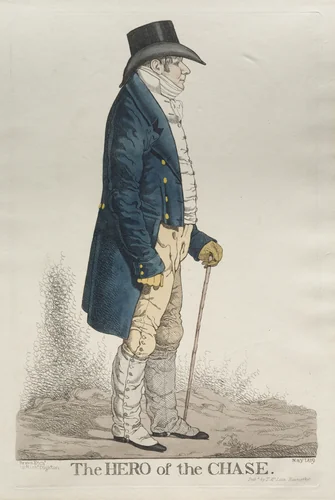
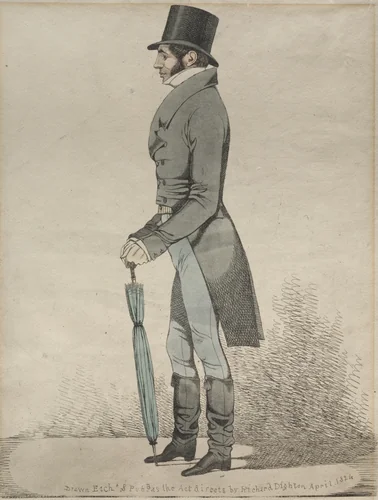
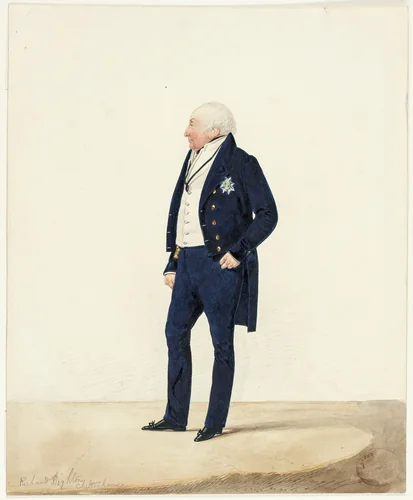
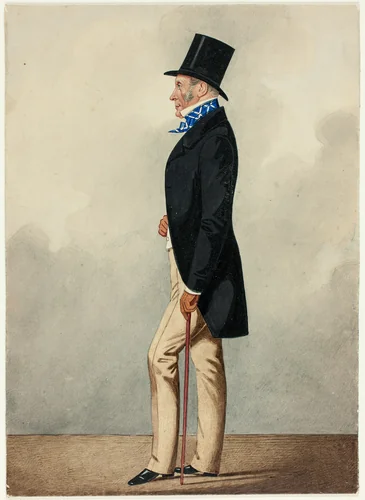
Dighton’s artistic strength lay in his ability to achieve instantaneous recognition of the subject, often exaggerating features or stance just enough to convey personality flaws or social type. This approach made his works widely popular among contemporaries eager for social commentary and amusement. His substantial output of prints, exemplified by titles like Ireland in Scotland, or a Trip from Oxford to the Land of Cakes and the immediately descriptive The Man Wot Drives the Sovereign, established him as a key figure in the visual arts of the 1810s and 1820s. He excelled particularly in the stylized profile silhouette, a format perfectly suited for mass reproduction and distribution across the city.
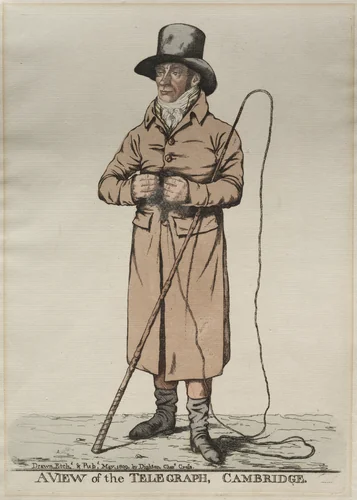
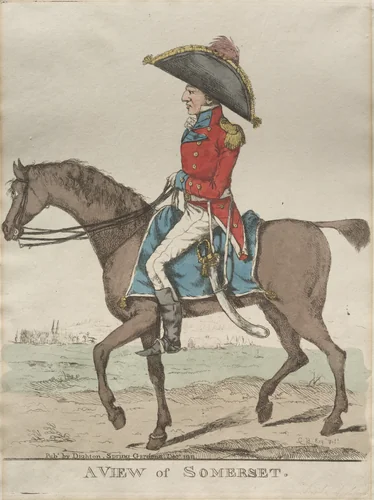
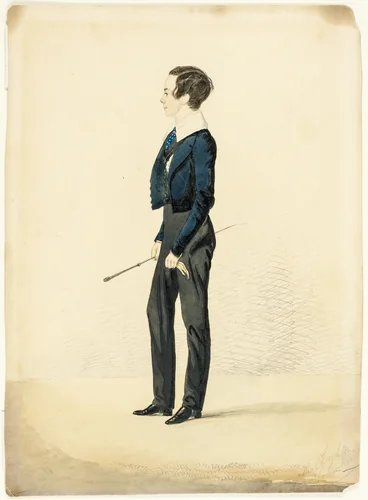
While the majority of his commercial success stemmed from these graphic ventures (eight prints are documented in this collection), Dighton also worked across other media, producing intimate character studies and small-scale Richard Dighton paintings. These included detailed works such as Boy in an Eton Collar, suggesting a broader, though less celebrated, proficiency in portraiture outside of the strict satirical form. One interesting feature of his work is the consistent attention paid to the specific geography and social dynamics of early nineteenth-century England, evident in localized views like A View of the Telegraph, Cambridge and A View of Somerset.
Dighton’s capacity for crisp, witty observation ensures his continued significance today. His works are preserved in major American institutions, including the Art Institute of Chicago and the Cleveland Museum of Art, where they serve as invaluable historical references. Given the age and enduring relevance of his artistic production, much of Dighton’s output is now in the public domain, allowing researchers and enthusiasts easy access to high-quality prints and downloadable artwork for study and appreciation.
Source: Wikipedia · CC BY-SA 4.0