Richard Artschwager
Richard Ernst Artschwager (1923-2013) occupied a rare and complex position in late 20th-century American art. Working simultaneously as a painter, illustrator, and sculptor, his practice intentionally destabilized the conventional boundaries of medium and genre. His output resists easy categorization, displaying profound associations with the material objectivity of Minimalism, the detached commercial imagery of Pop Art, and the systemic rigor of Conceptual art. This unique synthesis made him a key transitional figure whose work paved the way for subsequent generations dealing with the inherent problems of artistic representation.
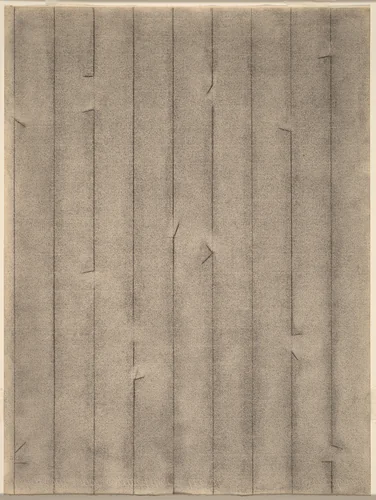
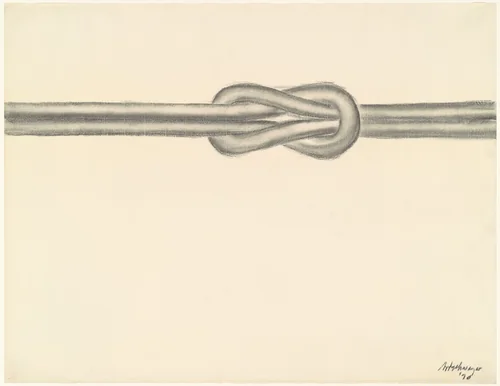
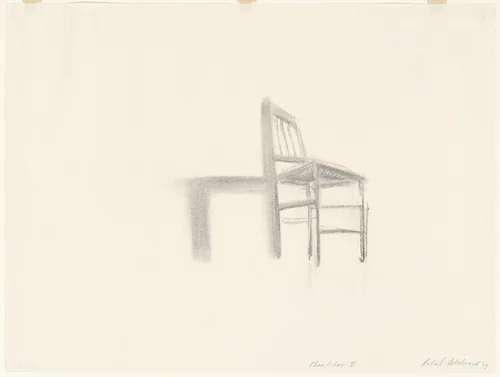
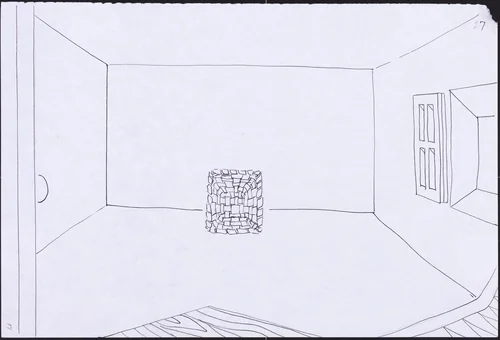
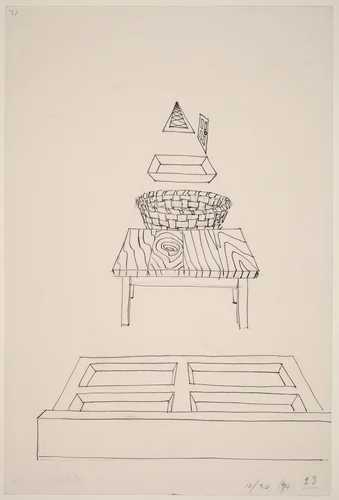
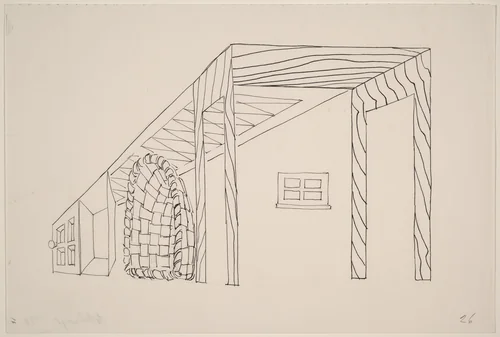
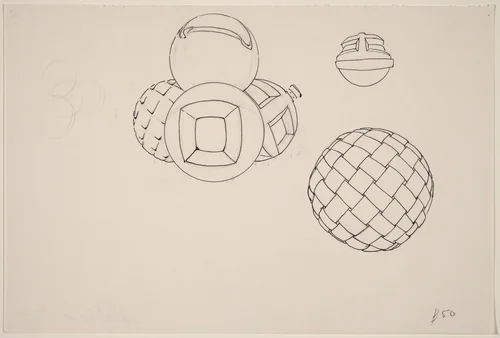
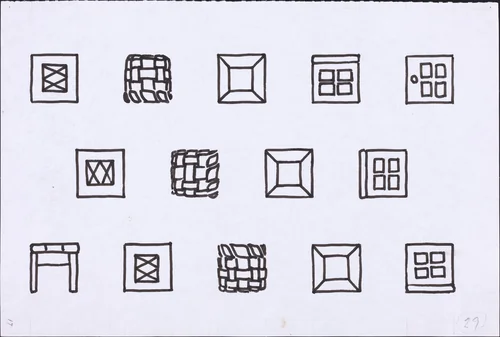
Artschwager focused persistently on the furniture and domestic environments that underpin daily life. These objects, whether rendered in stark, graphic drawings or in three-dimensional approximations of industrial laminates, forced viewers to question whether they were encountering painting, sculpture, or merely a diagram of the everyday. His highly active drawing series between 1969 and 1974, often utilizing carbon or ink, highlight this conceptual rigidity. Pieces such as Chair/Chair II and the intricate, enumerated studies like Basket, Table, Door, Window, Mirror, Rug #21 and Basket, Table, Door, Window, Mirror, Rug #23 operate as objective studies, simultaneously celebrating and neutralizing the utility of the depicted object. Artschwager’s work from this period is featured prominently in collections such as the National Gallery of Art.
His disciplinary independence extended to material choices; Artschwager used Formica, Celotex, and other common industrial materials, complicating the viewer's interpretation and making the resulting works feel both strangely familiar and aggressively artificial. Because much of his approach was rooted in high-contrast graphic reproduction and illustration, many Richard Artschwager prints translate exceptionally well to the digital format, frequently appearing as high-quality prints in museum and educational resources. It is perhaps a minor irony that an artist so committed to interrogating the objecthood of a simple chair ultimately helped define how we view the public domain status of modern artistic representation. His disciplined, conceptual approach cemented his reputation not as a stylist, but as an indispensable chronicler of modern domestic form.
Source: Wikipedia · CC BY-SA 4.0
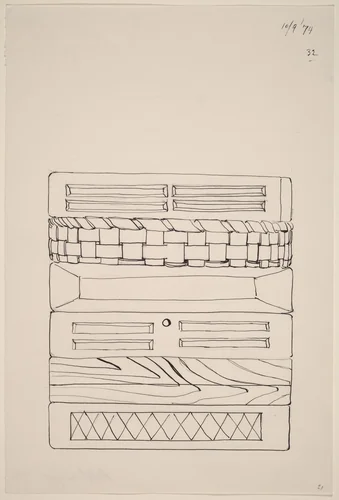
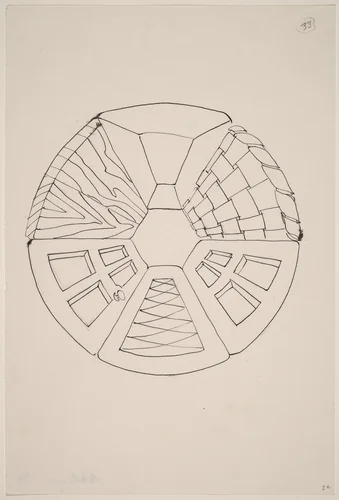
![Basket, Table, Door, Window, Mirror, Rug #39 [recto] by Richard Artschwager, drawing, 1974](https://img.artbee.org/81d1e87b-879b-47ae-9db3-00191521b414/small.webp)
![Basket, Table, Door, Window, Mirror, Rug #40 [verso] by Richard Artschwager, drawing, 1974](https://img.artbee.org/ba125142-955a-41ff-80d3-e357fe87dad4/small.webp)
![Basket, Table, Door, Window, Mirror, Rug #41 [recto] by Richard Artschwager, drawing, 1974](https://img.artbee.org/f3cedb93-9fbc-4fa5-88eb-006c28f4e8e0/small.webp)
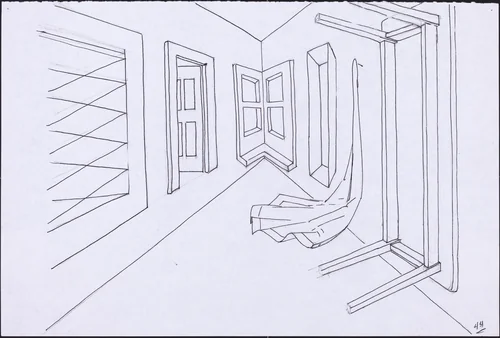
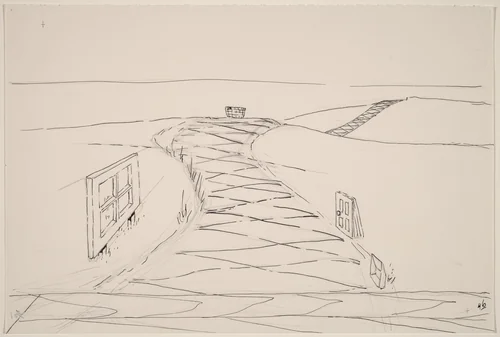
![Basket, Table, Door, Window, Mirror, Rug #7 [recto] by Richard Artschwager, drawing, 1974](https://img.artbee.org/f036f29a-6c07-4548-869c-ac04f30db938/small.webp)
![Basket, Table, Door, Window, Mirror, Rug #8 [verso] by Richard Artschwager, drawing, 1974](https://img.artbee.org/70a3dc29-168f-4215-bf95-97dd2a38ddca/small.webp)
![Basket, Table, Door, Window, Mirror, Rug [verso] by Richard Artschwager, drawing, 1974](https://img.artbee.org/947282d6-ecae-44b4-8807-987d72529438/small.webp)
![Basket, Table, Door, Window, Mirror, Rug #42 [recto] by Richard Artschwager, drawing, 1975](https://img.artbee.org/3d4bde60-6e5b-4db8-b0ab-4c64fc1ee763/small.webp)
![Basket, Table, Door, Window, Mirror, Rug #42 [verso] by Richard Artschwager, drawing, 1975](https://img.artbee.org/fa17bb9c-2ad9-4495-94cc-5d17cbac1039/small.webp)