Remondini
The Remondini name is intrinsically linked to one of the most prolific and influential print publishing houses operating in Italy during the late Baroque and Rococo periods. Based primarily in Bassano del Grappa, the Remondini firm specialized in the mass production and wide distribution of graphic material, ranging from religious iconography and playing cards to detailed architectural vistas and, crucially, social documentation. Active throughout the 18th century, the firm established a powerful commercial network that helped define popular visual culture across Europe.
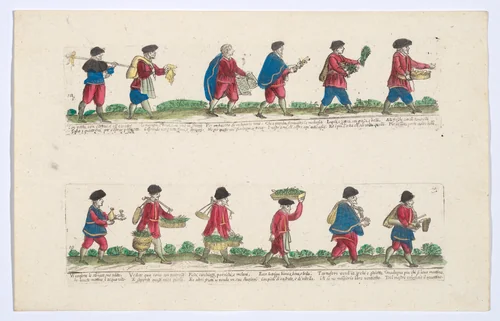
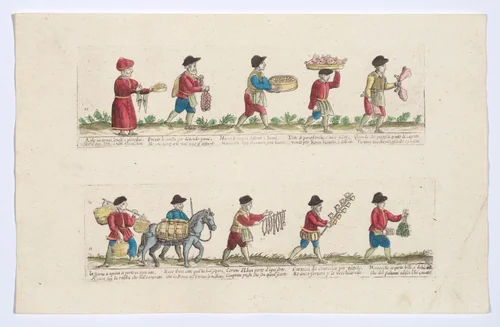
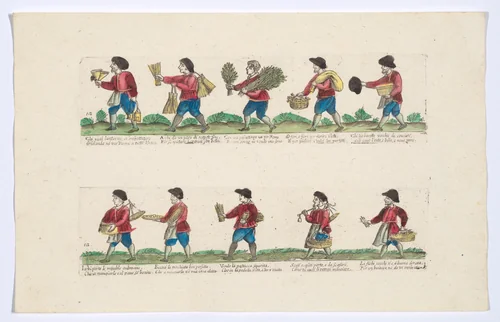
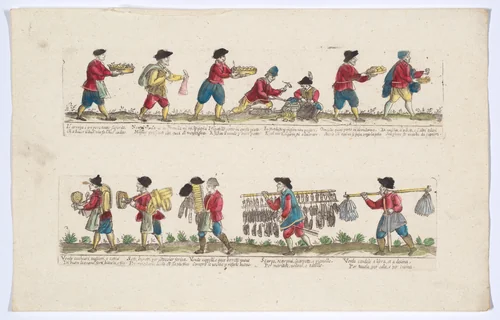
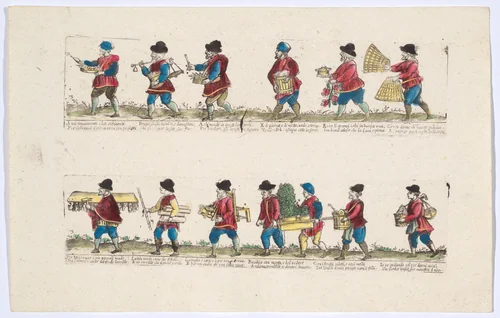
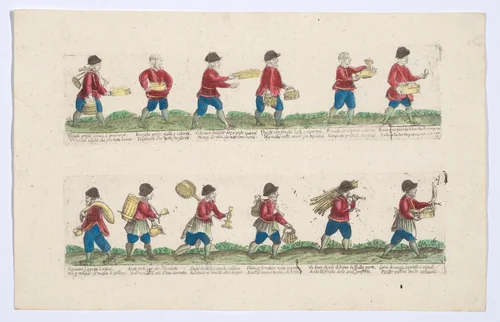
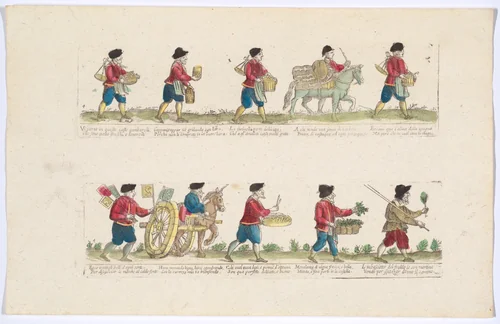
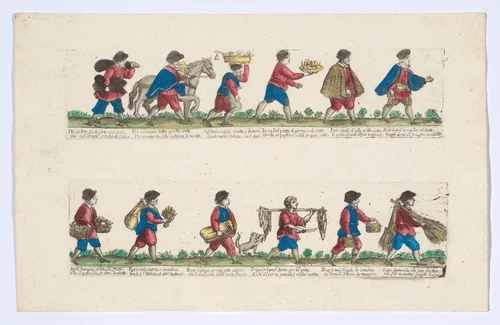
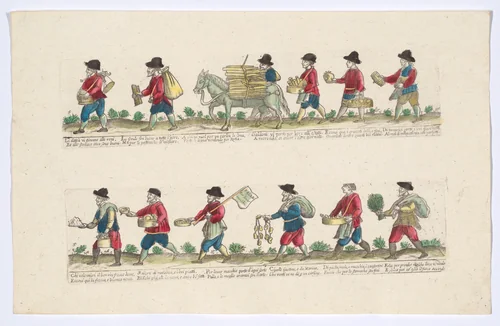
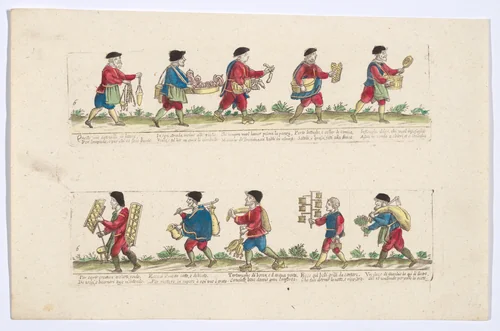
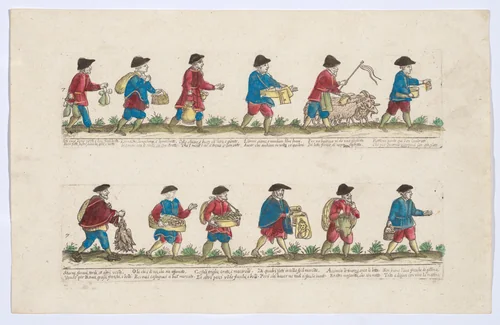
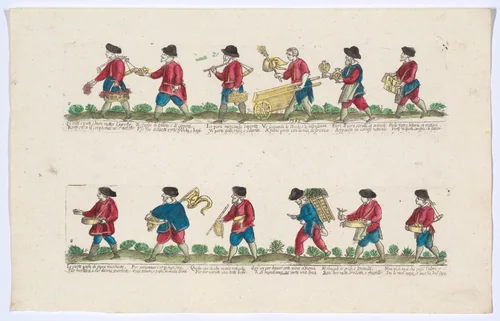
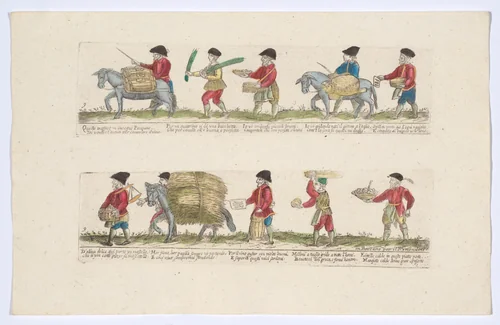
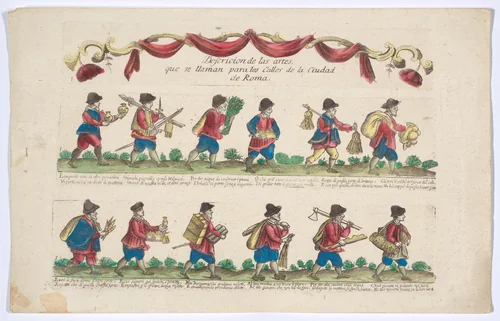
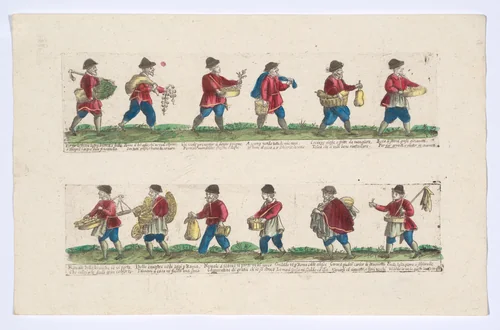
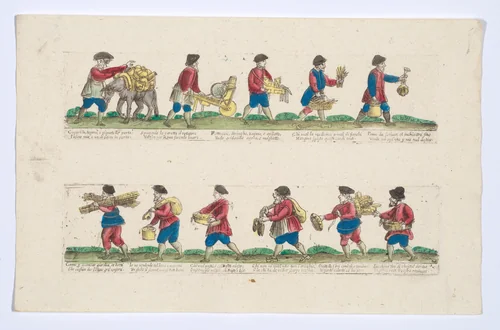
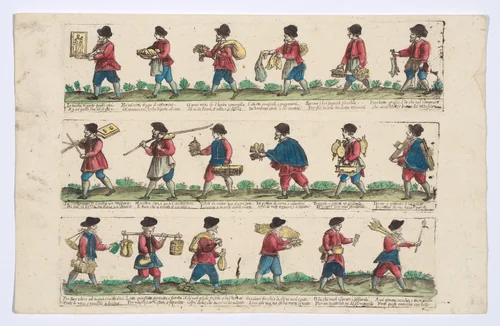
Among their most compelling contributions is the series Descrición de las artes que se llaman para los calles de la ciudad de Roma (Description of the Arts Called in the Streets of the City of Rome), dated to approximately 1765. This ambitious project captured the dynamic and gritty reality of the city’s trades. Far removed from the heroic poses and classical ruins favored by grand tourists, the individual plates offer sharp, often humorous, vignettes of quotidian commerce.
The catalog listing confirms the firm’s fascination with the delightfully mundane. Plate 10, for example, documents the precise transactions of daily life, detailing vendors of specific goods such as "medicine of an upset stomach" alongside artichokes and tripe. Likewise, Plate 11 immortalizes the sellers of pigs heads, milk, and wine, while Plate 3 focuses on flowers, chairs, and basil. This detailed visual survey, continued through plates depicting lanterns, brooms, almonds, figs, fish, and sieves, provides an invaluable resource for cultural historians studying 18th-century Italian economics and material culture.
The enduring success and sheer volume of the output ensured the firm’s lasting impact. These Remondini prints demonstrate a fascinating blend of entrepreneurial publishing prowess and genuine artistic observation, capturing the specific materiality of Roman life with disarming accuracy. Today, original impressions of these high-quality prints reside in major institutions globally, including the Metropolitan Museum of Art, cementing their status as museum-quality artifacts. Furthermore, the historical significance of these graphics means many have entered the public domain, making them widely accessible as royalty-free downloadable artwork for contemporary scholarship and appreciation.