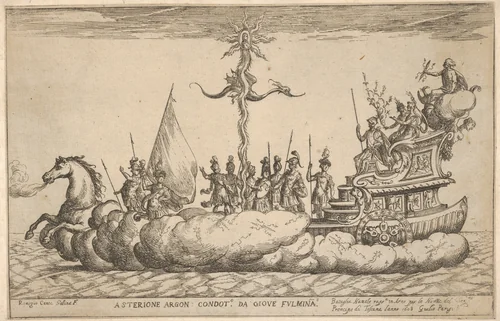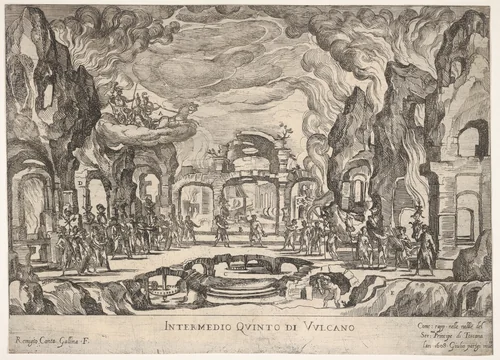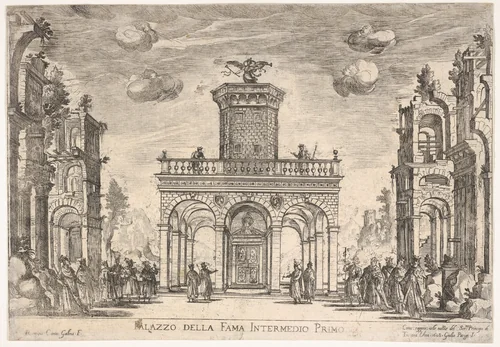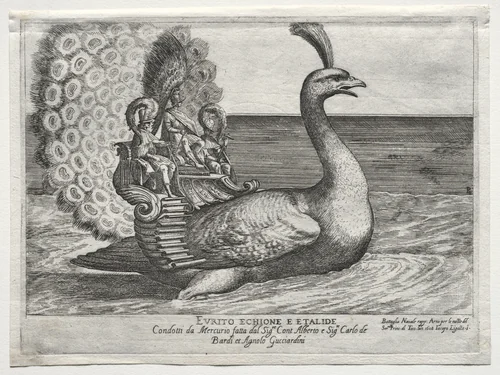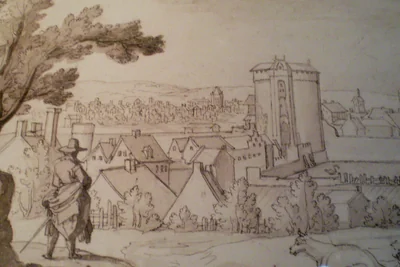
Remigio Cantagallina
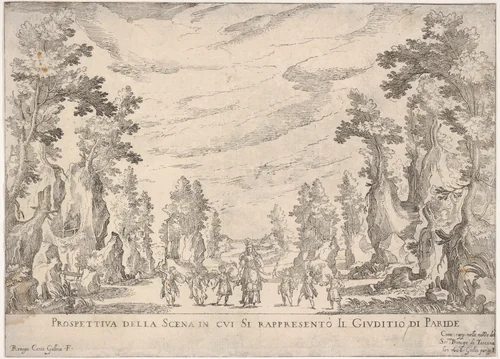
Remigio Cantagallina was an influential Italian etcher active during the dynamic shift from the sixteenth to the seventeenth centuries, operating primarily between 1582 and 1608. Although the documented body of known works is relatively modest—comprising approximately eight surviving drawings and seven published prints—his meticulous eye for landscape and topographical detail places him firmly within the historical development of early Baroque printmaking.
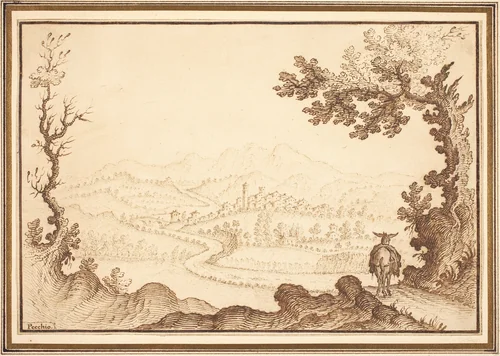
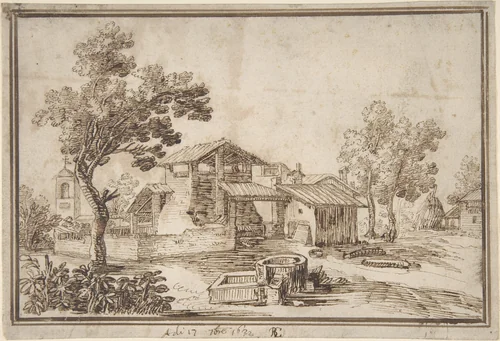
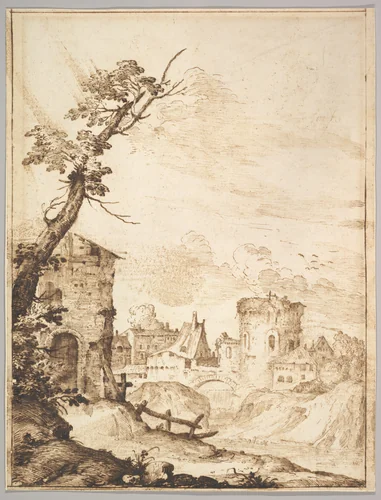
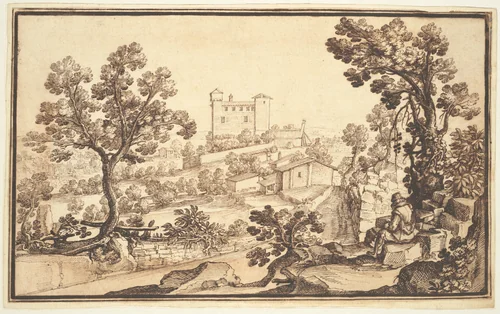
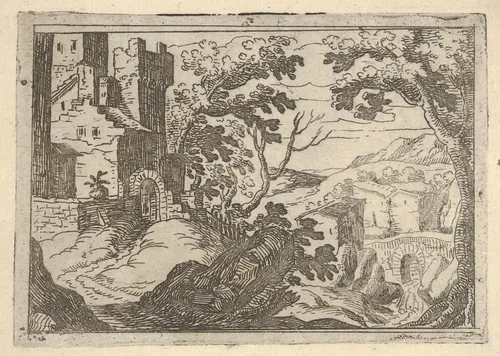
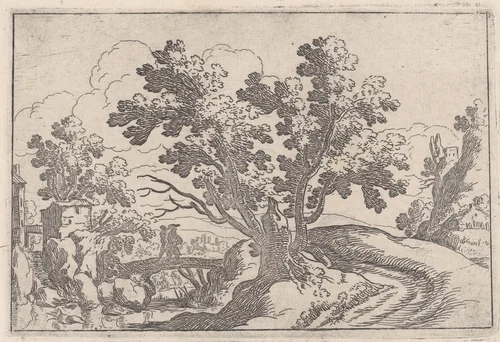
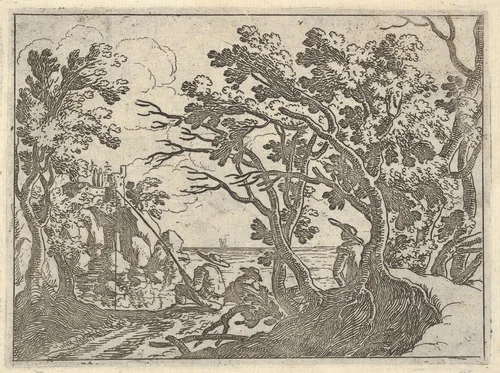
Cantagallina specialized in precise views of the Florentine hinterland and detailed narrative scenes, often bridging the structured idealism of late Mannerism with the observational realism associated with the emerging Baroque style. His works demonstrate an interest less in idealized classical settings and more in the specific, localized character of the contemporary Tuscan countryside, a focus evidenced by titles such as A Landscape Near Pecchio and Landscape with a Farm House and a Bell Tower.
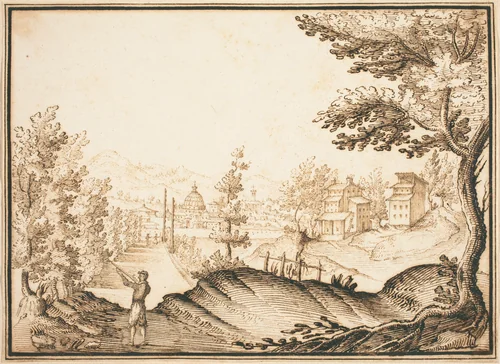
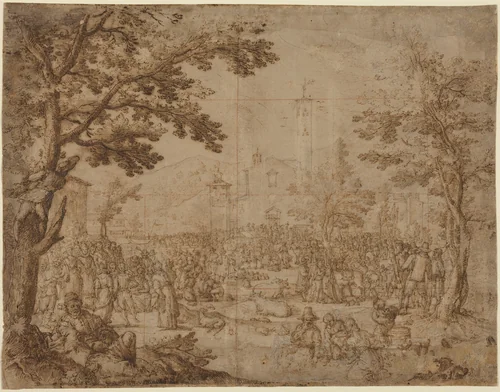
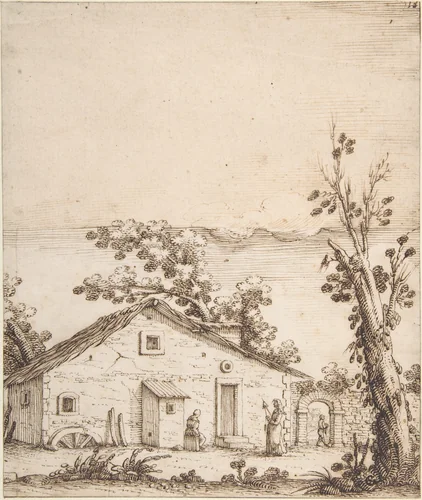
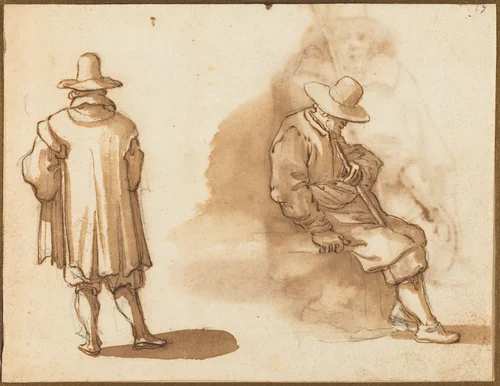
His etching technique, characterized by precise line work and effective use of shadow, allowed for nuanced renderings of both architectural complexity, seen in A Landscape with a Domed Building, and the lively interaction of figures, notably in the expansive genre scene The Fair at Impruneta. It is in these topographical views and depictions of common life, such as Three Figures by a Rustic Dwelling, that the artist’s subtle wit and observational skills are best displayed, elevating quotidian settings into subjects of serious artistic inquiry.
While documentary evidence concerning Cantagallina's personal life remains sparse, his historical importance is confirmed by the sustained interest of major global institutions. Original impressions of his work reside in prestigious collections, including the Metropolitan Museum of Art, the National Gallery of Art, and the Cleveland Museum of Art, establishing the enduring museum-quality of his output.
For scholars, Cantagallina’s precise delineation provides valuable insight into late Renaissance and early Baroque daily life and regional architecture. Furthermore, owing to the age of the original plates, many Remigio Cantagallina prints are now firmly in the public domain, making high-quality prints and downloadable artwork widely accessible to researchers and collectors globally. His legacy, though rooted in a small output, provides a crucial graphic document of early seventeenth-century Florence.
Source: Wikipedia · CC BY-SA 4.0