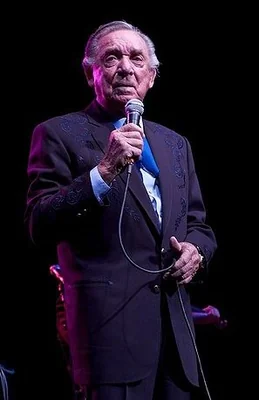
Ray Price
Noble Ray Price holds a crucial, often underestimated, place in the evolution of American popular arts during the mid-twentieth century. Recognized initially for his prowess as a guitarist, singer, and songwriter, Price’s enduring significance lies in his innovations that fundamentally redefined the rhythmic language of an entire genre. His remarkably wide-ranging baritone is universally regarded as among the finest male vocal instruments in the history of country music, possessing a technical polish that elevated the material he performed.
Price was not content merely to interpret existing forms. He approached the foundational rhythm of American music with a precision that bordered on engineering. Prior to his intervention, country music primarily adhered to a pronounced 2/4 meter, a structure that provided a steady but restrictive pulse. Price daringly and deliberately propelled this foundational structure into a driving 4/4 time. This sophisticated rhythmic advancement became known eponymously as the "Ray Price beat."
The transition from 2/4 to 4/4 may appear to be a minor mathematical adjustment, but in practice, it was a revolution. This shift provided the music with an immediate, swinging urgency that broadened its appeal far beyond its traditional regional confines. Price’s innovations helped unlock the commercial and artistic viability of the genre, making it significantly more popular among general American audiences and influencing subsequent generations of musicians across multiple styles. It is mildly ironic that such a profound expansion of American culture hinged on the strategic doubling of a time signature.
While Price’s contribution is primarily sonic, his method reflects the careful planning seen in other historical American design indexes. His systematic approach to rhythm ensures that the complexity and structure of his work continue to be studied. Although we may not have documentation detailing hypothetical Ray Price paintings, the structure of his recorded output is an enduring artifact of cultural history. His achievements are increasingly viewed through the lens of academic study, and reproductions of album art and photographs are available as high-quality prints, solidifying his legacy as an innovator whose royalty-free rhythmic framework continues to inform modern sound.
Source: Wikipedia · CC BY-SA 4.0