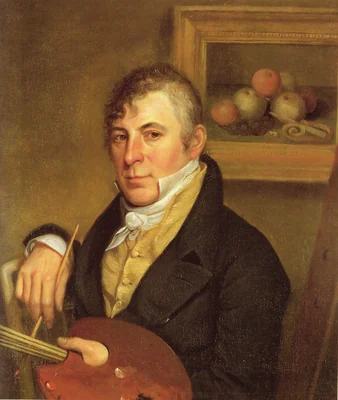
Raphaelle Peale
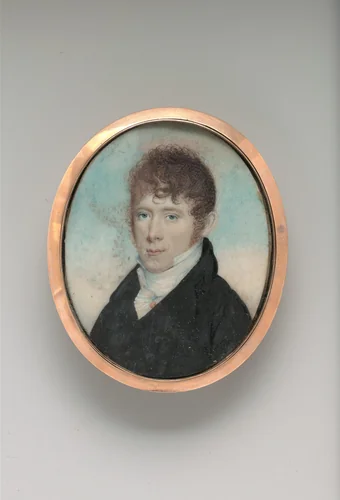
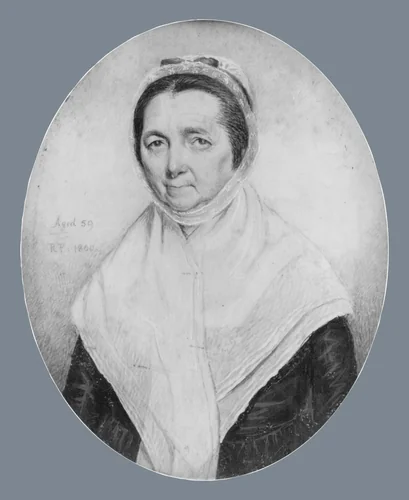
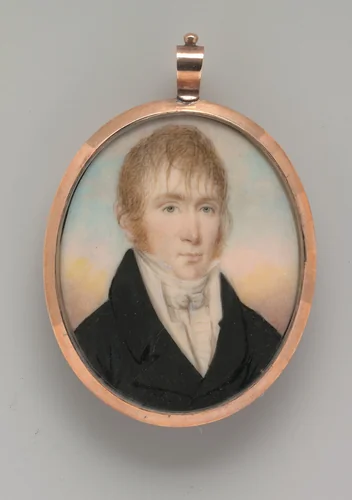
Raphaelle Peale (1774-1825) holds the singular distinction of being recognized as America’s first professional and dedicated still-life painter. Operating primarily out of Philadelphia, a cultural epicenter during the early Federalist period, Peale was born into the nation’s preeminent artistic dynasty, the son of the painter, inventor, and naturalist Charles Willson Peale. While the family legacy was strongly rooted in portraiture, Raphaelle consciously carved out a highly specialized niche that elevated the representation of common objects to high art.
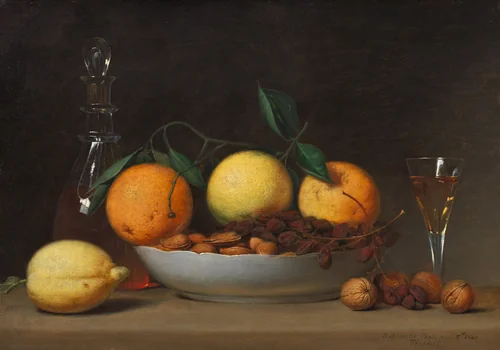
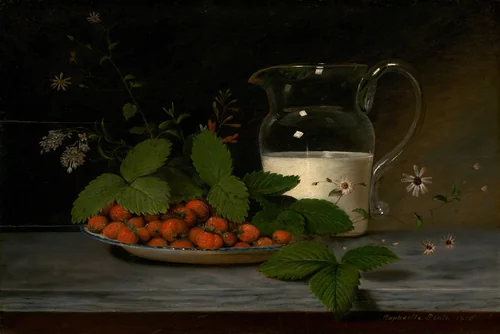
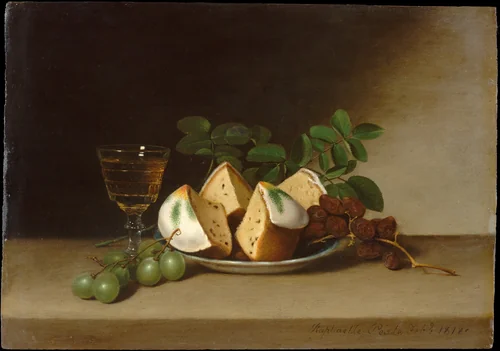
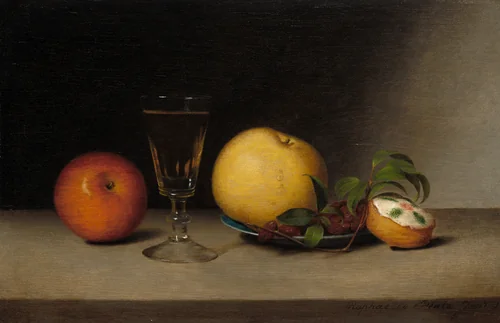
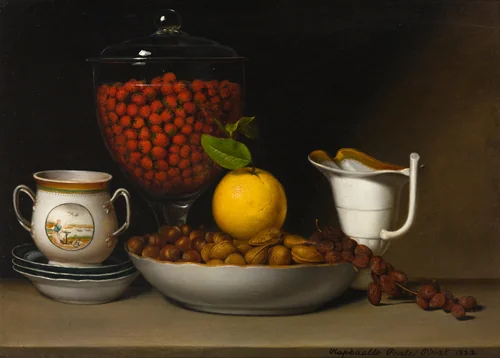
Working within a compressed active period (approximately 1795-1822), the artist developed a concise and rigorous style focusing almost exclusively on domestic arrangements of food and drink. His approach was defined by trompe l’oeil—visual trickery designed to deceive the viewer into mistaking the painting for a three-dimensional object. Canvases such as A Dessert and Strawberries and Cream illustrate his mastery of texture and light, placing objects against dark, unarticulated backgrounds that emphasize the austerity and precise realism of the scene.
Peale’s commitment to still life was a significant historical innovation. At a time when the nascent American art market strongly favored grand historical scenes and commissioned likenesses, Raphaelle Peale paintings focused instead on the tangible, the intimate, and the transient. He applied the precision of scientific observation, perhaps reflecting the natural history interests of the wider Peale family, to mundane objects. It is telling that the artist consistently chose to paint simple, American-grown consumables like peaches, crackers, and nuts, rather than the opulent, imported goods often featured in earlier European still lifes.
Though his output was limited, its quality was consistently high, establishing the foundational trajectory for later American still-life artists. His works, including portraits like Mrs. John Montgomery (Sarah Diemer), are held in prestigious collections such as the National Gallery of Art and the Art Institute of Chicago. The enduring quality of his technique ensures that museum-quality reproductions are in constant demand. Today, the widespread availability of this downloadable artwork ensures that Peale’s subtle, yet critical, role in establishing a distinct American aesthetic is fully appreciated.
Source: Wikipedia · CC BY-SA 4.0