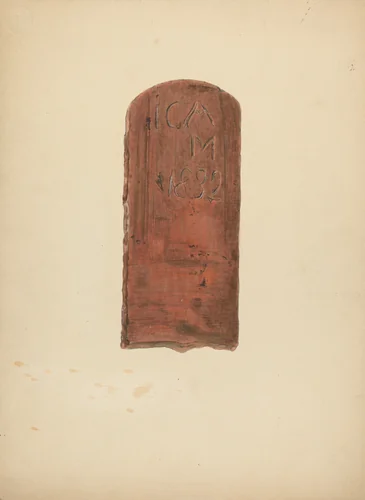
Ralph Russell
Ralph Russell’s contributions to American visual culture are rooted in the ambitious federal documentation projects of the Great Depression, particularly his work for the Index of American Design (IAD). While globally recognized as a leading British scholar of Urdu literature and a lifelong Communist, Russell dedicated the crucial period between 1938 and 1941 to meticulously recording the material history of the United States. His activity was defined not by traditional studio painting, but by the exacting, almost scientific discipline required to illustrate vernacular American craft.
Russell's involvement with the IAD, a subsidiary of the Works Progress Administration (WPA), places him squarely within a movement designed to affirm American artistic heritage through preservation. His nine recorded artworks, now residing in the collections of the National Gallery of Art, Washington D.C., are master classes in technical illustration and material fidelity.
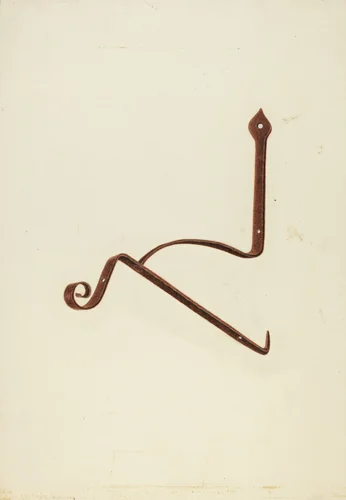
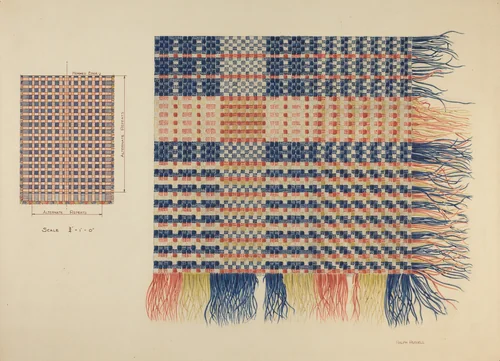
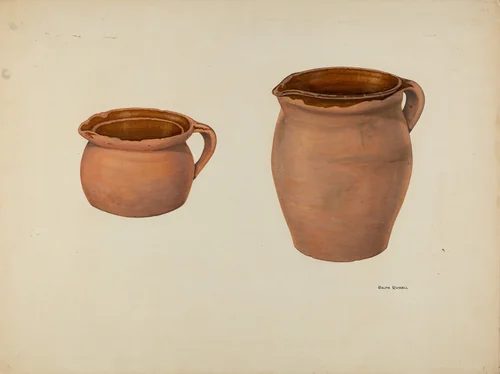
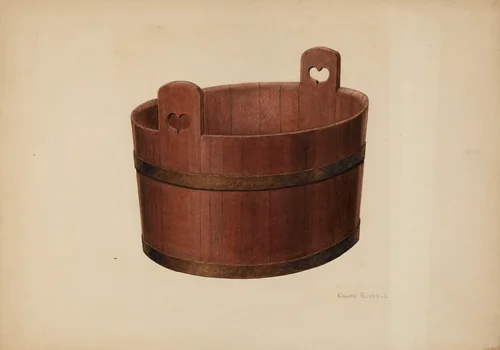
The scope of his focus was both domestic and functional, primarily capturing objects from Ohio's historic Zoar community. His drawings transcend mere copies; they are careful analytical studies of form, volume, and texture. Russell’s commitment to capturing the integrity of the object is evident in pieces like the highly detailed rendering of the Iron Bracket from Zoar Tavern and the geometrically precise documentation of the Zoar Coverlet. He treated items of everyday utility, such as the Zoar Milk Pitcher and the utilitarian Milk Tub, with the same respect usually reserved for fine art.
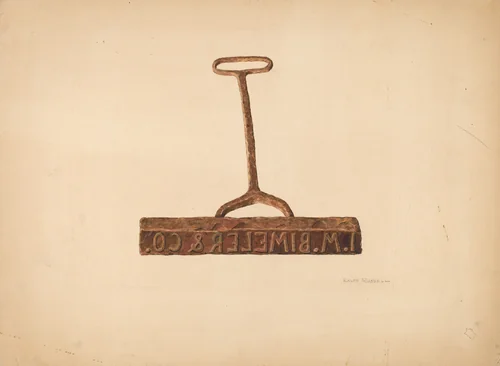
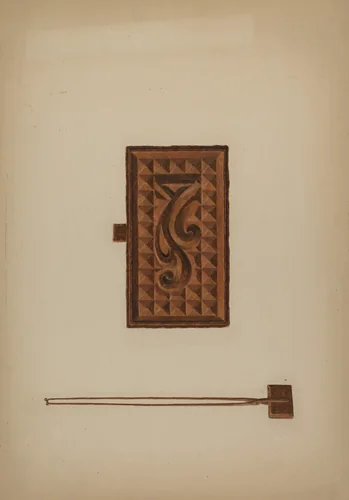
It presents a fascinating duality that a figure dedicated to radical global politics spent these years producing such exacting, grounded illustrations of American domestic life and simple industry, including his graphic study of a Branding Iron Used for Boxes and Bags. This attention to the functionality and design of the mundane ensured that these objects, often overlooked until they deteriorated, were permanently preserved.
This comprehensive documentation effort ensures that much of Russell’s work is now in the public domain, providing essential research material for cultural historians and designers. These museum-quality illustrations remain highly sought after for their historical accuracy and clean graphic aesthetic. Although original Russell drawings are scarce, their legacy persists through high-quality prints and downloadable artwork, solidifying his unique, if understated, place within the history of American material documentation.