Ralph Morton
Ralph Morton’s significant, if understated, contribution to American visual culture is preserved within the landmark Index of American Design. Active during the crucial period of 1935 to 1939, Morton was instrumental in the ambitious New Deal program aimed at systematically documenting the decorative and functional objects of the early Republic and frontier eras. This massive undertaking, managed under the auspices of the Federal Art Project and centered eventually at the National Gallery of Art, sought to create a comprehensive visual encyclopedia of craft traditions before industrial production fully erased regional distinctiveness.
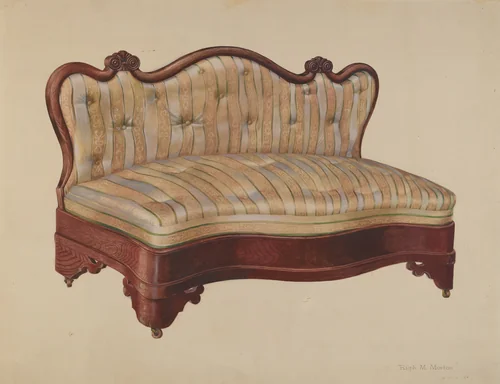
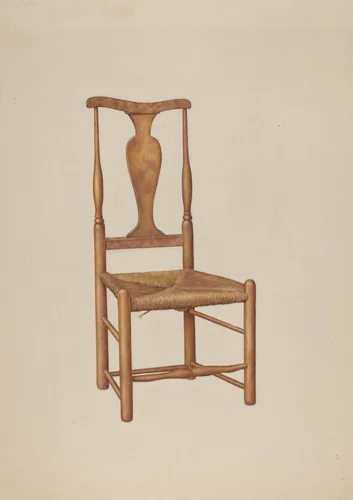
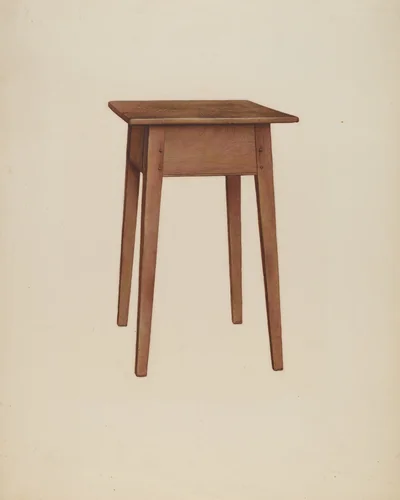
Morton excelled in the precise rendering and documentation of domestic artifacts. His work focuses on capturing the utility, form, and texture of applied arts, treating them not merely as historical objects but as sophisticated design prototypes. His meticulous studies, which include designs for a sturdy Clock, an imposing Iron Bank, and the formal practicality of a Settee, elevate these commonplace items to the status of museum-quality records. This dedication provided indispensable documentation of American vernacular design, effectively bridging the academic gap between fine arts and industrial craftsmanship. Morton’s attention to detail is evident even in his documentation of humble accessories, such as the elaborate patterns found on a simple Trivet or the rugged functionality of the common Bootjack.
It is a peculiar, yet fascinating, footnote of history that this meticulous study of American folkways was undertaken by Sir Ralph John Morton, CMG, OBE, MC, a distinguished Southern Rhodesian lawyer and judge. This dual identity—the rigorous legal mind applied to the ephemeral study of American material culture—lends a compelling gravitas to his focused contribution.
The enduring legacy of Morton’s efforts lies in his dedication to preserving design history through exhaustive documentation. Because these records were generated under the authority of a federal program, his complete documented output within the Index of American Design resides within the public domain. This accessibility allows researchers, historians, and enthusiasts worldwide to utilize these records. The comprehensive collection ensures that these high-quality prints and downloadable artwork continue to serve as essential resources for studying American decorative arts and period craftsmanship.
Source: Wikipedia · CC BY-SA 4.0