Ralph M. Lewis
Ralph Maxwell Lewis is primarily known in the history of American design for his focused contributions to the Index of American Designs (IAD) during the vital late 1930s. Operating under the auspices of the Federal Art Project, the IAD employed hundreds of artists to create a comprehensive, systematic visual census of American folk art, craft, and traditional decorative items, ultimately preserving a visual record of material culture that spanned two centuries.
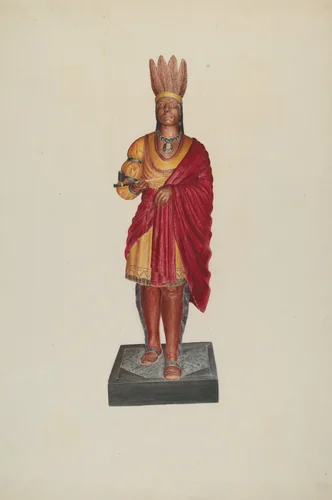
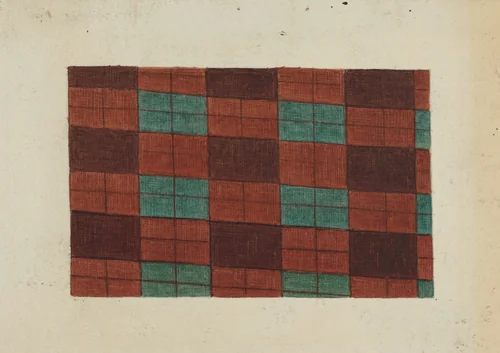
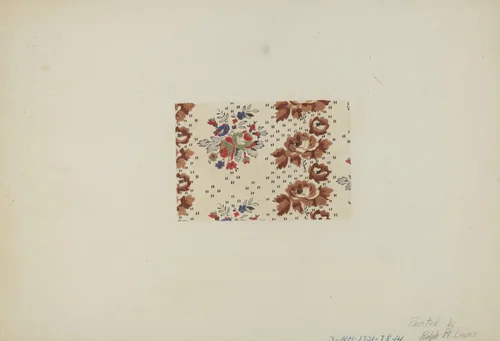
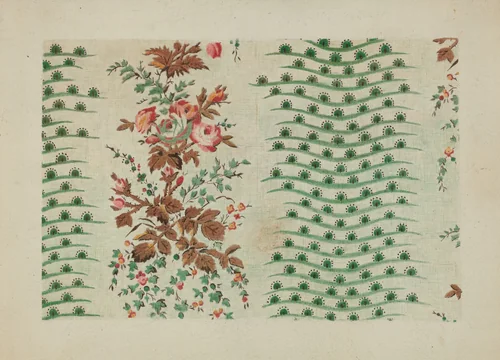
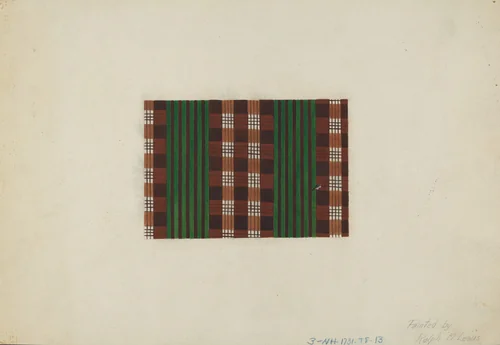
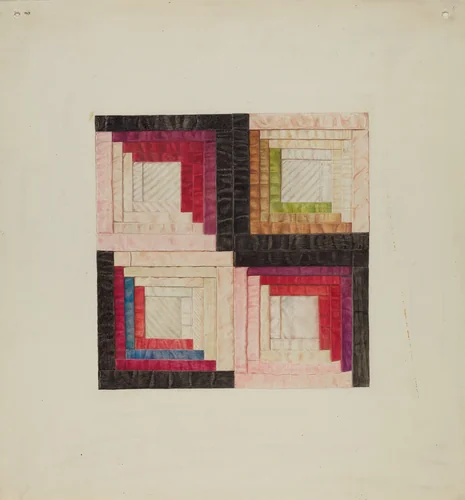
Lewis was active in this endeavor between 1938 and 1939, contributing six meticulously rendered studies. Unlike expressionistic or speculative fine art, Lewis’s efforts required precise technical skill, emphasizing accurate dimension, color, and texture necessary for historical preservation and potential reproduction. His portfolio from this period includes detailed records of vernacular artifacts, such as multiple studies of printed textiles that capture the intricacies of early American pattern-making, alongside the documentation of significant three-dimensional objects, notably the imposing Cigar Store Indian.
These works, held in the permanent collection of the National Gallery of Art, Washington D.C., serve as key reference documents for textile historians, designers, and students of anthropology. They are foundational recordings of objects deemed vital to the national aesthetic heritage. The importance of Lewis’s commitment to objective documentation is reflected in the continuing accessibility of these drawings; his technical skill ensured the creation of high-quality records, many of which are now considered museum-quality documents available as royalty-free downloadable artwork for academic and design study.
Lewis’s brief but significant career as a visual documentarian presents an intriguing duality. While his artistic focus centered on grounding ephemeral physical objects in empirical reality, his subsequent and far more famous life journey lay in the esoteric. Immediately following his contributions to the Index, Lewis assumed the Imperatorship of the Ancient Mystical Order Rosae Crucis (AMORC) in 1939, a position he held for nearly fifty years. He was already a prolific author on the subject of mysticism, having inherited the leadership mantle from his father, Harvey Spencer Lewis. It is perhaps one of the more understated ironies of American cultural history that a prominent global figure in mystical philosophy also served as one of the most dedicated, anonymous recorders of American commonplace material culture.