Raffaello Sanzio
Raffaello Sanzio da Urbino (1483-1520) stands as one of the definitive figures of the Italian High Renaissance. His career, though tragically curtailed at age thirty-seven, secured his place alongside Leonardo da Vinci and Michelangelo, forming the traditional triumvirate of masters whose collective output defined the aesthetic zenith of the period. A highly successful painter and architect, Raphael’s enduring reputation rests upon a powerful synthesis of harmony and grace, a stylistic signature marked by its remarkable clarity of form and profound ease of composition. His mastery established the gold standard for classicism that would influence Western artistic academies for centuries.
Raphael’s genius lay in his ability to translate complex philosophical concepts into visually accessible terms. His work consistently achieved the Neoplatonic ideal of human grandeur, elevating the subject, whether secular or divine, to a state of perfect order and formal balance. This technical brilliance is immediately apparent in his portraits, such as Joanna of Aragon, which conveys noble presence through precise geometry and poise. His compositional solutions ensured that the eye moves naturally and rationally through the scene, a trait perhaps best encapsulated by the concept of sprezzatura—the studied carelessness necessary to make incredibly complex art appear natural and unforced. This apparent effortlessness often masks the intense preparatory effort required, evidenced today in surviving preliminary works like the pen and ink study, Design for Funerary Monument to the Marchese Francesco Gonzaga.
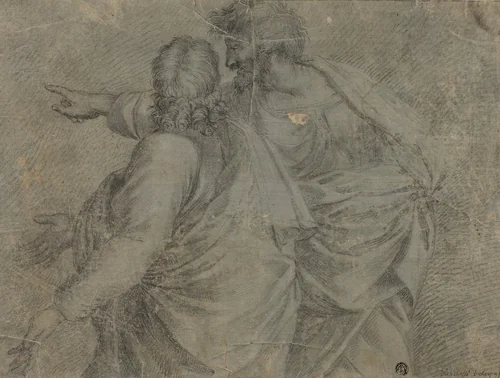
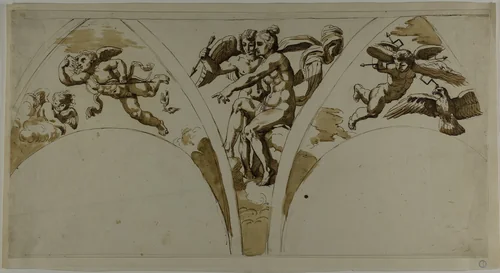
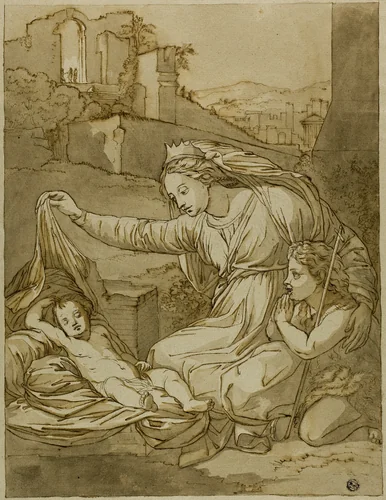
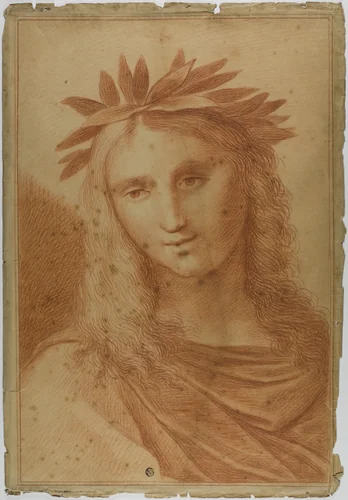
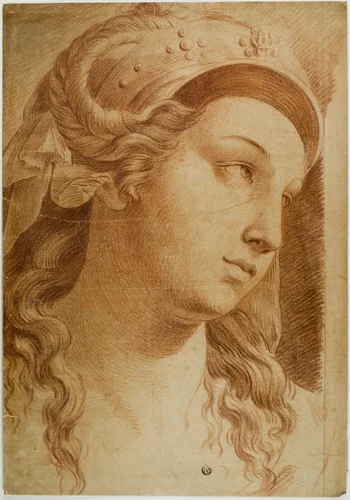
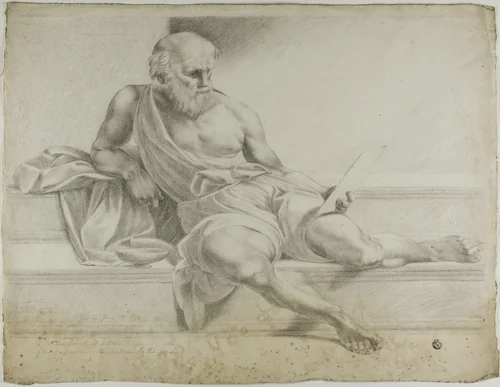
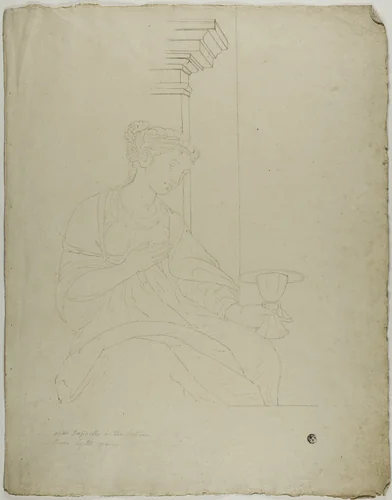
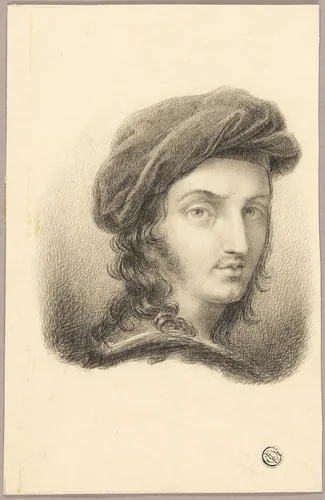
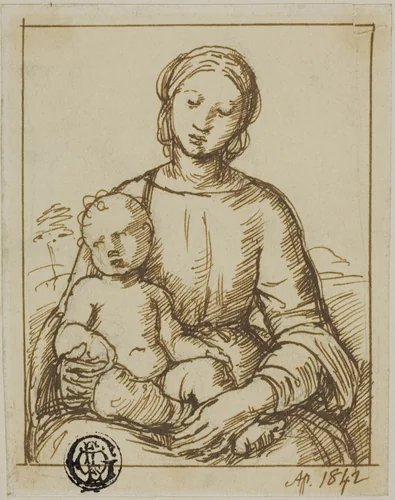
Although he left behind far fewer Raffaello Sanzio paintings than his peers, the impact of his designs and prints remains monumental. His surviving corpus, documented through approximately thirteen drawings and two prints in this database, includes key narrative pieces such as Joshua and the Israelites Crossing the Jordan and Resurrection. Today, the foundational brilliance of his compositions remains universally accessible. Major international institutions, including the Art Institute of Chicago, house significant holdings. Furthermore, much of his visual output, preserved now in the public domain, is widely available, allowing scholars and enthusiasts alike to access high-quality prints and downloadable artwork for dedicated study, ensuring the continued appreciation of his timeless classical achievement.
Source: Wikipedia · CC BY-SA 4.0