Radio Corporation of America
The Radio Corporation of America (RCA), formally established in 1919, holds a unique and unintentional place within the history of photographic documentation. Primarily known as a major American electronics and communications powerhouse, RCA originated not as an art producer, but as a strategic patent trust. This powerful consolidation united several industrial giants, including General Electric, Westinghouse, AT&T Corporation, and the United Fruit Company, allowing it to dominate the nascent global airwaves. This period of corporate partnership defined its initial function until 1932, when the company achieved independence following a mandatory divestment required by an antitrust settlement with the United States government.
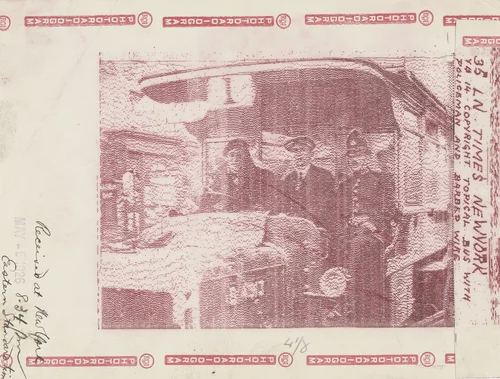
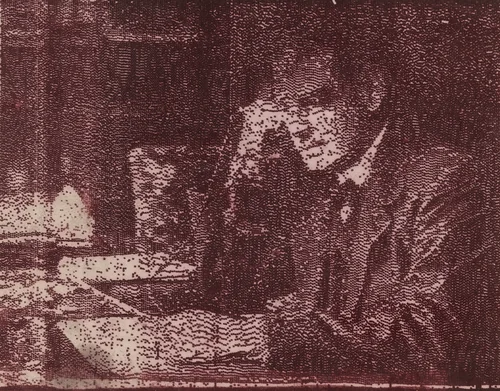
RCA’s most significant artistic contributions, recognized in major collections such as the Museum of Modern Art, emerged during a focused period between 1924 and 1926. These works are not traditional fine art studies, but visual records of pioneering technological achievement: the successful development and application of the Photoradiogram. This groundbreaking system allowed for the reliable transmission of photographs across vast distances using high-frequency radio waves, effectively treating visual information as reproducible data decades before the digital revolution.
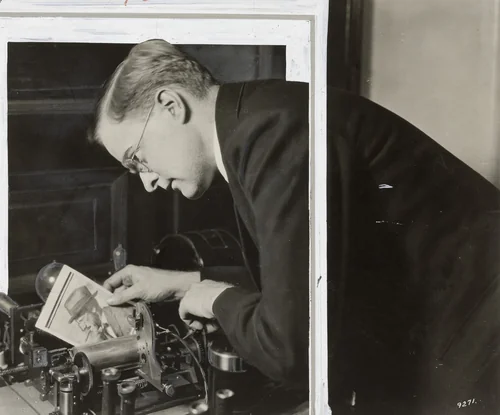
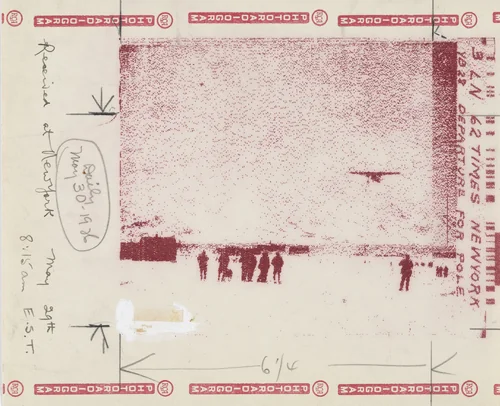
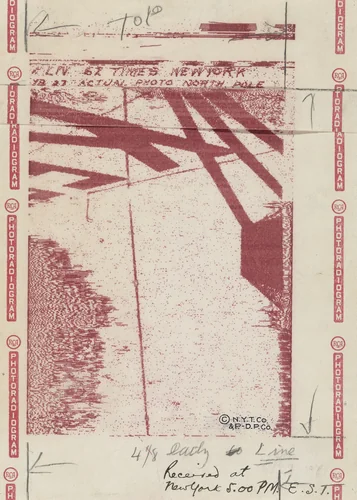
The resulting images, including Captain Richard H. Ranger-Inventor, Departure for the Pole, and the transmission test labeled simply North Pole, document moments of unprecedented global connection. They possess a distinct, high-contrast aesthetic imposed by the technical limitations and mechanics of radio transmission, capturing the raw ambition of early 20th-century communication science. It is perhaps the only instance where a major American electronics company’s internal testing records have been elevated to the status of museum-quality artifacts.
While RCA itself did not set out to create art, the historical weight and technical innovation captured in these visual documents grants them undeniable cultural significance. Today, historians and collectors benefit from the broad availability of these seminal images. Many Radio Corporation of America prints are now in the public domain, allowing for access to high-quality prints and downloadable artwork that continues to inform and inspire students of both communication history and early modernist documentation.