R. B. Hill
R. B. Hill was a photographer known to be active circa 1850. Their documented body of work consists primarily of topographical and architectural documentation focusing on sites in colonial India, specifically the Calcutta region.
Hill’s practice reflects the early documentary interests of 19th-century photography, capturing significant historical structures and environments. Notable images in their known catalog include Dum Dum Church, Entrance to Botanical Gardens, Calcutta, and the historically relevant Dum Dum House-Built by Lord Clive. Other cataloged works, such as Garden in Indigo Districts, suggest a breadth of focus encompassing both the built and natural environments.
A selection of fifteen photographs by R. B. Hill is preserved in museum collections, confirming the artist’s historical significance. The photographer is represented in the archives of the Metropolitan Museum of Art, establishing their work as museum-quality material for researchers studying early photographic history in South Asia. Due to the age of these documents, many of R. B. Hill’s photographic studies are now in the public domain, allowing institutions to disseminate high-quality prints and downloadable artwork for study and research.
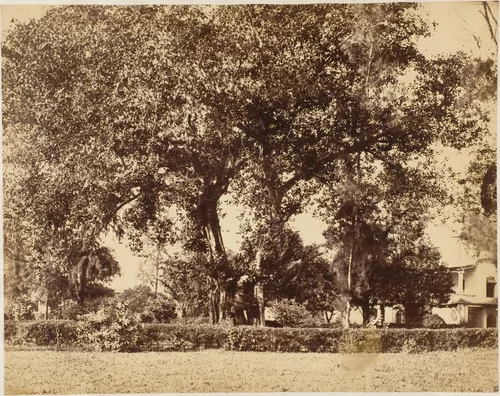
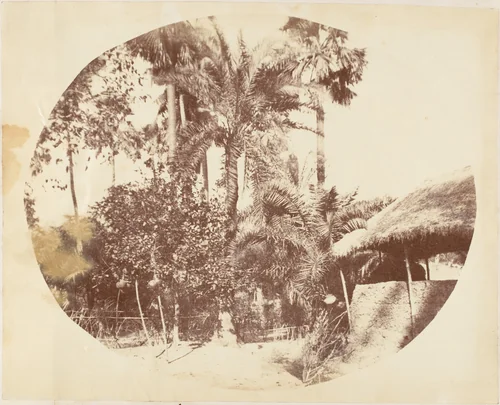
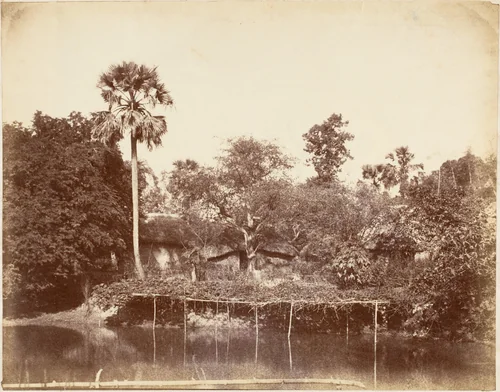
![[Avenue, Mess and Capt. Hill's House] by R. B. Hill, photograph, 1850-1859](https://img.artbee.org/bf191a16-7b73-401b-97db-1ceed9e14f42/small.webp)
![[Banian Tree] by R. B. Hill, photograph, 1850-1859](https://img.artbee.org/8642ffa2-52d2-4795-a966-a75c956cc453/small.webp)
![[Botanical Gardens, Calcutta] by R. B. Hill, photograph, 1850-1859](https://img.artbee.org/e94fa000-4007-474a-9edc-1888dcbec701/small.webp)
![[Botanical Gardens, Calcutta] by R. B. Hill, photograph, 1850-1859](https://img.artbee.org/7f5a89cd-45c5-40ff-a184-9774f9e34b0c/small.webp)
![[Botanical Gardens, Calcutta] by R. B. Hill, photograph, 1850-1859](https://img.artbee.org/e241ab7e-f9e8-4c00-9a9a-c0638bde0a87/small.webp)
![[Burmese Pagoda in the Eden Gardens, Calcutta] by R. B. Hill, photograph, 1850-1859](https://img.artbee.org/8f565090-495b-4bcf-91a8-f4aa4dda9711/small.webp)
![[Entrance to Botanical Gardens, Calcutta] by R. B. Hill, photograph, 1850-1859](https://img.artbee.org/d0d5cf67-d7ab-4655-8b59-8f21000151a3/small.webp)
![[Ghulam Muhammad Mosque, Calcutta] by R. B. Hill, photograph, 1850-1859](https://img.artbee.org/30c3aa4d-ed09-4562-9171-07dbf34b007b/small.webp)
![[Government House,Calcutta] by R. B. Hill, photograph, 1850-1859](https://img.artbee.org/023dbe14-b05c-4f1e-b8d2-4303fbab5af7/small.webp)
![[Grand Entrance to the Government House, Calcutta] by R. B. Hill, photograph, 1850-1859](https://img.artbee.org/5a0d1388-ced3-4510-86f4-17514722f86f/small.webp)
![[Grindley and Company Building, Calcutta] by R. B. Hill, photograph, 1850-1859](https://img.artbee.org/7873d8c2-dc57-4fbb-9e28-532666bf5314/small.webp)
![[Humayun's Tomb, Delhi] by R. B. Hill, photograph, 1850-1859](https://img.artbee.org/07ef1fe8-d200-4382-a4ef-461744ff5b6a/small.webp)
![[Kanpur Memorial] by R. B. Hill, photograph, 1850-1859](https://img.artbee.org/4d02d8f2-c905-411a-8e84-416c55bffcd8/small.webp)
![[Ochterlony Monument, Calcutta] by R. B. Hill, photograph, 1850-1859](https://img.artbee.org/56237736-fbe0-463c-89dc-803af20b1542/small.webp)
![[Part of the Exterior of the St. Paul's Cathedral, Calcutta] by R. B. Hill, photograph, 1850-1859](https://img.artbee.org/bc41579c-b5da-402d-918e-035ff03337ed/small.webp)
![[Shipping in the Hooghly near Fort, Calcutta] by R. B. Hill, photograph, 1850-1859](https://img.artbee.org/5f9e12bb-94fc-41ce-97f7-fbed834a0203/small.webp)
![[The St. Pauls Cathedral, Calcutta] by R. B. Hill, photograph, 1850-1859](https://img.artbee.org/3aab114f-e30e-413c-a388-afb4c0a5abc9/small.webp)