Pseudo-Aert Ortkens
Pseudo-Aert Ortkens was an artist whose documented activity spans the period between 1490 and 1520. Known primarily through a limited corpus of surviving graphic work, the artist’s output consists of eleven drawings held in major international collections, placing his creative years firmly within the late Gothic and early Renaissance transitional era.
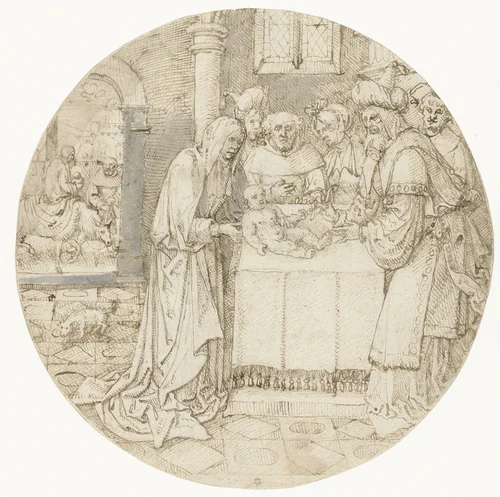
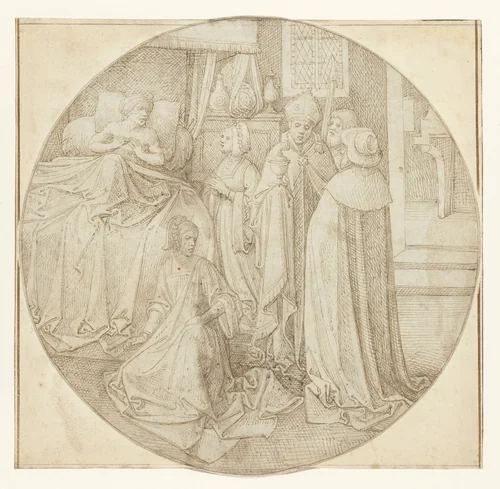
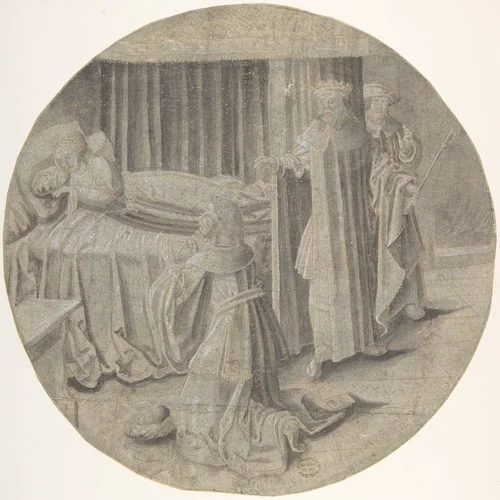
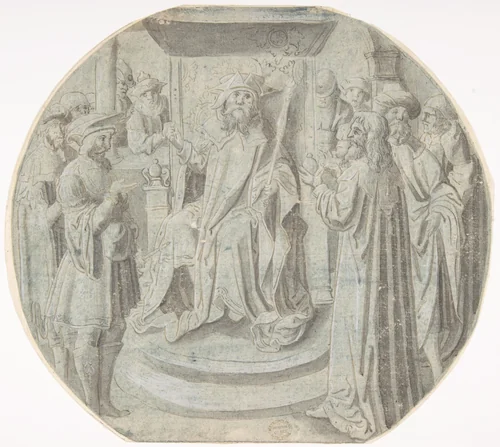
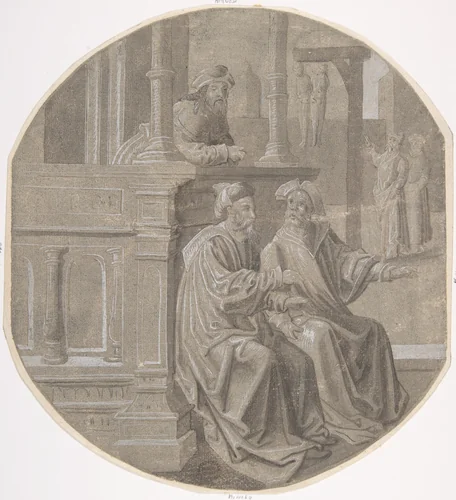
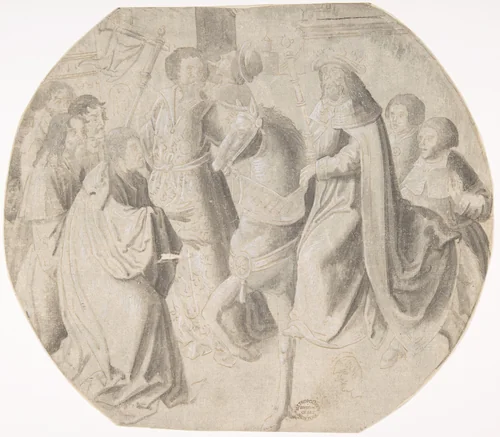
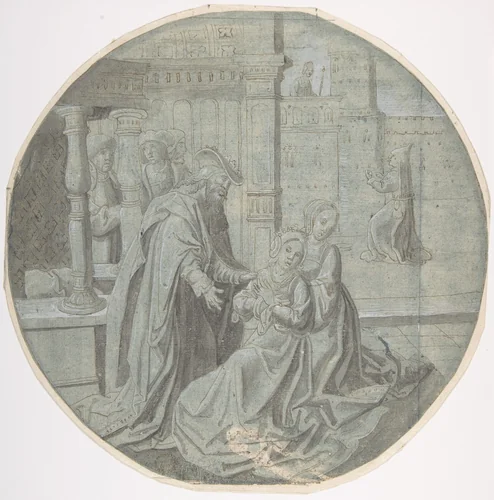
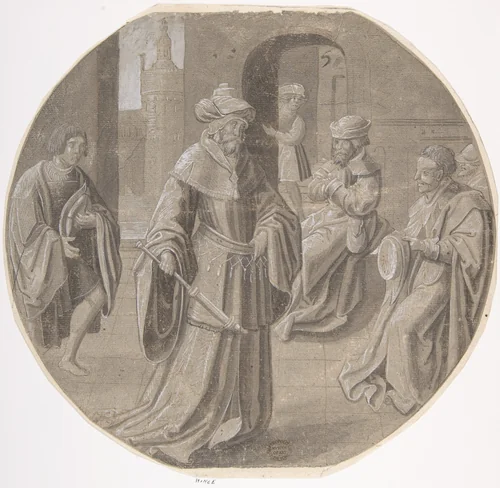
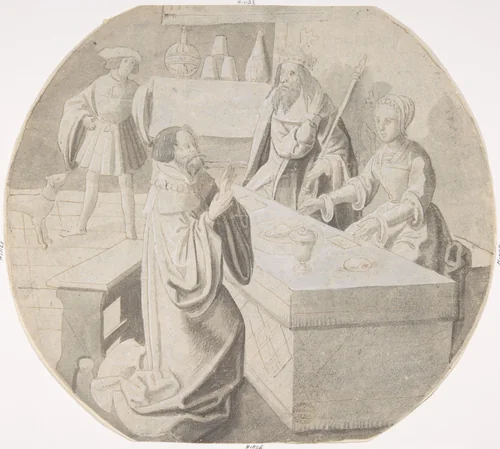
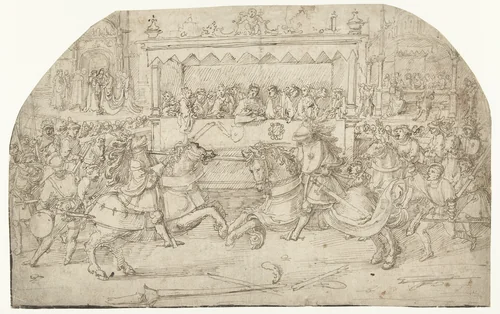
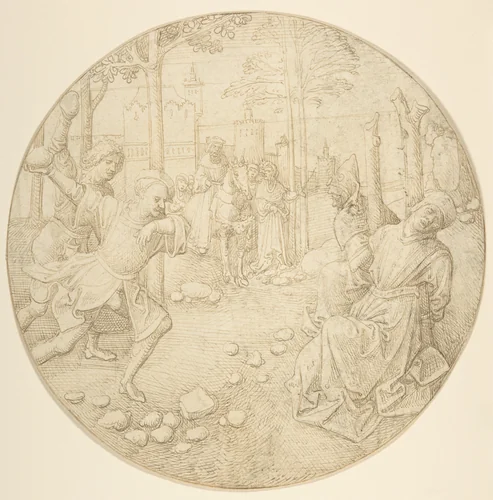
The historical and artistic significance of Pseudo-Aert Ortkens’s work is established by its inclusion in renowned collections, specifically the Metropolitan Museum of Art in New York and the Rijksmuseum in Amsterdam. The known works frequently illustrate complex narrative and biblical subjects. Documented titles include De Besnijdenis (The Circumcision) and Herkinbald ligt in bed en ontvangt de bisschop. The artist also produced several scenes derived from the Book of Esther, such as Haman begs Esther for his Life, King Ahasuerus in Council, and Mordecai overhears the two Conspirators plotting against the King.
The surviving drawings provide valuable insight into late fifteenth and early sixteenth-century design practices. Today, documentation related to Pseudo-Aert Ortkens prints and original drawings, preserved across museum collections, often falls within the public domain. This accessibility allows researchers and the general public to study the work, often via high-quality prints, ensuring the continued scholarly relevance of this early historical artist.