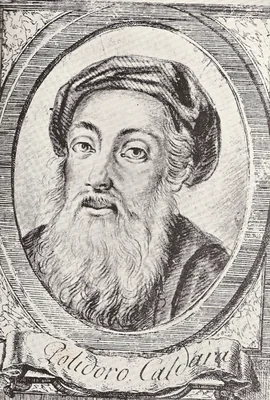
Polidoro Caldara
Polidoro Caldara, known historically as Polidoro da Caravaggio, stands as one of the most intriguing and influential figures of the Italian Mannerist period. Active from approximately 1519 to 1580, Polidoro was recognized as a leading member of Raphael’s large workshop in Rome, deemed by scholars to be "arguably the most gifted and certainly the least conventional of Raphael's pupils." His significance lies not only in his mastery of classical narrative but also in his radical specialization in sgraffito decoration and fresco applied to architectural exteriors.
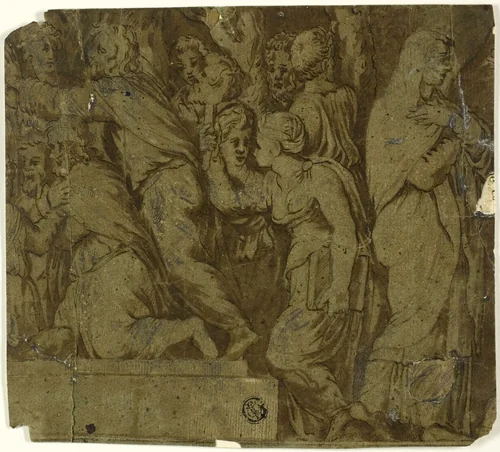
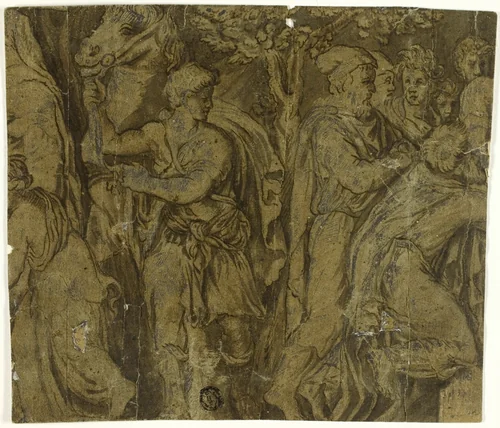
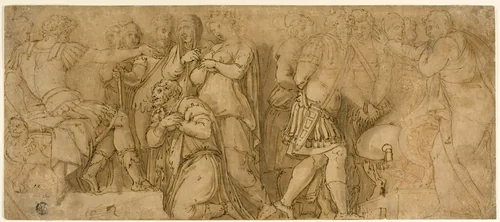
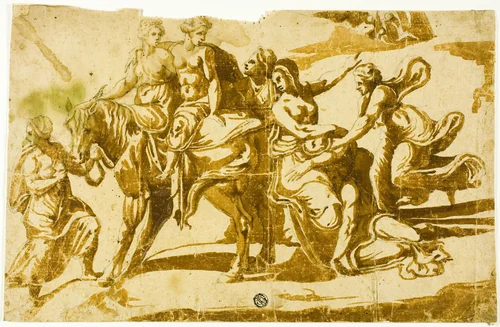
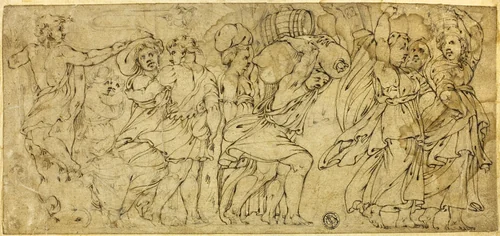
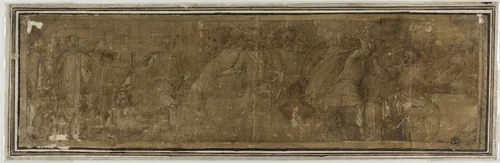
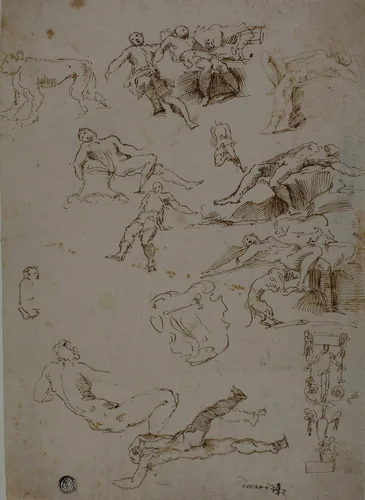
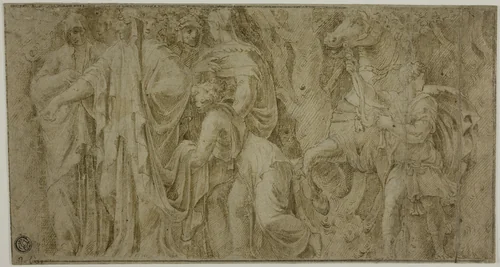
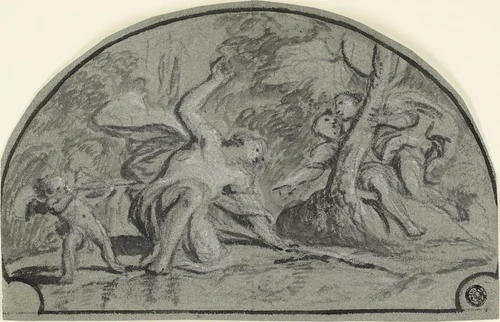
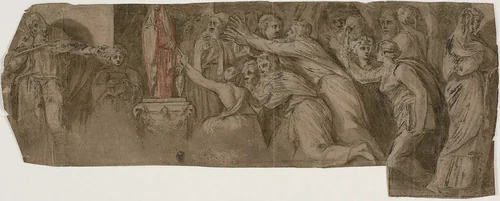
Polidoro was best known during his lifetime for the monumental paintings adorning the facades of Roman palaces. Utilizing limited color palettes often mimicking antique sculpture, these exterior works transformed the urban environment, employing illusionistic architecture and dramatic figural relief. Tragically, these major public commissions were inherently vulnerable to the elements, and nearly all have vanished, leaving only documentation and preparatory studies to attest to their inventive brilliance. This loss means Polidoro’s surviving legacy is largely preserved through his prolific output of masterful drawings.
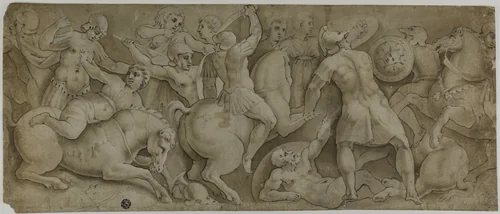
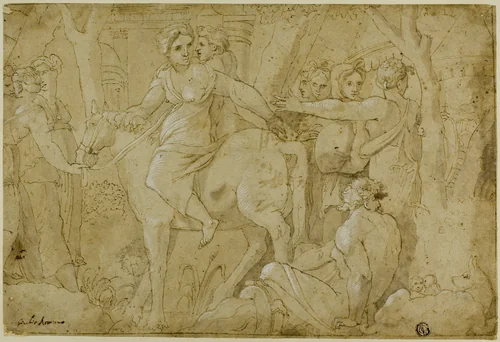
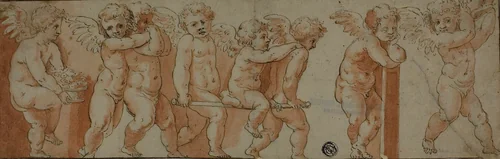
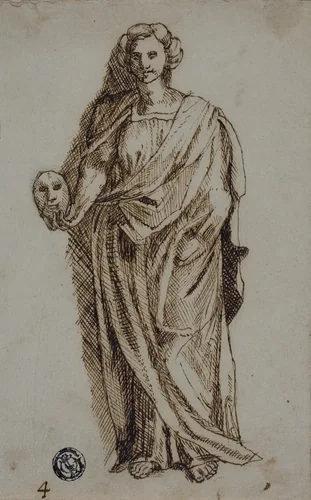
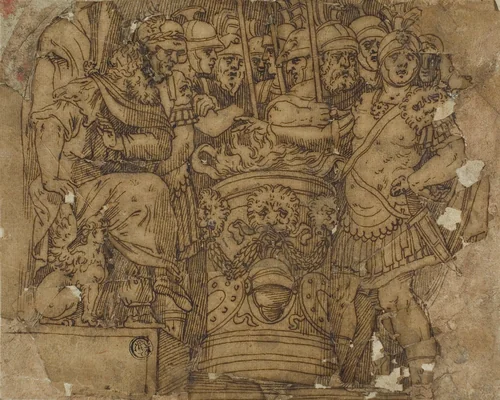
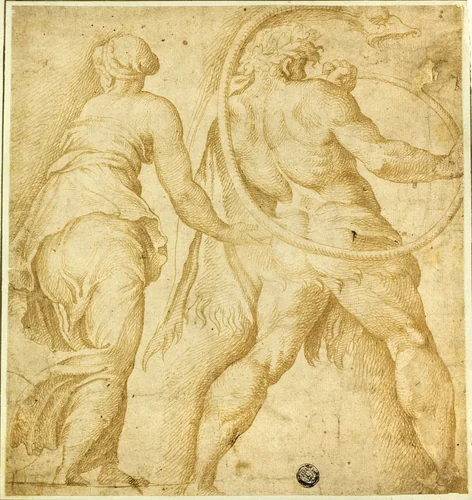
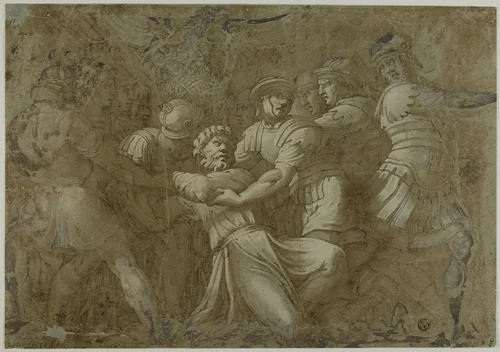
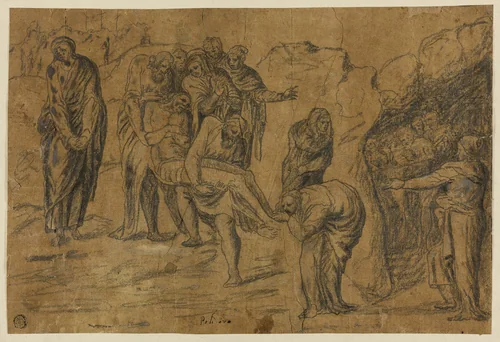
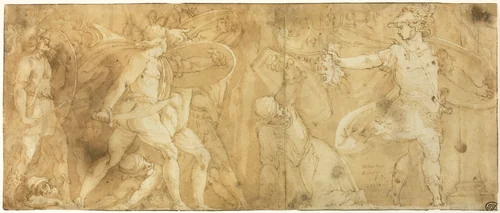
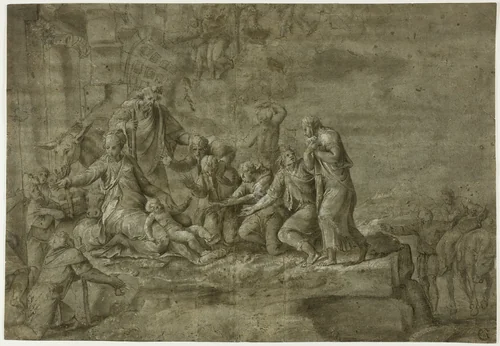
These preparatory sheets reveal his sophisticated handling of dramatic tension and complex composition, visible in pieces held in major institutions, including the 15 drawings currently documented in the collections of the Art Institute of Chicago. Works such as Battle of the Amazons, Melpomene, and the powerful Mucius Scaevola Putting His Hand in the Flame before Porsenna demonstrate a dynamic narrative energy that cemented his reputation as a unique Mannerist innovator. For those studying his invention outside major archives, high-quality prints of his detailed figure studies are frequently consulted.
A curious footnote in art history is his name: Polidoro da Caravaggio hailed from the same northern Italian town as the much later Baroque master, Michelangelo Merisi, who also adopted the name Caravaggio. Despite the shared geography, the two artists are unrelated, serving merely as a potent reminder of how widely the creative energies of a single municipality could spread across centuries. Today, much of his surviving output remains vital for understanding the transitional moment between the High Renaissance and the flowering of mid-century Mannerism, making Polidoro Caldara prints a staple of art historical inquiry.
Source: Wikipedia · CC BY-SA 4.0