Pisanello
Pisanello, born Antonio di Puccio Pisano, was one of the most celebrated and historically significant artists of the early Italian Quattrocento. Active from approximately 1400 until 1444, Pisanello operated at the confluence of the waning International Gothic style and the burgeoning classicism of the Renaissance. His reputation during his lifetime was formidable, acknowledged by contemporary poets such as Guarino da Verona and praised by humanists who favorably compared him to illustrious ancient masters like Phidias and Praxiteles.
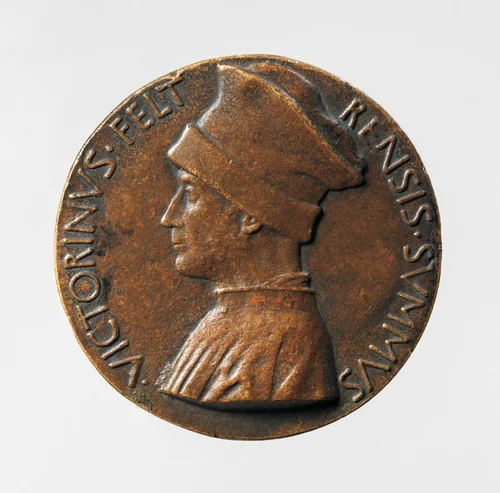
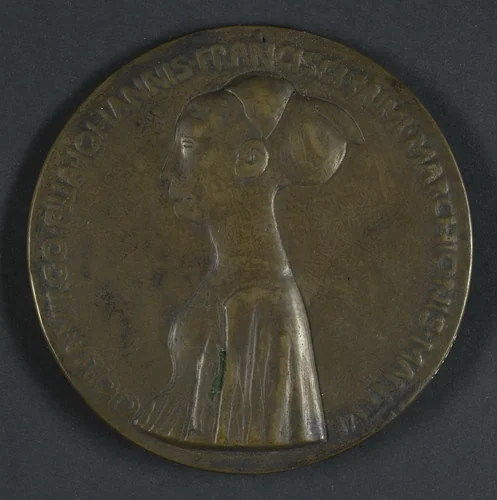
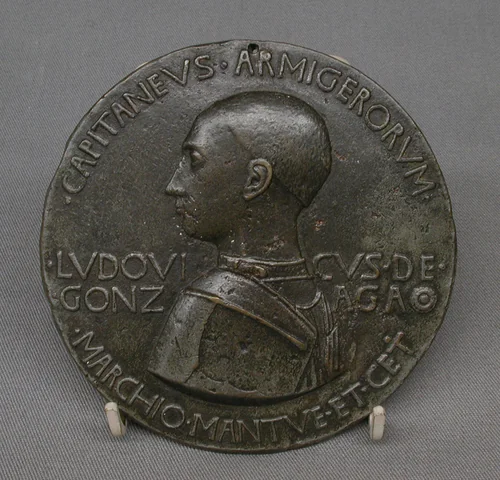
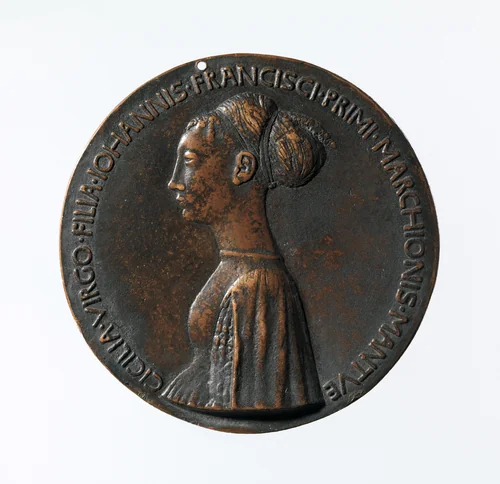
While Pisanello paintings and large-scale frescoes secured his reputation across the major courts of Italy, his most enduring contribution to art history lies in his revolutionary adaptation of medallic portraiture. Pisanello is credited with effectively resurrecting the classical commemorative medal, a form dormant since the fall of the Roman Empire. Drawing inspiration directly from classical Roman coinage, he translated the detailed, often naturalistic drawing style of the early Renaissance into low-relief bronze, producing portraits of unparalleled psychological acuity and technical refinement.
His body of work documents the political and military elite of the period. His sitters included key figures in the complex political landscape of fifteenth-century Italy and the wider Mediterranean, as evidenced by medals featuring figures such as Filippo Maria Visconti, Duke of Milan, Leonello d'Este, Marquis of Ferrara, and the Byzantine emperor John VIII Palaeologus. These 13 surviving metalworks and a small collection of exceptional preparatory drawings illustrate his mastery of profile and costume detail.
Pisanello’s practice demonstrates the shift in the artist’s status from craftsman to intellectual courtier. His uncanny ability to capture personality in profile ensured his services were constantly in demand by the most powerful dynastic families. The enduring quality of his draftsmanship is particularly evident in the detail required to model figures like Francesco Sforza or Alfonso V, King of Aragon and Sicily. The remarkable thing is that, unlike many figures whose reputations rested solely on humanist hyperbole, the surviving evidence of Pisanello’s acute observational skill fully justifies the praise. Today, many of his works have entered the public domain, making high-quality prints and downloadable artwork accessible to the contemporary scholar, ensuring the legacy of this pivotal early Renaissance master persists.