Pirro Ligorio
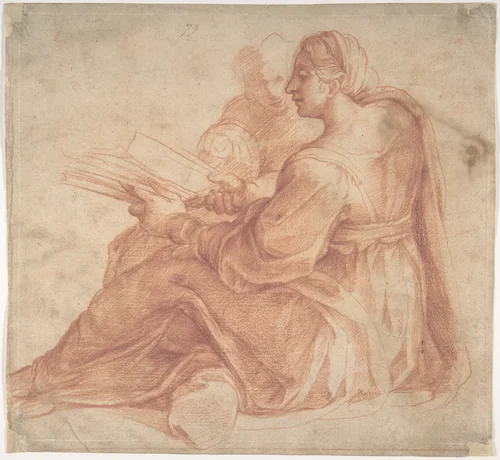
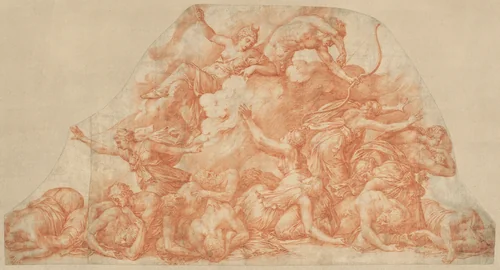
Pirro Ligorio (active 1513-1545) stands as one of the essential polymaths of the Italian Renaissance, moving seamlessly between the roles of architect, painter, and profound scholar of antiquity. His career was defined by high-profile commissions and a deep, intellectual commitment to documenting and resurrecting the culture of classical Rome.
Ligorio held positions of immense influence, including the Vatican’s Papal Architect under the successive reigns of Popes Paul IV and Pius IV. Yet his most widely celebrated achievement is undoubtedly his work for Cardinal Ippolito II d’Este. Ligorio masterfully designed the extensive water systems and dramatic garden architecture for the Villa d’Este at Tivoli, establishing a new paradigm for the giardino all'italiana. His innovations in hydraulic engineering and landscape design remain central to the understanding of sixteenth-century aristocratic display.
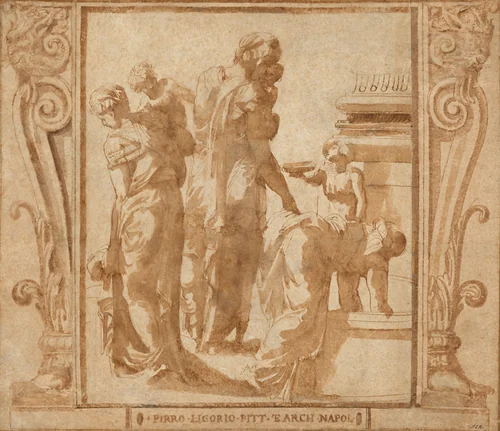
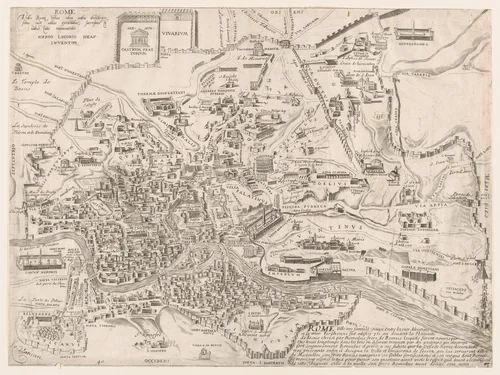
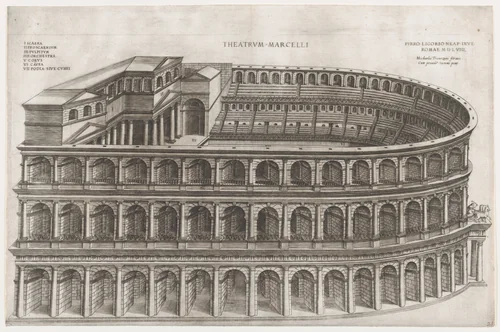
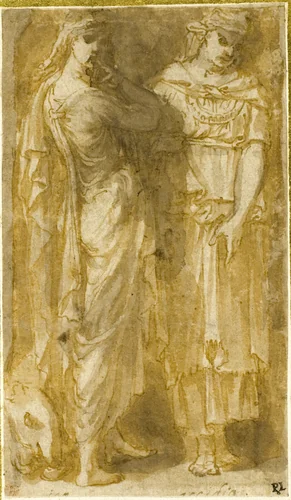
Fundamentally, Ligorio was an antiquarian. His passion for the vestiges of the classical world was rigorous and consuming, manifesting in extensive topographical research that sought to reconstruct ancient sites and architectural precedents. His drawings are thus more than preparatory studies; they function as academic documents, illustrating his rigorous methodology and his drive to merge Renaissance imagination with historical accuracy. Works such as A Domestic Scene and Women and Children at a Fountain reflect this dual devotion to composition and archaeological setting. His efforts to retrieve the glories of the past were so intense that he occasionally reconstructed ruins based more on classical literary descriptions than on physical evidence, believing what should have been there.
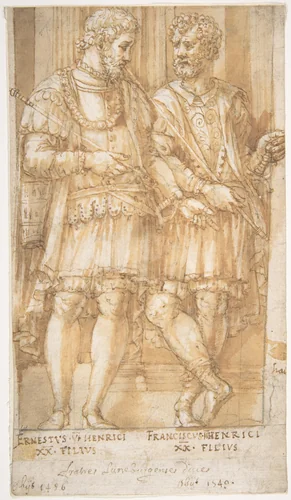
Later in his life, Ligorio continued his scholarly pursuits as the Ducal Antiquary in Ferrara, influencing the artistic and intellectual currents of Northern Italy. Today, his surviving output of drawings and Pirro Ligorio prints, including highly detailed studies like Two Princes of the House of Este: Ernest VI and Francis II, are preserved in major international repositories such as the National Gallery of Art and the Metropolitan Museum of Art. These museum-quality works offer a direct, invaluable insight into the meticulous mindset of a Renaissance master who dedicated his career to bringing the grandeur of ancient Rome back to life.
Source: Wikipedia · CC BY-SA 4.0
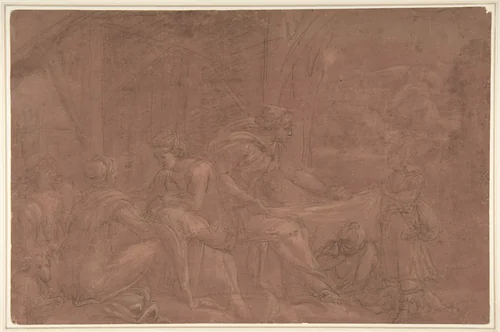
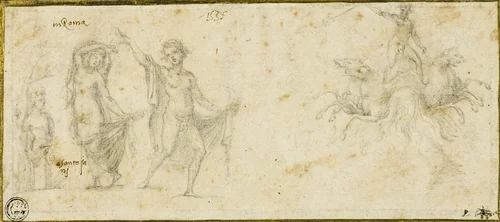
![A Party in a Roman Villa [recto] by Pirro Ligorio, drawing, 1513-1583](https://img.artbee.org/e2f5c599-9291-4217-ba8e-0472b319b811/small.webp)
![Studies for the Rape of the Sabine Women [verso] by Pirro Ligorio, drawing, 1513-1583](https://img.artbee.org/b38be3f5-067d-4797-b402-ed10ac519ade/small.webp)