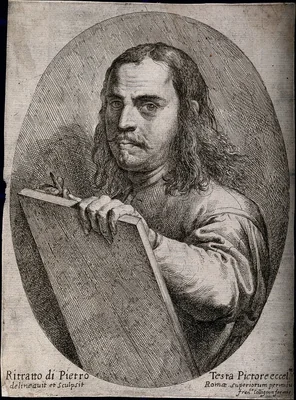
Pietro Testa
Pietro Testa was a pivotal Italian artist of the High Baroque era whose significance resides almost entirely in his exceptional output as a draftsman and printmaker. Active during the mid-17th century, Testa spent the majority of his relatively brief but intense career in Rome. There, he became an essential member of the circle surrounding the influential patron and polymath Cassiano dal Pozzo, an association which reinforced Testa’s commitment to Classical ideals and scholarly erudition.
While his ambitions often lay in monumental formats, his attempts at public Pietro Testa paintings were largely unsuccessful. Art history, however, judges Testa through the sophistication of his graphic work, placing him among the finest Italian printmakers and draughtsmen of his century. His work demonstrates an unwavering intellectual rigor, translating demanding philosophical and mythological narratives into detailed visual language.
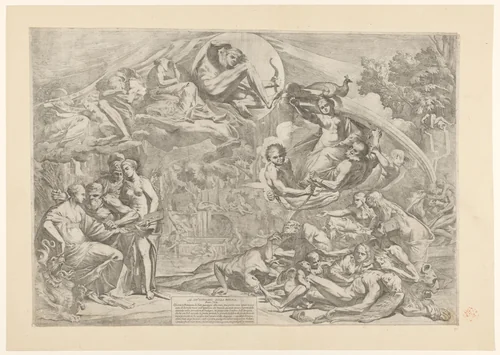
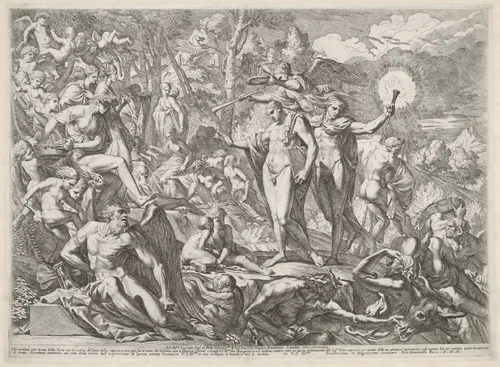
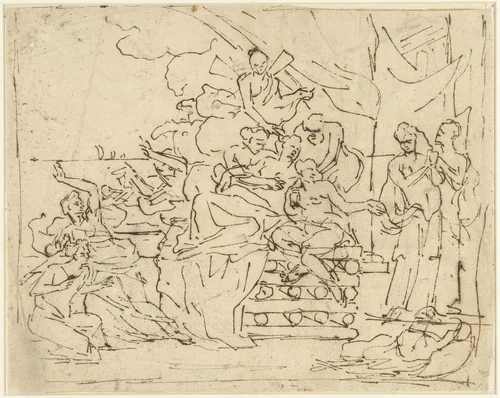
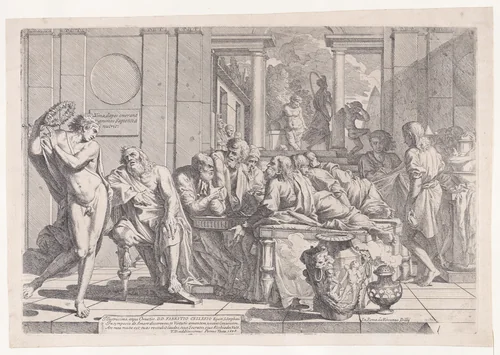
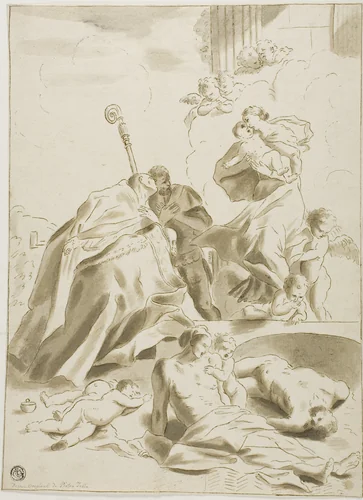
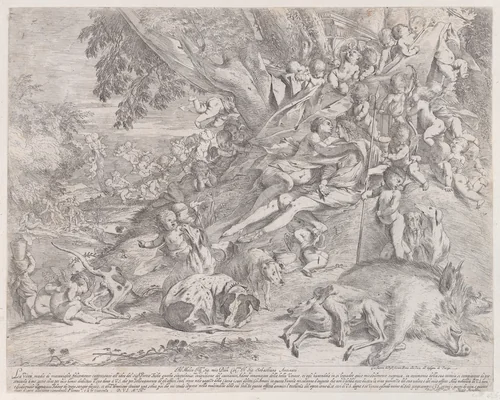
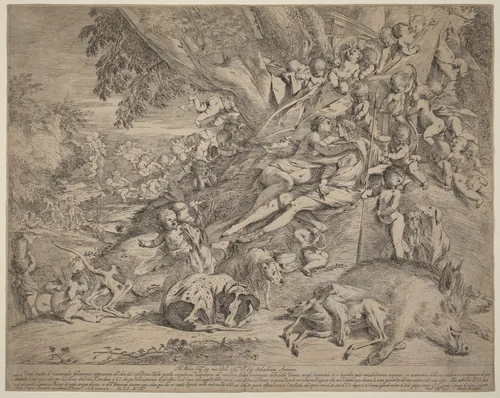
Testa mastered the art of the dense, allegorical composition. A work like Plato's symposium: Socrates and his companions... perfectly illustrates this approach, providing a complex visual commentary on ideal love, dramatically interrupted by the arrival of the inebriated Alcibiades. Similarly, works dealing with contemporary politics, such as An allegory in honor of the arrival of Cardinal Franciotti as Bishop of Lucca, served to cement his reputation among educated patrons.
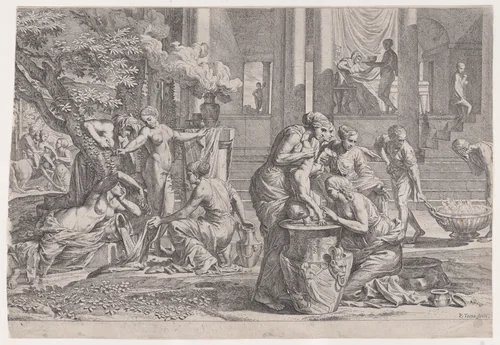
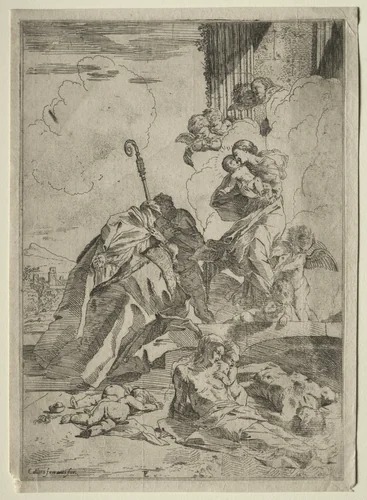
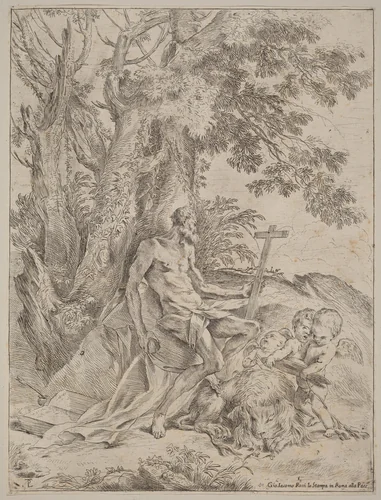
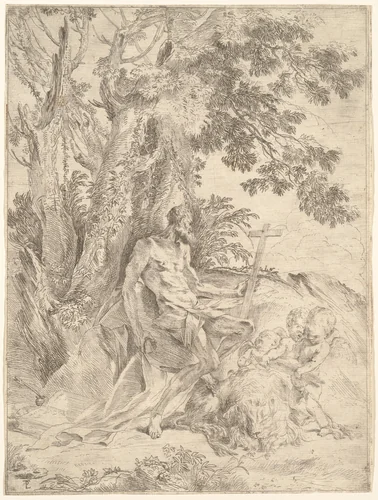
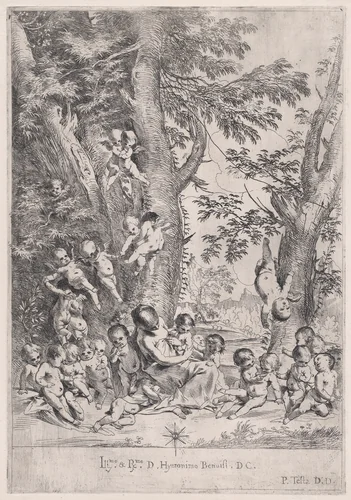
His dedication to the medium extended to self-reflexive commentary, as seen in An allegory of painting, who as a child in the centre left draws on a tablet, which acts as a pictorial treatise celebrating the graphic arts themselves. It is a quiet irony that an artist who sought the prestige of large-scale public painting secured his lasting legacy through the reproducible, widely circulated form of high-quality prints. Today, these museum-quality sheets, including devotional pieces like Mary Magdalene in the desert, are foundational documents of 17th-century Italian classicism. As much of his seminal work resides in the public domain, the rigorous detail and intellectual complexity of Testa's drawings and engravings remain readily accessible for scholarly study.
Source: Wikipedia · CC BY-SA 4.0