Pietro Perugino
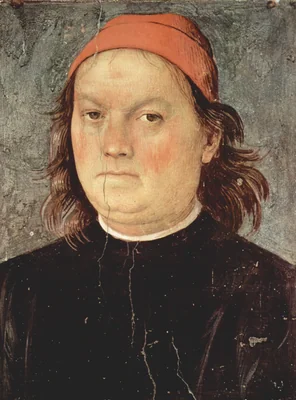
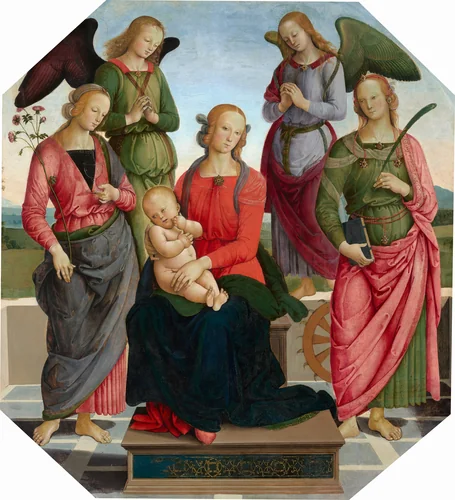
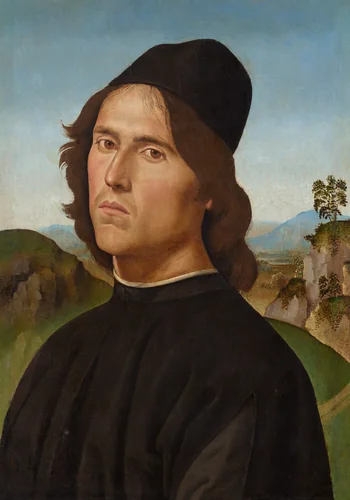
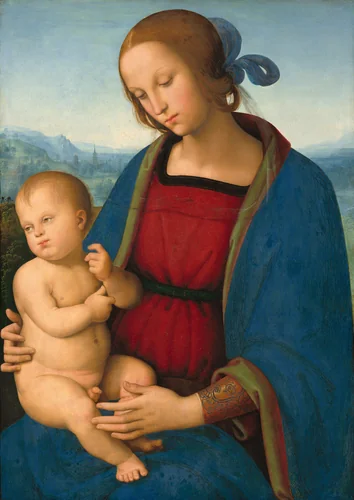
Pietro Perugino (c. 1450-1523), a dominant force in the Italian Renaissance Umbrian school, occupies a critical position in art history, acting as the fundamental bridge between the Early and High Renaissance styles. Active broadly between 1475 and 1512, Perugino’s prolific studio established the compositional standards that his successors would elevate. His most celebrated pupil, Raphael Sanzio, inherited and refined the master’s pervasive commitment to structural clarity, graceful symmetry, and serene figure placement.
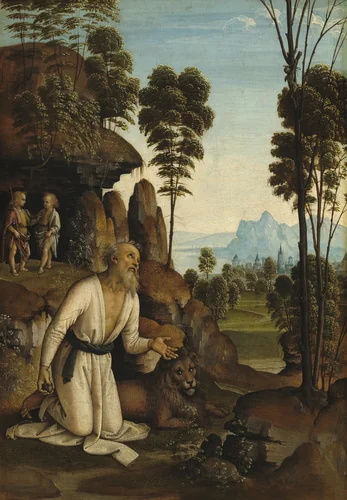
Perugino’s innovative approach centered on developing qualities that would later become synonymous with classicism. In executing major commissions, including frescoes and altarpieces, he consistently employed open, organized spatial arrangements that allowed figures to interact with measured elegance. Works like the multi-panel The Crucifixion with the Virgin, Saint John, Saint Jerome, and Saint Mary Magdalene exemplify his mature style: devotional figures set against receding, highly atmospheric landscapes, conveying spiritual weight without dramatic excess. This measured, often tenderly melancholic treatment of religious narrative was immensely popular. His consistent formula for success, perhaps necessitated by the demands of his large workshop, secured his position as one of the most commercially astute and sought-after artists of his time across Florence, Rome, and Perugia.
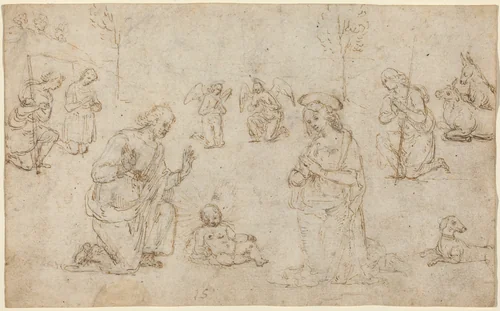
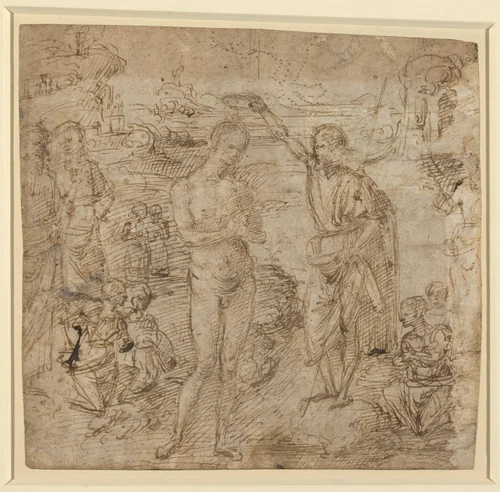
Though later generations sometimes prioritized the more dramatic terribilità of Michelangelo, Perugino’s lasting impact on the vocabulary of sacred art remains profound. He refined the visual grammar necessary for painting that was both intellectually rigorous and deeply accessible to the lay viewer. While many of the great Pietro Perugino paintings remain preserved in situ, key examples and preparatory sketches, such as the drawing Draped Figure Holding a Book and Man Wielding an Ax with a Figure, are held in major international collections, including the National Gallery of Art. Today, thanks to extensive digitization efforts, many of his iconic works are now in the public domain, offering access to high-quality prints and royalty-free downloadable artwork for scholars and enthusiasts alike.
Source: Wikipedia · CC BY-SA 4.0
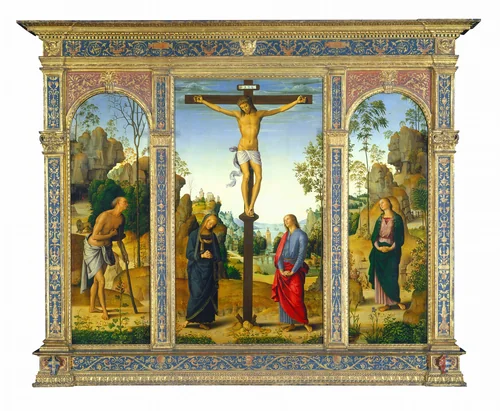
![The Crucifixion with the Virgin, Saint John, Saint Jerome, and Saint Mary Magdalene [left panel] by Pietro Perugino, painting, 1482-1485](https://img.artbee.org/118a66ac-2df9-48fa-ba71-05aacad64d2f/small.webp)
![The Crucifixion with the Virgin, Saint John, Saint Jerome, and Saint Mary Magdalene [middle panel] by Pietro Perugino, painting, 1482-1485](https://img.artbee.org/326e9f3e-cc0b-4af8-9c00-3ccf1e2b9a9f/small.webp)
![The Crucifixion with the Virgin, Saint John, Saint Jerome, and Saint Mary Magdalene [right panel] by Pietro Perugino, painting, 1482-1485](https://img.artbee.org/788bff17-63bf-4c90-ac28-dd99249f11fe/small.webp)
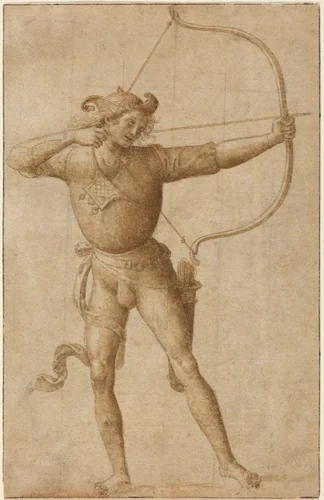
![Figure of an Archer [recto] by Pietro Perugino, drawing, 1500](https://img.artbee.org/437c0c78-d90f-4fbf-94f0-642a35e1bae7/small.webp)
![Rider and Standing Draped Man, after the Antique [verso] by Pietro Perugino, drawing, 1500](https://img.artbee.org/5ac13245-0f24-4531-be1d-915a78c8585c/small.webp)