Pietro Longhi
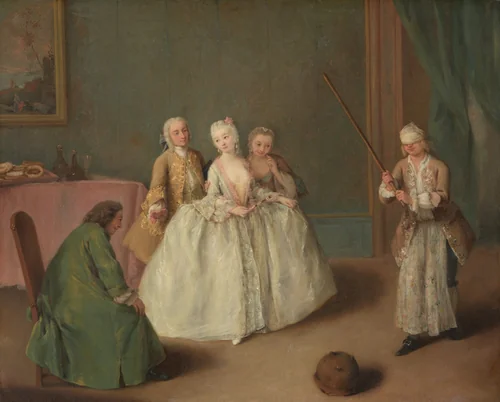
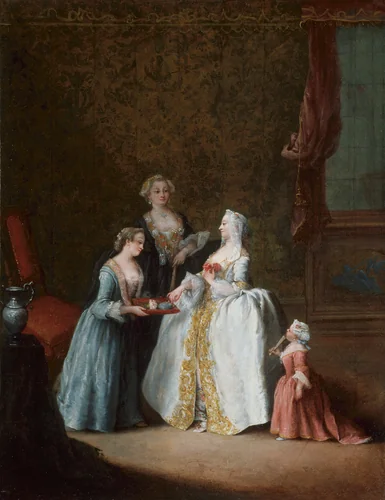
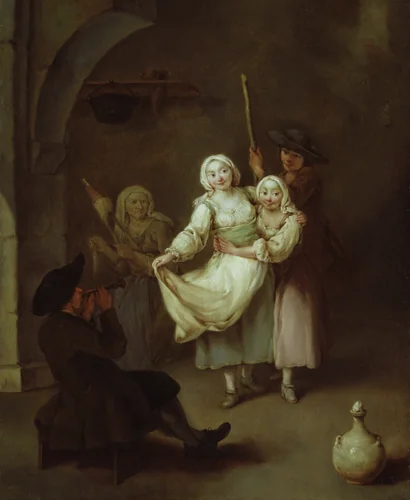
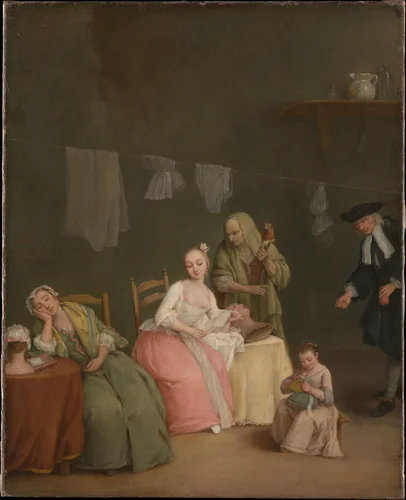
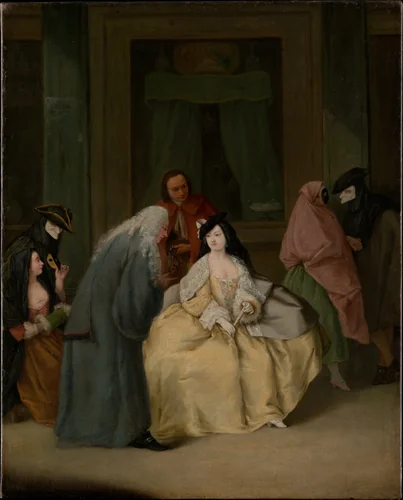
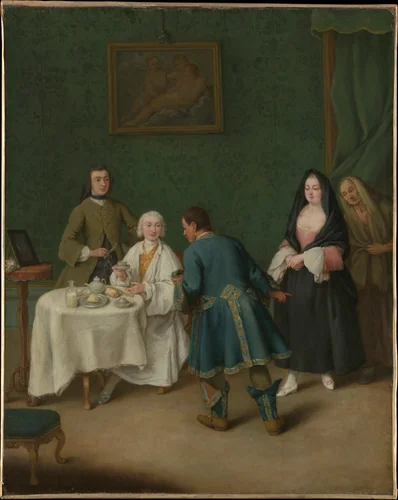
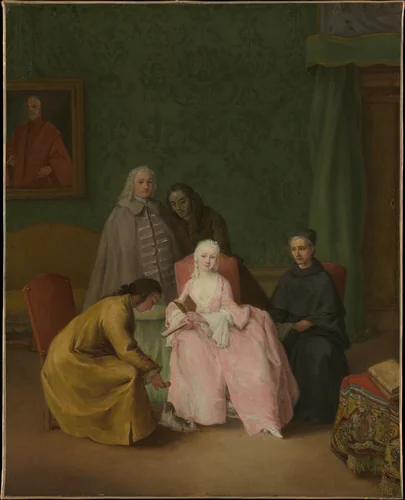
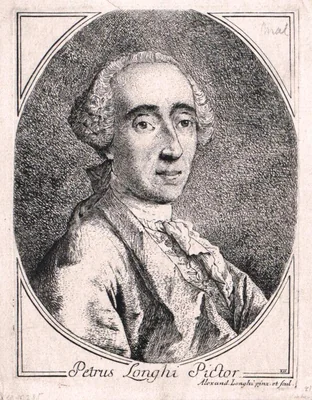
Pietro Longhi established himself as the premier Venetian genre painter of the eighteenth century, providing an intimate, often theatrical view into the private domesticity of the rising bourgeois and patriciate classes. Active during a period when Venetian painting was dominated by the grand scale of Tiepolo’s history compositions and Canaletto’s celebrated panoramas, Longhi deliberately shifted focus, concentrating instead on small, meticulously rendered cabinet canvases detailing everyday life.
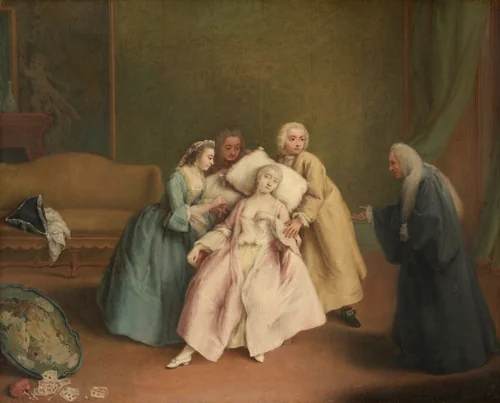
His works function as pictorial social documentation, observing the minutiae of interaction, fashion, and social games that defined elite existence in mid-eighteenth century Venice. Longhi specialized in capturing moments of structured leisure, from parlor games like The Game of the Cooking Pot to dramatic episodes of social spectacle, such as The Faint. His compositions often possess a static, stage-like quality, where figures—frequently masked or facing away—appear slightly distanced, participating in a codified social ritual. This observational approach grants his paintings a distinctive charm; they are visual studies of human interaction rendered with gentle, often subtle humor. The figures are captured in the midst of following strict etiquette, giving the viewer a sense of observing a world defined by its own rigid, yet slightly absurd, rules.
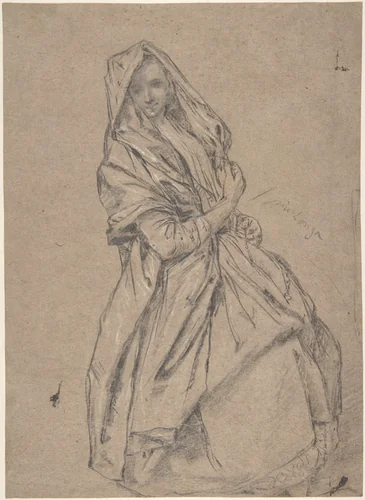
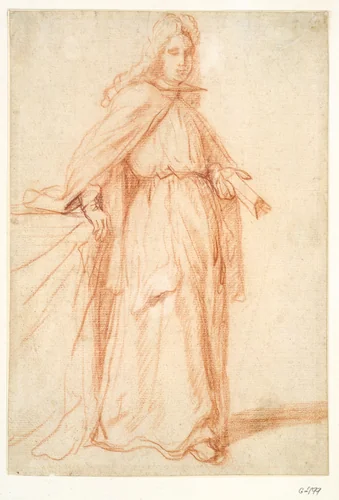
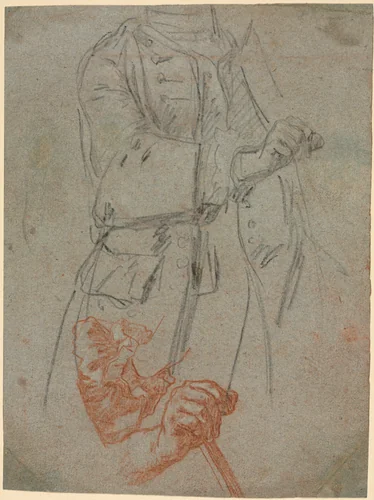
The artist was equally adept in preparatory work, utilizing charcoal and chalk to capture the essence of posture and material texture, exemplified by detailed pieces like Studies of a Costume, Sleeve, and Hand. These drawings often served as templates for his finished canvases, showing his commitment to accurate, detailed rendering. Today, many of these Pietro Longhi paintings now reside in major international collections, including the Metropolitan Museum of Art, the National Gallery of Art, and the Art Institute of Chicago, testifying to their lasting value as key documents of social history. Moreover, many works from this prolific period are available through institutional programs offering high-quality prints, allowing modern audiences to explore the subtle nuances of Venetian eighteenth-century life captured by this dedicated chronicler.
Source: Wikipedia · CC BY-SA 4.0