Pietro Gonzaga
Pietro di Gottardo Gonzaga (1751-1800) stands as one of the late eighteenth century’s most formidable scenic architects. An Italian master of illusionistic design, Gonzaga established his early reputation in his native country before accepting a pivotal role in the Russian Empire beginning in 1792. His active period spanned the final decades of the Enlightenment, and his works, preserved largely through detailed drawings, transcended mere decoration, transforming the theatrical stage into a platform for profound architectural fantasies.
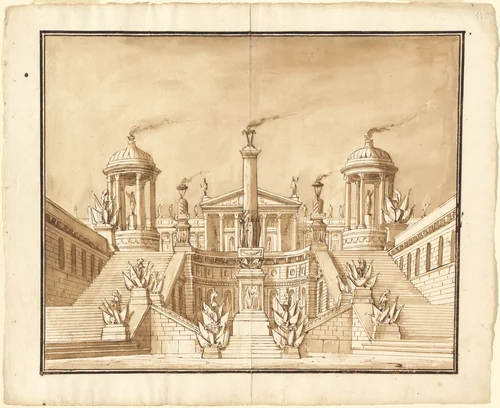
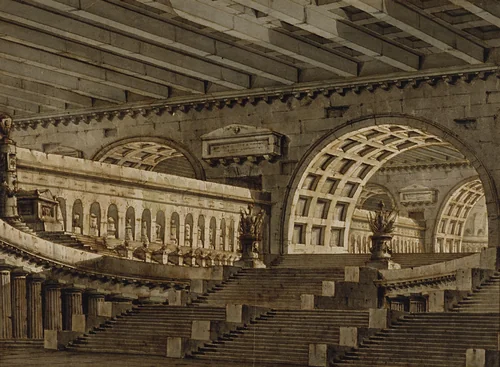
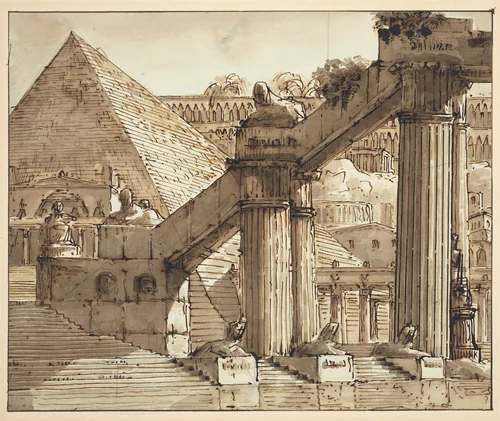
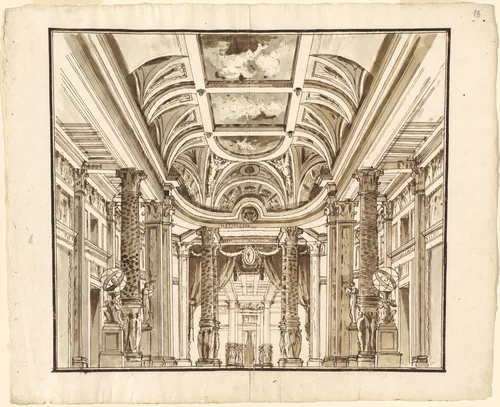
Gonzaga specialized in the capriccio and the architectural veduta, translating the monumental grandeur of classical ruins and imagined urban spaces onto temporary wooden stages. Drawings such as Fantasy of an Ancient Capitol with Trophies and Grand Staircases reveal a profound preoccupation with scale and rigorous, almost Piranesian, perspective. Unlike many contemporaries who prioritized excessive ornament, Gonzaga’s designs prioritize structure, shadow, and the dramatic manipulation of light to create depth. This mastery of spatial articulation is also evident in the chilling precision of his Subterranean Mausoleum, which speaks directly to the era’s burgeoning fascination with the sublime and the ruinous.
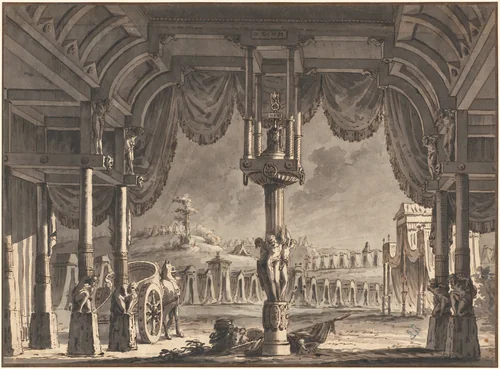
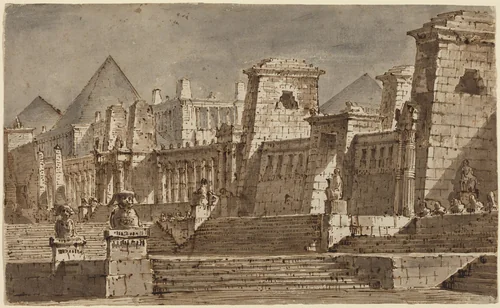
Although designed for the ephemeral world of stage production, Gonzaga’s concepts required a draftsman's high standard to communicate their ambition to builders and painters. It is fortunate that a significant corpus of these working documents survived the inherent fragility of the theatre. Today, his surviving stage designs, which also include specialized works like An Egyptian Stage Design, are held in prestigious North American institutions, including the Art Institute of Chicago and the National Gallery of Art, providing museum-quality examples of late Baroque theatrical draughtsmanship.
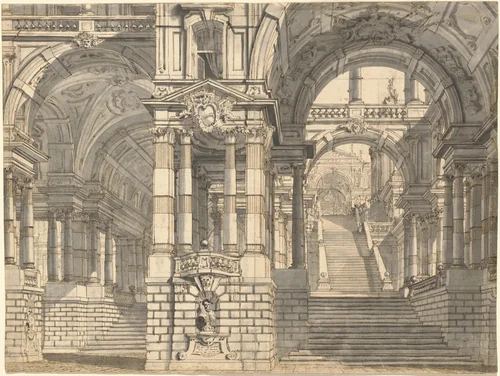
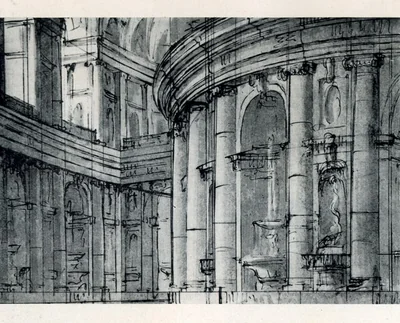
Gonzaga’s late career shift to the Imperial Court in Russia marked a powerful continuation of sophisticated Italian scenic traditions into Eastern Europe. It is perhaps the highest compliment to his vision that many of his elaborate designs, such as the expansive Fantasy of Magnificent Courtyards and Loggie with a Monumental Staircase, appear so complex as to be utterly unbuildable—a magnificent defiance of reality inherent in the best tradition of stagecraft. Through the accessibility provided by the public domain, the rigorous detail captured in Pietro Gonzaga prints remains essential study for understanding the spectacular demands of eighteenth-century opera and theatre production.
Source: Wikipedia · CC BY-SA 4.0